








Einführung
Wenn Sie schon einmal Zeit in einem geschäftigen Lager verbracht haben, wissen Sie, wie das läuft. Mitarbeiter, die mit ausgedruckten Kommissionierlisten zwischen den Gängen hin und her eilen. Papieretiketten, die jedes Mal ausgetauscht werden müssen, wenn ein Produkt den Standort wechselt. Informationen, die immer einen Schritt hinter dem tatsächlichen Lagerbestand zurückliegen.
Es ist nicht so, dass das System nicht funktioniert. Es ist nur so, dass Papier nie für das Tempo der modernen Logistik konzipiert wurde.
So sieht es derzeit im Lager aus – und wie E-Paper-Anzeigemodule es still und leise verändern.
Das Papierproblem
Wenn man fast jedes Lager betritt, sieht man überall Papier. Regaletiketten. Behälteretiketten. Kommissionierlisten. Versanddokumente. Kanban-Karten. Jedes einzelne davon stellt einen in der Zeit eingefrorenen Moment dar – Informationen, die zum Zeitpunkt des Drucks korrekt waren, aber möglicherweise bereits veraltet sind, wenn jemand sie liest.
Papieretiketten lassen sich nur mühsam aktualisieren, was zu ungenauen Daten und betrieblichen Verzögerungen führt. Wenn Produkte an einen anderen Standort verlegt werden, muss jemand ein neues Etikett ausdrucken, zum Regal gehen, das alte Etikett entfernen und das neue anbringen. Wenn im Lager Tausende von Artikelnummern verwaltet werden, bedeutet das Tausende von manuellen Aktualisierungen. Jede einzelne davon birgt die Gefahr eines Fehlers.
Die andere Möglichkeit ist LCD-Bildschirme. Allerdings verbrauchen LCDs relativ viel Strom und neigen zu Spiegelungen, weshalb sie sich weniger für Umgebungen eignen, in denen Energiekosten und Lesbarkeit eine entscheidende Rolle spielen.
E-Paper liegt dazwischen. Es schließt die Lücke zwischen pflegeleichten Papierbeschilderungen und der hohen Sichtbarkeit elektronischer Displays.
Bistabilität und Stromverbrauch nahe Null
Hier ist das technische Detail, das E-Paper in der Logistik funktionsfähig macht: Es ist bistabil.
Sobald ein Bild auf einem E-Paper-Display angezeigt wird, bleibt es dort auch ohne Stromversorgung erhalten. Das Display verbraucht nur dann Energie, wenn sich der Inhalt ändert. Herkömmliche LCD-Displays benötigen eine kontinuierliche Stromversorgung, um die Hintergrundbeleuchtung aufrechtzuerhalten. Bei E-Paper ist dies nicht der Fall.
Was bedeutet das in einem Lager?
Erstens, Eine Akkulaufzeit, die sich in Jahren und nicht in Wochen misst. Ein drahtloses E-Paper-Etikett kann monatelang in einem Regal oder auf einem wiederverwendbaren Behälter angebracht bleiben und wird nur bei Bedarf aktualisiert, ohne dass dabei die Energiequelle aufgebraucht wird.
Zweitens, geringerer Wartungsaufwand. Weniger Batteriewechsel bedeuten weniger Arbeitsaufwand für die Wartung.
Drittens, Flexibilität bei der Bereitstellung. Die Etiketten können überall angebracht werden – an abgelegenen Gestellen, an schwer zugänglichen Stellen, sogar an beweglichen Behältern –, ohne dass man sich Gedanken über die Verlegung von Stromkabeln machen muss.
Die „Digital Paper“-Tags von E Ink zeichnen sich durch einen sehr geringen Stromverbrauch und eine lange Batterielebensdauer aus und lassen sich zur zentralen Verwaltung drahtlos mit Backend-Systemen verbinden.
Lesbarkeit bei unterschiedlichen Lichtverhältnissen
Lagerhallen sind nicht gerade für ihre gleichmäßige Beleuchtung bekannt. Manche Gänge werden von hellen LED-Leuchten erhellt, andere liegen in dunklen Ecken. Und bei vielen Logistikabläufen muss man zwischen Innen- und Außenbereichen hin- und herwechseln.
E-Paper ist reflektierend. Es nutzt das Umgebungslicht, um Bilder darzustellen, genau wie Papier.
Helle LED- oder Leuchtstofflampen können die Lesbarkeit von hintergrundbeleuchteten Displays aufgrund von Blendungen beeinträchtigen. E-Paper ist reflektierend und gewährleistet daher sowohl bei schwachem als auch bei starkem Licht eine gute Lesbarkeit.
In der Praxis bedeutet das:
- Keine Blendung. Im Gegensatz zu hintergrundbeleuchteten LCD-Displays, die bei hellem Licht unlesbar werden, bleibt E-Paper klar und deutlich.
- Bessere Sichtbarkeit in hellen Umgebungen. Je heller das Umgebungslicht ist, desto besser ist die Lesbarkeit des Displays.
- Gleichbleibende Lesbarkeit in schummrigen Ecken. E-Paper-Anzeigen sorgen auch in schlecht beleuchteten Bereichen eines Lagers für gute Lesbarkeit.
Das ist kein unerheblicher Vorteil. Mitarbeiter, die ein Etikett auf einen Blick lesen können – ohne die Augen zusammenzukneifen, ohne die Position zu verändern und ohne eine Taschenlampe hervorzuholen –, arbeiten schneller und machen weniger Fehler.
Die Logistik-Etiketten von E Ink zeichnen sich durch ihre hohe Kontraststärke aus und sind daher auch bei Sonneneinstrahlung oder in dunklen Lagerhallen gut lesbar.
Robuste Langlebigkeit für raue Umgebungen
Logistikumgebungen stellen hohe Anforderungen an die Ausrüstung. Staub, extreme Temperaturen, Vibrationen und Stöße gehören zum täglichen Betrieb dazu.
E-Paper-Module können so konstruiert werden, dass sie diesen Bedingungen standhalten.
Im Gegensatz zu empfindlicheren LCD-Bildschirmen lassen sich E-Paper-Module robust und bruchsicher konstruieren. Sie zeichnen sich oft durch einen breiten Betriebstemperaturbereich aus, sodass sie sowohl in Kühlhäusern als auch in heißen und feuchten Umgebungen zuverlässig funktionieren.
Einige E-Paper-Logistiketiketten verfügen mittlerweile über die Schutzklasse IP65. Das Logistiketikett von CCL Faubel ist beispielsweise mit IP65-Zertifizierung erhältlich – es ist vollständig staubdicht und gegen Wasserstrahlen geschützt. Dies eröffnet neue Anwendungsbereiche in stark staubbelasteten Industrieumgebungen mit feinen, trockenen Partikeln, in denen herkömmliche elektronische Etiketten oft versagen.
Bei Anwendungen in der Kühlkette liefert E-Paper in gekühlten Logistikumgebungen eine gleichbleibend hohe Leistung. Im Gegensatz zu LCD-Bildschirmen, die unter kalten und feuchten Bedingungen beschlagen können, zeigen E-Paper-Displays Informationen zwischen -20 °C und 60 °C präzise an.
Batterieloser Betrieb mit drahtloser Energieübertragung
Jetzt wird es erst richtig spannend.
Einige der modernsten E-Paper-Logistiketiketten kommen ganz ohne Batterien aus. Sie werden über RFID oder NFC mit Strom versorgt.
Das CCL Faubel Logistics-Etikett nutzt RFID-Technologie, um ein E-Paper-Display drahtlos zu aktualisieren, auf dem die auf dem RFID-Tag gespeicherten variablen Daten visuell dargestellt werden. Da das Etikett ohne Batterie auskommt, ist es außerordentlich langlebig und wartungsfrei. Die Aktualisierungszeiten konnten seit der Markteinführung des Produkts um bis zu 50 Prozent reduziert werden.
Die Advantech EPD-300-Serie bietet eine ultradünne 3,7-Zoll-NFC-E-Paper-Lösung, die entwickelt wurde, um herkömmliche Papieretiketten in Lager- und Fabrikumgebungen zu ersetzen. Diese Displays sind als 2-, 3- und 4-Farben-Modelle erhältlich, nutzen NFC zum Lesen und Schreiben und ermöglichen schnelle Aktualisierungen per Smartphone oder NFC-Lesegerät, ohne dass eine Batterie erforderlich ist.
„Ohne Batterie“ bedeutet:
- Keine Batterie, die ausfallen oder entsorgt werden muss.
- Wartungsfreier Betrieb.
- Längere Lebensdauer—Das Etikett hält so lange, wie das Gehäuse intakt bleibt.
Produkte wie das RAMXEED-E-Paper-Etikett nutzen die UHF-RFID-Technologie für die drahtlose Energieversorgung und Kommunikation. Das Etikett kann neu beschrieben werden, ohne dass es ausgetauscht werden muss, und da es ohne Batterie auskommt, entfällt auch der Batteriewechsel.
Drahtlose Echtzeit-Updates
E-Paper-Etiketten können über ein zentrales System aktualisiert werden, was eine Echtzeit-Synchronisation mit Lagerverwaltungssystemen (WMS), Unternehmensressourcenplanungssystemen (ERP) und Produktionssteuerungssystemen ermöglicht.
Wenn elektronische Regaletiketten in der Logistik eingesetzt werden, können Aktualisierungen von Produktdetails, Artikelnummern oder Bestimmungscodes sofort auf den Etiketten angezeigt werden, wodurch menschliche Fehler minimiert und der Kommissionierungsprozess beschleunigt werden.
Da E-Ink-Anzeigen digital kommunizieren, können Inhalte über ein zentrales System aktualisiert werden. Lagerleiter können Änderungen an Produktinformationen, Artikelnummern oder Lagerplatzbeschriftungen sofort weitergeben. Dies reduziert den Aufwand für die manuelle Neuetikettierung und gewährleistet Genauigkeit in Echtzeit.
Der „Smart Printer Service“ von CCL Faubel verarbeitet Druckaufträge aus ERP-, WMS- oder ähnlichen Systemen – ohne Cloud-Anbindung und ohne zusätzliche mobile Geräte. Der Dienst läuft auf Desktop-PCs oder Industrie-Terminals, und Etikettenaktualisierungen werden automatisch ausgelöst, sobald ein Etikett an ein HF-Lesegerät gehalten wird.
Das Logistics Label unterstützt zudem eine OPC-UA-Schnittstelle, die einen sicheren, strukturierten Datenaustausch ermöglicht. “Mit der OPC-UA-Schnittstelle öffnen wir das Logistics Label für vernetzte industrielle Umgebungen”, sagt Christian Spanuth, Produktleiter Neue Technologien bei CCL Faubel. “Damit wird das Smart Label zu einer voll integrierten Komponente moderner Automatisierungs- und Digitalisierungsstrategien.”
Pick-to-Light und geführte Kommissionierung
E-Paper-Etiketten lassen sich mit LED-Anzeigen kombinieren, um effiziente „Pick-to-Light“-Systeme zu schaffen.
Bei Integration in eine Lagerverwaltungssoftware werden die Mitarbeiter durch eine leuchtende LED zum richtigen Lagerplatz geführt. Auf dem E-Paper-Display werden die zu kommissionierende Menge und die Produktbeschreibung angezeigt.
Das ’Pick-to-Light“-System von AIOI Systems nutzt ein 2,9-Zoll-E-Paper-Display mit zwei Funktionen: “Regalbeschriftungsfunktion” und “Kommissionierfunktion”. Durch die Anzeige von Produktnamen, Produktcodes und weiteren Informationen auf dem E-Paper lässt sich die Arbeitsgenauigkeit weiter verbessern.
Die PTL-Kommissionieretiketten von ZKONG sind mit LED-Anzeigen und Positionierungsmodulen ausgestattet und wurden entwickelt, um die Effizienz in der Logistik und im Lagerbetrieb zu steigern.
Das Ergebnis? Weniger Kommissionierfehler, eine schnellere Auftragsabwicklung und weniger Zeitaufwand für die Einarbeitung neuer Mitarbeiter in die Lageraufteilung.
Integration mit Ortungs- und Verfolgungstechnologien
E-Paper-Etiketten werden zunehmend in Echtzeit-Ortungssysteme (RTLS) integriert, wobei Technologien wie BLE und UWB zum Einsatz kommen.
Die Integration von Ubudus BLE-ESL-Technologie mit dem RTLS-System ermöglicht eine Echtzeit-Bestandsverfolgung und automatische Aktualisierungen in der Fertigung. Schnellere Produktionszyklen, geringere Materialkosten durch den Verzicht auf Papieretiketten und eine verbesserte betriebliche Effizienz führen im Laufe der Zeit zu erheblichen Kosteneinsparungen.
In Fabriken und Lagerhallen können BLE-Tags mit E-Paper-Displays den Verfügbarkeitsstatus, das Datum der letzten Kalibrierung und andere Echtzeitdaten anzeigen, die von der RTLS-Plattform abgerufen werden.
Mit dem ivBeacon Display von inVirtus können Unternehmen die Position ihrer Gegenstände in Innenräumen ermitteln und gleichzeitig dynamische Informationen wie QR-Codes, Kennungen oder Produktionsanweisungen direkt auf dem Tag anzeigen.
Skalierbarkeit und zentralisierte Verwaltung
In großen Einrichtungen mit Hunderten oder Tausenden von Ausstellungsorten ist es nicht praktikabel, die Etiketten einzeln zu verwalten.
Der digitale Charakter von E-Paper ermöglicht eine zentralisierte Verwaltung der Inhalte:
- Ein System, viele Anzeigen. Inhalte können über eine einzige Benutzeroberfläche an eine beliebige Anzahl von Labels übertragen werden.
- Einheitliche Informationen in der gesamten Einrichtung. Es gibt keine Diskrepanzen mehr zwischen den Angaben im System und den Angaben auf dem physischen Etikett.
- Prüfpfade und Rückverfolgbarkeit. Jede Aktualisierung kann protokolliert werden.
E Ink weist darauf hin, dass E-Paper-Etiketten den Lagerbestand dynamisch anzeigen können, wodurch Probleme hinsichtlich der Genauigkeit oder Effizienz, die bei manuellen Aktualisierungen auf Papier auftreten, vermieden werden. Mitarbeiter können auf andere Positionen versetzt werden, was zu einer besseren Gesamtproduktivität im Lager führt.
In einem Fall konnte ein Kunde durch den Einsatz von E-Paper-Etiketten den Papierverbrauch um bis zu 90 Seiten pro Bestellung senken.
Anwendungsszenarien
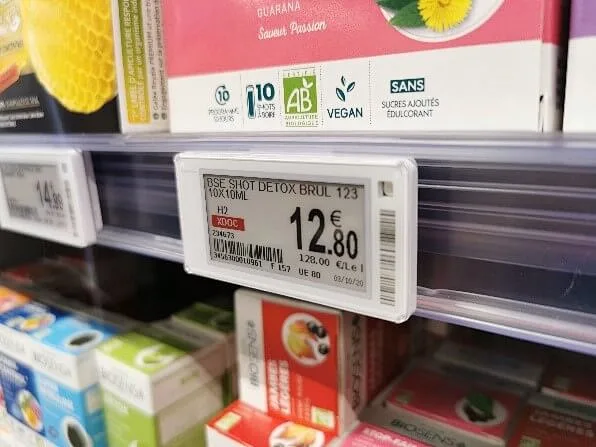
Beschriftung von Lagerregalen. E-Paper-Regaletiketten aktualisieren automatisch die Lagerbestände oder Produktdetails, wodurch Kommissionierfehler reduziert werden und sichergestellt wird, dass die Mitarbeiter stets über korrekte Informationen verfügen. Dadurch entfällt das manuelle Austauschen von Etiketten, was Zeit spart und Abfall vermeidet.
Wiederverwendbare Behälter und Kanban-Etiketten. Das CCL Faubel Logistics-Etikett eignet sich besonders für Mehrwegbehälter und Ladungsträger in Kanban- und Closed-Loop-Prozessen. Die Etiketten können in jeder Phase des Kreislaufs aktualisiert werden, ohne dass neues Papier benötigt wird.
Etiketten für unfertige Erzeugnisse in der Fertigungslinie. Die EPD-300-Serie von Advantech wird in Fabriken und im Logistikbereich häufig zur Anzeige von Produktionsinformationen eingesetzt. Etiketten für unfertige Erzeugnisse zeigen an, was gerade hergestellt wird, was als Nächstes ansteht und wohin es geht.
Bestandsverfolgung. E-Paper-Tags können hochwertige Werkzeuge, Geräte und Vermögenswerte im gesamten Betrieb verfolgen und deren Status und Standort in Echtzeit anzeigen.
Überwachung der Kühlkette. E-Paper-Displays liefern in der Kühllogistik eine gleichbleibende Leistung und zeigen den Status temperaturempfindlicher Fracht an, ohne zu beschlagen oder auszufallen.
Die Wahl des richtigen E-Paper-Moduls für die Logistik
Wenn Sie E-Paper-Module für eine Logistikanwendung beschaffen möchten, sollten Sie Folgendes beachten:
Größe. Regaletiketten sind in der Regel zwischen 2 und 5 Zoll groß. Bei Behälteretiketten können größere Formate wie beispielsweise 4,2 Zoll zum Einsatz kommen. Berücksichtigen Sie dabei die Betrachtungsentfernung und die Menge an Informationen, die Sie anzeigen müssen.
Farbe. Schwarz-Weiß eignet sich für die meisten logistischen Anwendungen. Dreifarbige (schwarz, weiß, rot) oder vierfarbige Darstellungen ermöglichen eine visuelle Hervorhebung von Prioritätsartikeln oder Statusanzeigen.
Stromquelle. Batteriebetrieben für eine lange Lebensdauer oder batterielos für einen wartungsfreien Betrieb. Batterielose RFID-/NFC-Etiketten eignen sich ideal für die geschlossene Logistikkette, in der Lesegeräte an festen Stationen zur Verfügung stehen.
Umweltanforderungen. Temperaturbereich, Staubschutz, Wasserfestigkeit. Für anspruchsvolle industrielle Umgebungen sind Module der Schutzklasse IP65 erhältlich.
Kommunikationsprotokoll. RFID, NFC, Bluetooth, WLAN oder LoRa. Wählen Sie die passende Technologie entsprechend Ihrer bestehenden Infrastruktur und der Aktualisierungshäufigkeit aus.
Integration. Unterstützt das Modul die Integration in Ihr WMS, ERP oder MES? Achten Sie auf OPC-UA-Schnittstellen oder SDKs, die eine individuelle Integration ermöglichen.
Inhalt anzeigen. Text, Barcodes, QR-Codes oder Grafiken – E-Paper kann all das darstellen.
Bei Jictech entwickeln und fertigen wir maßgeschneiderte E-Paper-Anzeigemodule für Logistik- und Lageranwendungen. Von Regaletiketten bis hin zu Container-Etiketten – wir können jedes Modul genau auf Ihre individuellen Anforderungen zuschneiden. Besuchen Sie uns unter https://jiclcd.com/e-paper/ um unsere E-Paper-Produktpalette zu entdecken, oder schauen Sie sich https://jiclcd.com/industrial-display/ für unsere umfassenden Display-Lösungen für die Industrie.
Das Fazit
Die Logistik verabschiedet sich zunehmend vom Papier. Nicht, weil Papier schlecht wäre, sondern weil es mit dem Tempo moderner Lieferketten nicht Schritt halten kann.
E-Paper-Anzeigemodule bieten eine praktische Alternative. Sie sind so stromsparend, dass sie jahrelang mit einer Batterie – oder ganz ohne Batterie – betrieben werden können. Sie sind unter allen Lichtverhältnissen gut lesbar, von dunklen Lagerecken bis hin zu grellem Sonnenlicht. Sie sind robust genug, um den Einsatz im Lager zu überstehen. Und sie werden drahtlos in Echtzeit aktualisiert, sodass die Informationen ohne manuelles Eingreifen stets korrekt bleiben.
Für Lagerleiter, Logistikunternehmen und alle, die für den Warenfluss verantwortlich sind, ist E-Paper keine futuristische Technologie. Es ist ein Werkzeug, das schon heute einsatzbereit ist.
FAQs
Die Batterielebensdauer hängt von der Häufigkeit der Aktualisierungen ab, doch die meisten E-Paper-Etiketten laufen mehrere Jahre lang mit einer einzigen Batterie, da sie nur dann Strom verbrauchen, wenn sich der Inhalt ändert.
Ja. E-Paper-Etiketten können über RFID, NFC, Bluetooth, WLAN oder LoRa aktualisiert werden, wobei die Änderungen sofort aus einem zentralen Managementsystem übernommen werden.
Ja. E-Paper ist reflektierend und bietet auch in schwach beleuchteten Umgebungen einen hohen Kontrast, sodass es auch an schlecht beleuchteten Orten gut lesbar ist, an denen Bildschirme mit Hintergrundbeleuchtung Schwierigkeiten haben könnten.
Industrielle E-Paper-Module arbeiten in der Regel bei Temperaturen zwischen -20 °C und 60 °C, wobei einige Varianten sogar noch größere Temperaturbereiche für Kühlhäuser und heiße Umgebungen unterstützen.
Zwar sind die Anschaffungskosten höher, doch entfallen bei E-Paper-Etiketten die laufenden Kosten für Papier, Tinte, Druck und den manuellen Aufwand für den Austausch. Bei groß angelegten Einsätzen sind die Gesamtbetriebskosten oft niedriger.
Ja. Batterielose, RFID-gestützte E-Paper-Etiketten eignen sich besonders gut für Mehrwegbehälter und Kanban-Prozesse, bei denen die Etiketten in jeder Phase des Kreislaufs aktualisiert werden müssen.
Zu den gängigen Protokollen zählen RFID, NFC, Bluetooth Low Energy (BLE), WLAN und LoRa. Die Wahl hängt von Ihrer bestehenden Infrastruktur und Ihren Anforderungen an die Aktualisierung ab.