








What Is a TFT Capacitive Touch Screen?
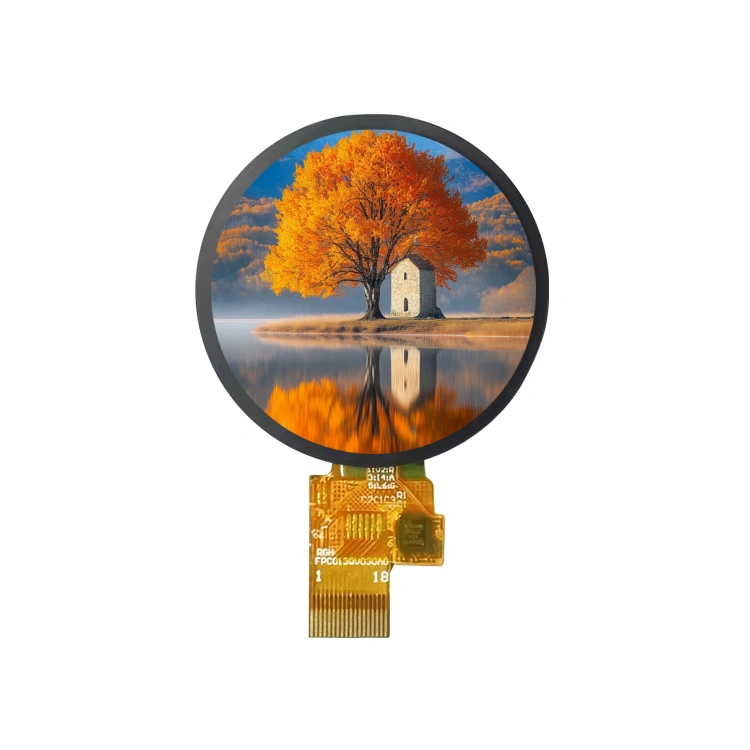
A TFT capacitive touch screen is a display module that combines two technologies: TFT (Thin-Film Transistor) LCD for image display and capacitive touch sensing for user input.
- TFT LCD uses thin-film transistors to individually control each pixel, delivering vibrant colors, high resolution, and fast response times.
- Capacitive touch technology detects input through the electrical conductivity of the human body (or a conductive stylus), rather than relying on physical pressure.
When combined, these two technologies create a high-performance, interactive display that is responsive, durable, and visually stunning.
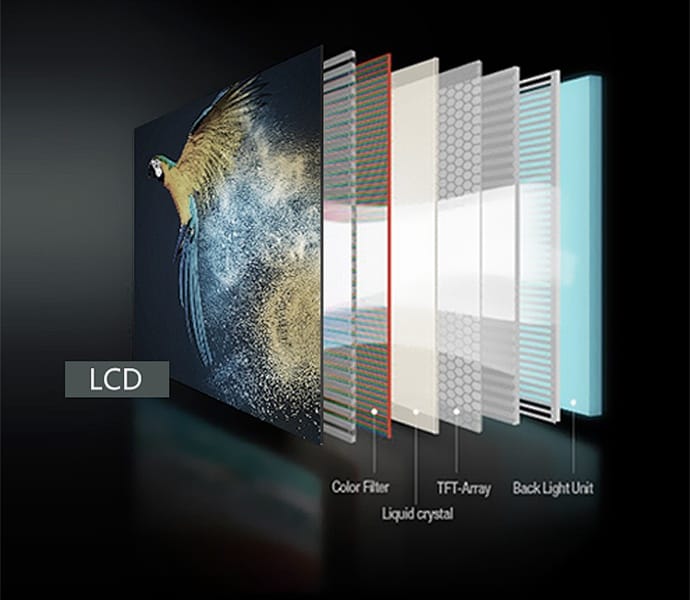
Structural Components of a TFT Capacitive Touch Screen
A typical TFT capacitive touch screen consists of several key layers and components:
1. Cover Glass (Cover Lens)
The topmost protective layer, usually made of chemically strengthened glass (such as Corning Gorilla Glass) or synthetic materials like PMMA and polycarbonate. It protects the internal sensor from scratches, dust, and impact. Standard thickness ranges from 0.55 mm to 1.8 mm, with thicker glass (up to 4–8 mm) used in industrial or vandal-resistant applications.
2. Touch Sensor
The sensor is the heart of the capacitive touch functionality. It consists of:
- ITO (Indium Tin Oxide) layers: Transparent conductive films patterned into vertical (X) and horizontal (Y) electrode grids. These form a matrix that detects touch events at their intersections.
- Substrate: The sensor can be built on glass (glass sensor) or flexible PET/film (film sensor), depending on the application.
3. TFT LCD Display Panel
Beneath the touch sensor lies the TFT LCD panel, which includes:
- Backlight unit: Provides illumination (since LCDs are not self-emissive).
- Liquid crystal layer: Controlled by thin-film transistors to modulate light and create images.
- Color filter: Produces the full spectrum of colors.
4. Touch Controller IC (Integrated Circuit)
A dedicated microcontroller that continuously scans the capacitive sensor grid, detects capacitance changes, and translates them into digital touch coordinates.
5. FPC (Flexible Printed Circuit)
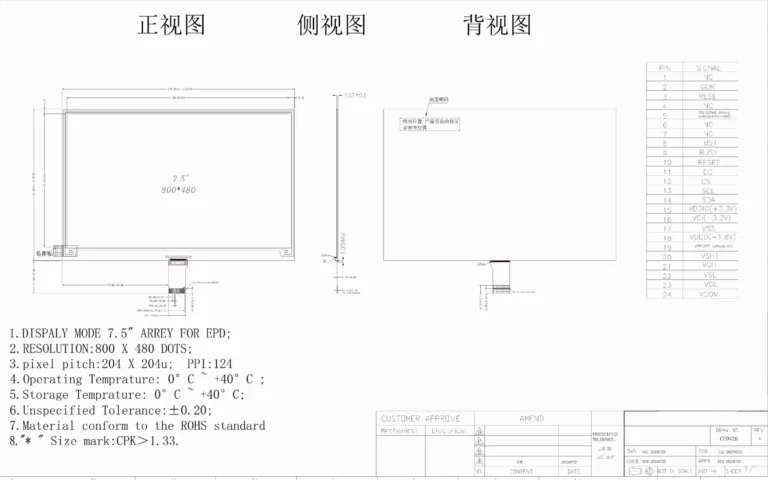
The FPC serves as the electrical connection between the touch sensor, the controller IC, and the host device (such as a motherboard or processor).
Common Interfaces
TFT capacitive touch screens communicate with host systems through several standard interfaces:
| Interface | Description | Typical Use |
|---|---|---|
| I2C | Two-wire serial bus; simple and widely supported | Small displays, embedded systems, low-speed data |
| SPI | High-speed serial peripheral interface | Faster communication than I2C; common in industrial displays |
| USB | Universal Serial Bus; plug-and-play | External monitors, kiosks, consumer electronics |
| RS-232/RS-485 | Serial communication standards | Industrial equipment, legacy systems |
| LVDS/eDP/MIPI DSI | High-speed differential signaling | Internal display connections in smartphones, tablets, and laptops |
The choice of interface depends on the application’s requirements for speed, wiring complexity, and electromagnetic compatibility.
Working Principle
The operation of a TFT capacitive touch screen can be understood in three stages:
Stage 1: Electrostatic Field Generation
When powered on, the touch controller charges the ITO electrode grid, creating a uniform electrostatic field across the screen surface.
Stage 2: Touch Detection
When a conductive object (such as a human finger) approaches or touches the screen, it disrupts the local electrostatic field. The human body acts as a dielectric, introducing additional capacitance at the touch point.
Modern screens use Projected Capacitive (PCAP) technology, which employs an X-Y electrode matrix to enable precise multi-touch detection. This is a significant improvement over older surface capacitive technology, which only supported single-touch and was less accurate.
Stage 3: Signal Processing and Output
The touch controller IC scans the grid, identifies the exact X and Y coordinates of the capacitance change, filters out noise, and sends the touch data to the device’s operating system. This entire process happens within milliseconds, delivering a seamless and responsive user experience.
Advantages of TFT Capacitive Touch Screens
1. High Sensitivity and Responsiveness
Capacitive screens respond to the lightest touch without requiring pressure, providing a smooth and natural interaction.
2. Multi-Touch Support
PCAP technology supports up to 10 or more simultaneous touch points, enabling gestures like pinch-to-zoom, rotate, and swipe.
3. Excellent Visual Quality
TFT LCD technology delivers high resolution, vibrant colors, high brightness, and fast response times—ideal for multimedia, gaming, and professional applications.
4. Durability and Longevity
With no moving parts and a solid glass surface, capacitive touch screens are highly durable. They can even continue functioning with minor cracks, unlike resistive screens.
5. Easy to Clean
The flat glass surface is resistant to dirt, grease, and dust, making it ideal for public-facing and hygienic environments.
Disadvantages of TFT Capacitive Touch Screens
1. Cannot Be Used with Non-Conductive Objects
Standard capacitive screens do not respond to gloved fingers (unless specially designed), plastic styluses, or non-conductive materials.
2. Susceptible to Water and Moisture
Water droplets on the screen can cause false touch signals or erratic behavior, although advanced controllers now offer water-rejection features.
3. Higher Cost Than Resistive Screens
TFT capacitive touch screens are generally more expensive to manufacture than resistive alternatives due to the complexity of the ITO sensor and controller IC.
4. Limited Visibility in Direct Sunlight
While TFT LCDs offer good brightness, visibility can still be limited under intense sunlight unless equipped with high-brightness backlights or optical bonding.
5. Power Consumption
TFT LCDs require a constant backlight, which consumes more power than self-emissive technologies like OLED—an important consideration for battery-powered devices.
Applications of TFT Capacitive Touch Screens
Thanks to their versatility, TFT capacitive touch screens are used across a wide range of industries:
| Industry | Application |
|---|---|
| Consumer Electronics | Smartphones, tablets, laptops, smartwatches |
| Automotive | In-car infotainment systems, GPS navigation, dashboard controls |
| Industrial | HMI (Human-Machine Interface) panels, factory automation, handheld terminals |
| Medical | Patient monitors, diagnostic equipment, portable medical devices |
| Retail & Hospitality | POS (Point of Sale) terminals, self-service kiosks, digital signage |
| Public Infrastructure | Ticket vending machines, information terminals, access control systems |
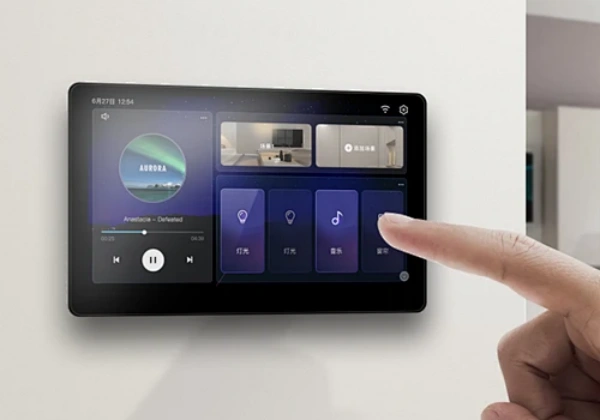
| Smart Home & IoT | Smart thermostats, security panels, home automation controllers |
Industrial-grade TFT capacitive touch screens are often built with enhanced durability features such as IP65-rated front panels, 7H hardness glass, and sunlight-readable brightness (500+ nits), making them suitable for 24/7 operation in harsh environments.
Conclusion
The TFT capacitive touch screen represents a powerful convergence of display and input technologies. By combining the high-quality visuals of TFT LCD with the intuitive, responsive touch experience of capacitive sensing, it has become the dominant interface technology across consumer, industrial, and commercial applications.
While it has limitations—such as sensitivity to water and the inability to work with non-conductive objects—ongoing advancements in controller ICs, materials, and manufacturing continue to expand its capabilities. Whether you’re designing a smartphone, an industrial control panel, or an interactive kiosk, understanding the structure, working principle, and trade-offs of TFT capacitive touch screens is essential to making the right choice for your project.