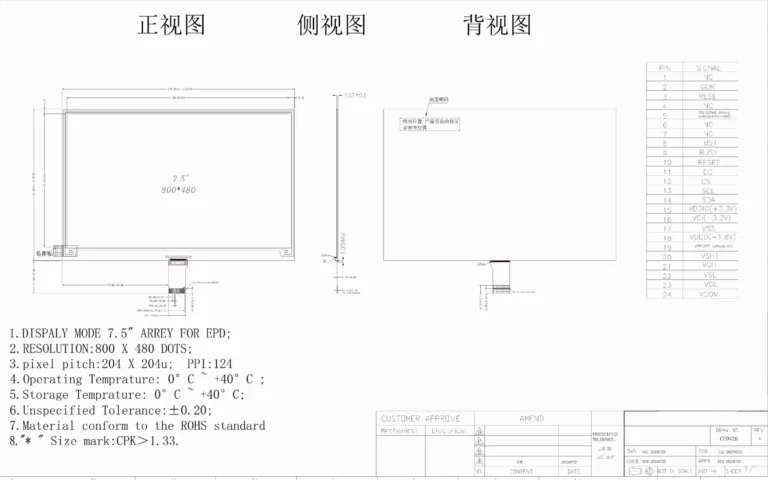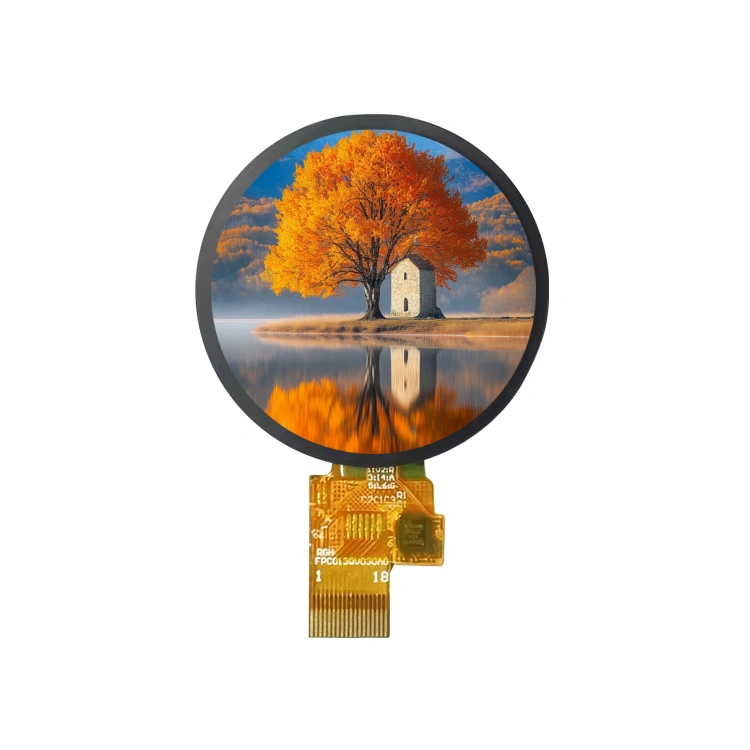








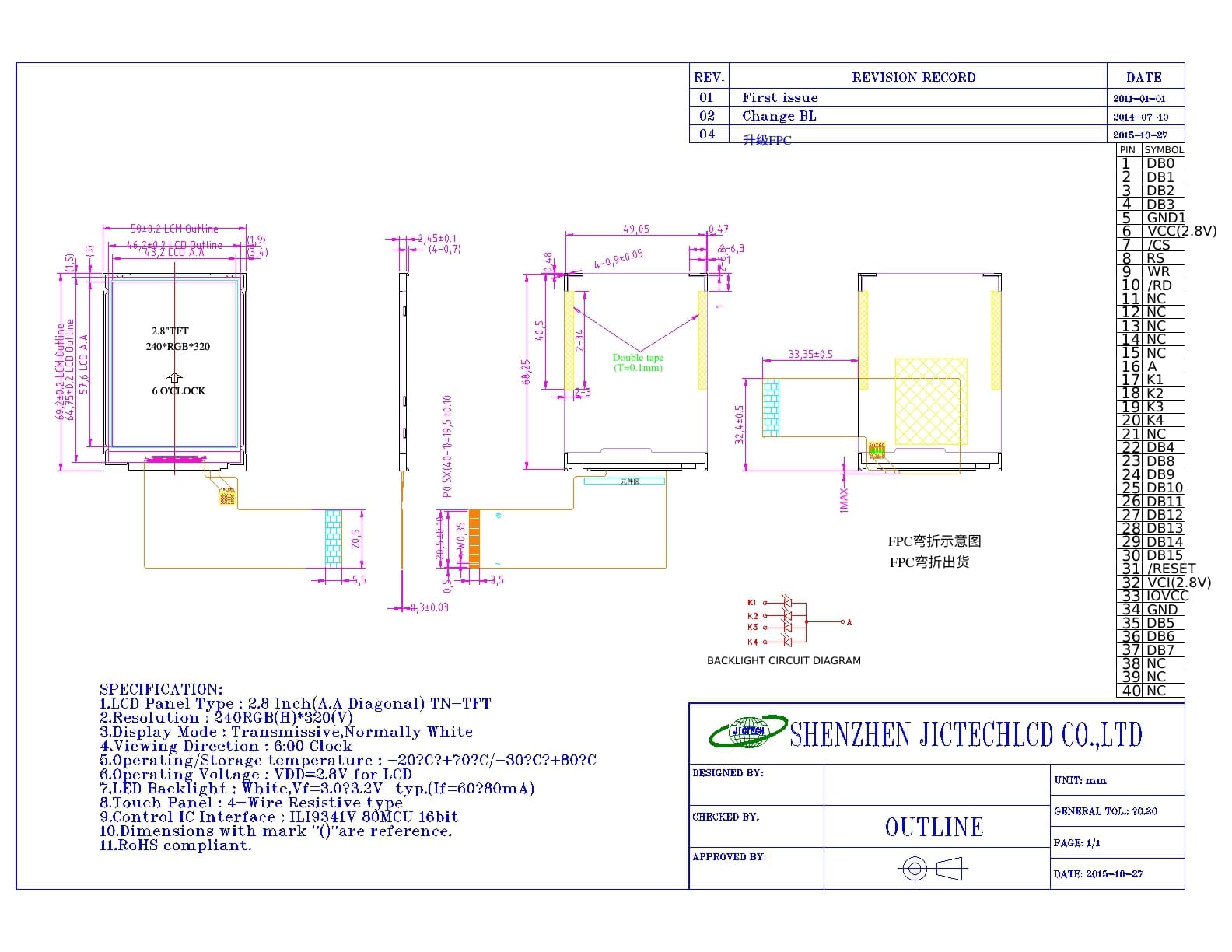

A TFT LCD display interface is the connection method used to transmit image data and control signals between a TFT (Thin Film Transistor) liquid crystal display and its host controller (MCU, application processor, etc.).
What Is a TFT LCD Display?
A TFT display is an active-matrix LCD where a thin-film transistor is integrated behind each pixel. It offers fast response time, good color reproduction, and high contrast, and is widely used in smartphones, automotive systems, industrial equipment, and embedded products. The panel itself is “memoryless” — it requires an external controller to continuously refresh data in order to display an image. This is why an interface is needed.
Common Interface Types
| Interface | Characteristics | Typical Applications |
|---|---|---|
| MCU / 80 parallel bus | Parallel data + control lines (16/18/24-bit), simple timing, driven directly by MCU | Small panels (below ~3.5″), microcontroller projects |
| SPI | Serial, few pins, low speed (typically tens of MHz) | Small screens, smart bands, simple displays |
| RGB (TTL) | Parallel data + horizontal/vertical sync signals; requires continuous output from host; no controller inside the panel | Medium/large panels (embedded Linux, tablets) |
| MIPI DSI | High-speed differential serial, high bandwidth, few pins, low power | Smartphones, high-end embedded devices |
| LVDS | Low-voltage differential serial, strong noise immunity, suitable for long flex cables | Automotive, industrial medium/large panels |
| eDP | Differential interface based on DisplayPort; a growing replacement for LVDS | Laptops, high-end devices |
| HDMI / DisplayPort | Standard display interfaces (often used with converter boards) | Commercial displays, development boards |
What the Interface Carries
Regardless of the form, the interface essentially transmits three types of signals:
- Pixel data: color data for red, green, and blue, each 6/8 bits
- Timing signals: pixel clock (DCLK/PCLK), horizontal sync (HSYNC), vertical sync (VSYNC), and data enable (DE)
- Control signals: reset (RESET), backlight control (BL), and commands/parameters (in command mode)
Key Points for Use
- Controller location: An RGB-interface panel has no built-in frame buffer, requiring the host to have an LCD controller and sufficient memory; MCU/DSI-interface panels include a driver IC (e.g., ILI9488, ST7789), which reduces the host’s workload.
- Voltage matching: Interface logic levels must match the host (commonly 3.3V / 2.8V / 1.8V); level shifters may be needed.
- Data format: 16-bit RGB565, 18-bit RGB666, 24-bit RGB888, etc. — host and panel must be configured identically.
In short, the TFT display interface is the channel that “feeds” image data to the screen. The right choice depends on panel size, resolution, host capabilities, and cost.
Related Reading