








Overview
I’ll never forget the first time I walked into a phone store and saw an OLED screen. It wasn’t just the colors that grabbed me—it was the black. Not that washed-out gray you get with regular screens, but a genuine, deep, turn-off-the-lights kind of darkness. That moment made me curious about what makes this technology tick, and after digging into it over the years, I’ve come to appreciate just how versatile OLED really is. So let’s break it down: what exactly is OLED, where is it actually being used, and if you’re in the market for displays, how do you pick the right one?
What Is OLED, Really? (No Engineering Degree Required)
OLED stands for Organic Light-Emitting Diode. Sounds complicated, but the concept is pretty straightforward.
Think of a traditional LCD screen like a sandwich. You’ve got a backlight at the bottom (basically a flashlight), a liquid crystal layer in the middle that acts like tiny shutters controlling light flow, and color filters on top. When an LCD shows black, those shutters are trying to block the backlight—but they never fully succeed. That’s why LCD blacks look grayish, and why the screen can’t get super thin.
OLED works completely differently. It sandwiches organic compounds between two electrodes. When electricity passes through, these organic materials light up all by themselves. Every single pixel is its own independent light source. This changes everything:
True black. When a pixel needs to be black, it simply turns off. No light leakage, no gray haze. The contrast ratio is theoretically infinite. Watch a starry night scene or a dark movie scene, and the depth is something LCD just can’t match.
Incredibly thin and light. Without a backlight module, OLED panels can be paper-thin. Some flexible OLED displays today measure under 0.1 millimeters thick. That’s why foldable phones exclusively use OLED—try bending an LCD and you’ll end up with shattered glass.
Blazing fast response times. OLED pixels switch on and off in microseconds, compared to milliseconds for LCD. Fast-moving games and action scenes show virtually no motion blur. At CES 2026, LG Display unveiled a 27-inch OLED panel with a staggering 720Hz refresh rate—numbers that would’ve seemed impossible just a few years ago.
Wide viewing angles and vivid colors. Because each pixel emits light directly, colors and brightness stay consistent even when you’re viewing from extreme angles. The color gamut coverage far exceeds traditional LCD standards.
Now, OLED isn’t perfect. Early generations struggled with burn-in (permanent ghost images from static content) and shorter lifespans. But material science has come a long way. Tandem OLED technology, which stacks multiple emitting layers, has dramatically boosted both brightness and longevity.
The market numbers tell the story. The global OLED market hit roughly $64.21 billion in 2025 and is projected to reach $322.56 billion by 2034, growing at nearly 20% annually. That’s explosive growth for any display technology, signaling OLED’s transition from premium niche to mainstream standard.
Where Are OLED Displays Actually Used? (Way More Places Than You Think)
Most people associate OLED with smartphones and TVs. Those are indeed the biggest markets, but limiting OLED to just those applications misses the bigger picture. Smartphones and tablets account for about 55% of the OLED market, wearables around 20%, and automotive applications roughly 25%—with the latter expanding rapidly. Let’s walk through the industries.
Consumer Electronics: The Proving Ground
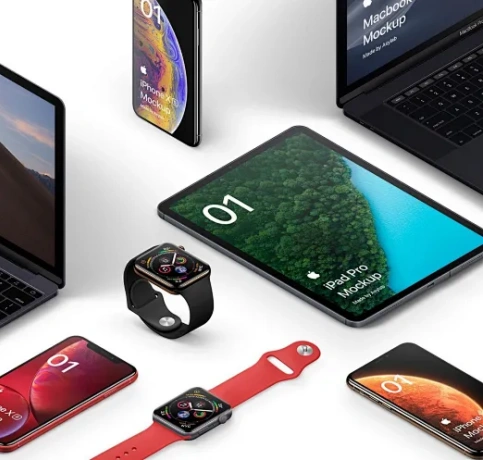
Smartphones represent OLED’s largest single market. These days, launching a flagship phone without an OLED display is almost unthinkable. Apple switched the entire iPhone lineup to OLED starting with the iPhone 12, and Android manufacturers embraced the technology even earlier. Beyond image quality, OLED enables under-display fingerprint sensors, under-display cameras, and those curved “waterfall” edge designs. Global smartphone AMOLED shipments are expected to reach 810 million units in 2026.
Televisions are where OLED dominates the premium segment. LG’s OLED TVs have long been the industry benchmark, with Sony and Panasonic following suit. The appeal is clear: watching movies with rich shadow detail, no light bloom in dark scenes, and an immersive experience that feels cinematic. Plus, OLED TVs can be incredibly thin—mount one on your wall and it practically looks like framed art. LG Display’s 2026 OLED TV panels hit peak brightness levels of 4,500 nits with reflectivity as low as 0.3%, making them perfectly viewable even in bright living rooms.
Laptops and tablets are the newest frontier for OLED adoption. Historically, notebooks rarely used OLED due to cost and burn-in concerns. But 2026 changed the game—Samsung Display’s 8.6th-generation IT OLED line began mass production specifically for laptops and tablets, with annual capacity for 10 million notebook panels. Combined with Tandem OLED solving durability and brightness issues, premium notebooks (like the MacBook Pro) are now adopting OLED in large numbers. The benefits are tangible: thinner profiles for portability, accurate colors for design work, and high contrast that reduces eye strain during long document-reading sessions.
Wearables are practically tailor-made for OLED. Smartwatches and fitness bands have tiny screens, but users demand a lot—sunlight readability, nighttime comfort, and power efficiency. OLED’s pixel-level light control nails these requirements. Plus, wearables need curved designs that wrap around wrists, which flexible OLED handles effortlessly. The Apple Watch, Huawei GT series, and Xiaomi Band all use OLED without exception.
Automotive: The Next Big Wave
If you’ve checked out any new electric vehicles lately, you’ve probably noticed a trend: more screens, bigger screens. Dashboards, center consoles, passenger entertainment displays, rear-seat screens, HUDs (heads-up displays)—cars are becoming “electronics on wheels.”
OLED’s automotive breakthrough came in 2026. LG Display showcased a 51-inch pillar-to-pillar OLED at CES 2026, stretching from the driver’s seat to the passenger’s side using a single panel that can serve personalized content to different seats. Even more futuristic: rollable OLED displays that tuck away into the dashboard when not needed, then unroll to a 33-inch screen on demand. This was concept-car stuff just years ago; now it’s heading for production.
Samsung Display launched its automotive OLED brand “DRIVE” in 2025, clearly signaling in-car displays as their next growth engine. According to Omdia, automotive OLED shipments hit about 3.05 million units in 2025 and are projected to approach 6 million in 2026—nearly doubling.
Why OLED makes sense for cars:
- High contrast: Night driving won’t blind you with screen glare or light halos;
- Wide temperature range: Specially designed OLEDs operate from -40°C to 85°C, handling everything from freezing winters to scorching dashboards;
- Freeform cutting: Dashboards are often curved or irregularly shaped, and OLED can be cut to fit virtually any contour;
- Thin and light: Saves precious interior space, which matters enormously in electric vehicles where every cubic centimeter counts.

Industrial Control and Medical Equipment: The Reliability Test
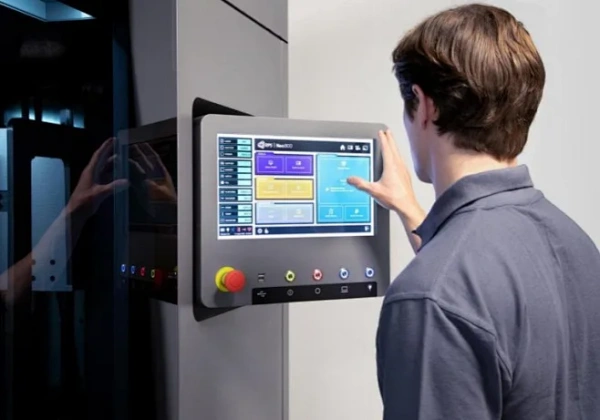
Industrial applications demand entirely different things from displays than consumer gadgets. Factory equipment might run 24/7, needing resistance to oil, vibration, and wide voltage ranges. Medical devices require extreme precision and stability—diagnostic accuracy depends on it.
OLED penetration in industrial settings lags behind consumer electronics, but it’s accelerating. Industrial HMIs (human-machine interfaces), handheld measurement tools, and portable testing equipment are increasingly adopting OLED. Here’s why:
Industrial devices often have tight space constraints, and OLED’s ultra-thin profile helps minimize equipment size. Complex lighting conditions in factories favor OLED’s high contrast, keeping displays readable from any angle. And for control systems needing real-time feedback, OLED’s rapid response times are genuinely useful.
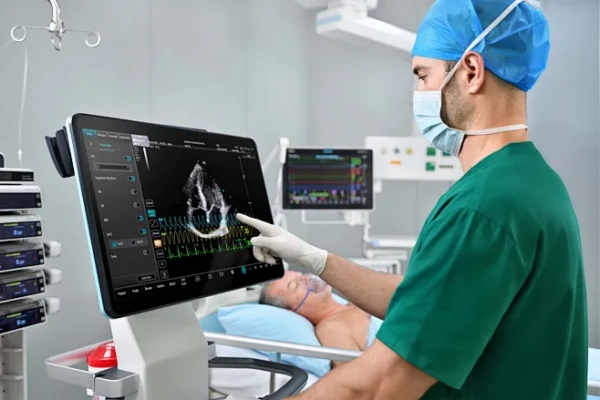
In medical applications, OLED shows up in portable ultrasound devices, patient monitors, and endoscope displays. These applications demand color accuracy (tissue colors must be true-to-life), low latency for real-time imaging, and low power for battery-operated portability. OLED excels across all these metrics, and flexible OLED can conform to curved surfaces on wearable medical monitors.
Smart Home and IoT: Screens Everywhere
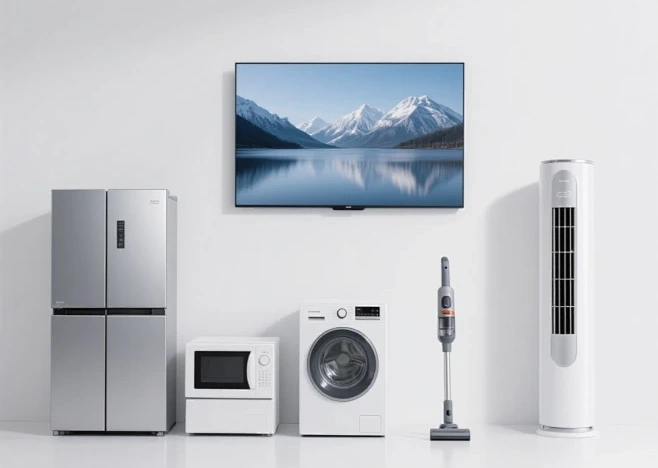
Smart homes are replacing buttons and LED indicators with actual displays. Smart door locks with tiny screens, refrigerator touch panels, thermostat displays, range hood interfaces—these applications need small sizes, low power, low cost, and clear visibility.
This is where PMOLED (Passive Matrix OLED) shines. PMOLED has a simpler structure, lower cost, and minimal power consumption—perfect for showing text, numbers, and simple icons. Your smart thermostat, blood pressure monitor, or humidity sensor likely uses PMOLED. While it can’t handle complex video, it doesn’t need to. For IoT devices displaying a few characters or icons, PMOLED delivers months of standby time.
Commercial Displays and Specialized Applications
Shopping mall transparent display cases, interactive museum exhibits, airport flight information boards—these venues are increasingly experimenting with OLED. Transparent OLED lets viewers see displayed content while still viewing objects behind the screen, creating an augmented reality effect that LCD simply cannot achieve.
Then there are cutting-edge applications like Micro-OLED in VR/AR headsets. VR goggles need incredibly high pixel density (since they’re inches from your eyes) and ultra-fast response (to prevent motion sickness). Micro-OLED achieves thousands of pixels per inch, making it a dominant choice for current VR hardware.

How to Choose an OLED Display (Don’t Just Look at Price)
If you’re a procurement engineer or product manager staring at OLED spec sheets, the sheer number of parameters can feel overwhelming. Resolution, driver ICs, interface types, operating voltages—how do you balance these? Based on years of industry observation, here are the core decision frameworks.
1. Start With What You’re Actually Displaying
This sounds obvious, but it’s the most overlooked step in the selection process.
If you’re only showing text, numbers, and simple icons (like a smartwatch time display or industrial gauge reading), a monochrome PMOLED is probably your most economical choice. Low power, low cost, excellent sunlight readability. Common options include white, blue, and yellow monochrome, plus dual-color or area-color variants.
If you need photos, videos, or complex UI interfaces (like handheld device menus or medical imaging), you’ll need a full-color AMOLED. AMOLED drives each pixel independently, delivering high resolution, rich colors, and video capability.
2. Size and Resolution: Bigger Isn’t Always Better
OLED displays range from 0.66 inches to several dozen inches. Match the size to your installation space and viewing distance.
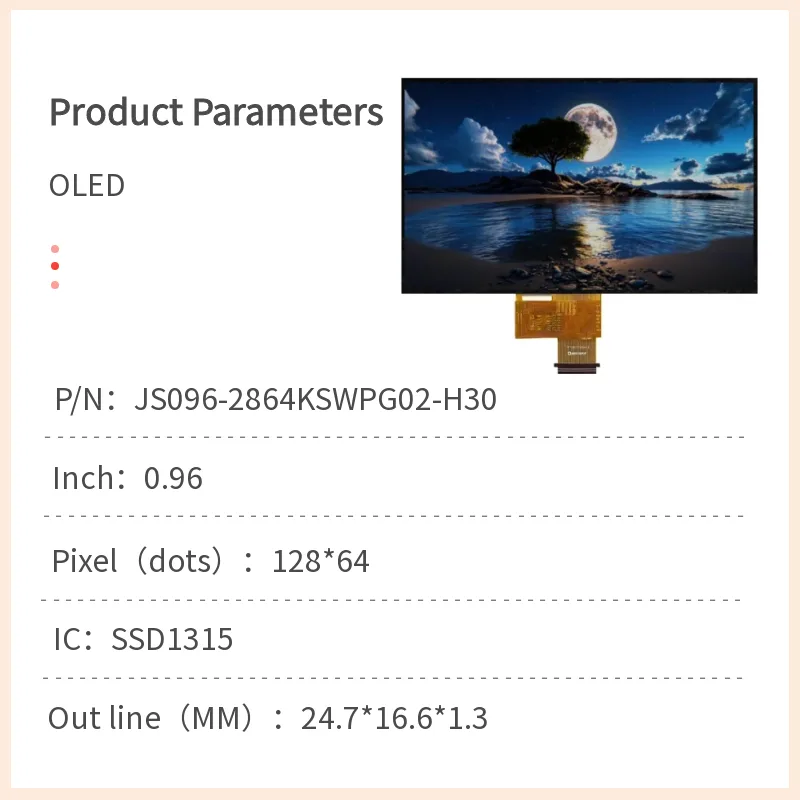
Small sizes (0.66″ to 2.42″) suit wearables, handheld instruments, and compact appliances. Common resolutions include 64×48, 128×64, and 128×128. Those numbers might seem low, but on a tiny screen, the pixel density actually looks quite sharp.
Medium sizes (2.7″ to 5.5″) work for portable devices, industrial handheld terminals, and medical monitors.
Large sizes (5.5″+) enter tablet, laptop, automotive, and television territory.
One pitfall to avoid: don’t blindly chase high resolution. Higher resolutions demand more powerful driver ICs, greater interface bandwidth, and beefier host controllers—costs scale exponentially. If your content doesn’t need that level of detail, an appropriately matched resolution is actually the safer choice.
3. Interface and Driver IC: Compatibility Is King
Your OLED needs to talk to your main controller board. Common interfaces include:
- I²C: Just two wires (SDA and SCL), saves IO pins, but slower speeds. Good for small, low-refresh displays.
- SPI: Four wires, much faster, suitable for animations or video content.
- 8080/6800 Parallel: Fastest option but requires more IO pins. Ideal for applications demanding extremely high refresh rates.
Driver IC selection matters too. Common chips include SSD1306, SSD1315, SH1107, SSD1327, and others. Different ICs have different initialization codes, command sets, and feature support. When selecting, verify whether your supplier can provide initialization code and sample programs for your specific host platform—this can save weeks of development time.
4. Operating Voltage and Power Consumption: Don’t Ignore Power Design
Common OLED operating voltages include 3.3V, 5V, and wide-input options (2.8V–5.5V). If your system runs on 3.3V but you pick a 5V display, you’ll need level shifting—adding circuit complexity.
Power-wise, OLED is unique: it consumes power based on what’s being displayed. An all-white screen draws maximum power; a black screen draws almost nothing. If your application frequently shows dark interfaces (dark mode), OLED can actually be more efficient than LCD. But if you’re mostly displaying white backgrounds with black text, the power advantage disappears.
5. Form Factor: Rigid or Flexible?
Rigid OLED: Glass or hard substrate, lower cost, straightforward for standard flat installations.
Flexible OLED (FPC): Polyimide film substrate, bendable and rollable, perfect for wearables and curved dashboards.
Custom shapes: Round displays, rounded corners, transparent windows, cutouts—ideal for design-forward consumer products.
If your product needs to conform to curved surfaces (smartwatch faces, curved automotive dashboards), flexible OLED is practically your only option. But flexible displays need more careful protection—ensure proper encapsulation to prevent damage at bend points.
6. Brightness and Dimming: Environmental Adaptation
OLED brightness is measured in cd/m² (nits). Indoor applications typically need 200–400 nits; outdoor or high-ambient-light environments may require 600+ nits.
Dimming methods matter too. PWM dimming rapidly switches the backlight on and off to control brightness—cheap but potentially causes flicker that sensitive users find tiring. DC dimming adjusts current directly, eliminating flicker for easier viewing, but requires more complex circuitry. Some premium OLEDs now support automatic brightness sensing, adjusting to ambient conditions automatically.
7. Lifespan and Reliability: Critical for Industrial Applications
OLED lifespan is typically measured as “half-life”—the time for brightness to decay to 50% of initial value. Monochrome OLEDs generally last longer than color versions because they don’t need to balance the degradation rates of red, green, and blue organic materials.
For industrial, medical, and automotive applications, pay close attention to:
- Operating temperature range: Consumer-grade OLEDs might work from 0°C to 50°C; industrial-grade needs -40°C to 85°C;
- Shock and vibration resistance: Automotive and industrial equipment vibrates constantly and needs ruggedized designs;
- Protection ratings: Waterproof and dustproof requirements (IP ratings);
- Lifespan requirements: For 24/7 continuous operation, select long-life models or implement pixel-shifting and periodic refresh routines to prevent burn-in.
Jictech: 23 Years of OLED Expertise, Customization as Core Competency
After all this technical discussion, let’s talk about supplier selection. If you need OLED displays in volume or require custom specifications, Jictech is worth serious consideration.
Jictech has spent 23 years specializing in OLED displays—that’s substantial tenure in this industry. Their product portfolio covers a comprehensive range of small-size OLED modules from 0.66 inches to 3.12 inches, with resolutions from 64×48 to 256×64, available in monochrome (white, blue, yellow), dual-color, area-color, and full-color RGB options.
But Jictech’s real strength lies in customization capabilities. Many standard OLED panels won’t perfectly match your product’s structural design, which is where custom engineering becomes essential. Jictech supports:
- Non-standard size cutting: If your device has an unusual aspect ratio or display area, they can cut panels to your exact specifications;
- Flexible FPC designs: Ideal for wearables and curved-surface installations;
- Specialized shapes: Round displays, transparent windows, rounded corners, and more;
- Integrated modules: Touch panels (capacitive or resistive), ambient light sensors, even under-display components can be integrated into the OLED module, reducing your peripheral circuit design workload;
- Custom driver ICs and interfaces: Support for SSD1306, SSD1315, CH1116, SH1107, SSD1309, SSD1327, SSD1322, and more, with I²C, SPI, and 8080/6800 parallel interfaces available;
- Wide voltage and brightness control: Options from 3.3V to 5V, plus wide-input 2.8V–5.5V variants. Dimming via PWM or command control, with automatic brightness sensing available.
Twenty-three years of experience means they’ve encountered virtually every application scenario—from consumer electronics to industrial HMIs, medical devices to smart home products, automotive displays to portable instruments. This accumulated knowledge proves invaluable when solving real engineering challenges: optimizing initialization code, adjusting FPC bend radii, recommending appropriate encapsulation methods, and more.
If you’re currently in the product selection phase, browse their website for detailed specifications, or reach out directly with your requirements (size, resolution, interface, operating environment, estimated volume) and let their engineering team propose tailored solutions. OLED selection spans optics, electronics, and mechanical design dimensions—having an experienced supplier as a partner helps you avoid costly missteps.
Final Thoughts
OLED technology took roughly three decades to move from laboratory curiosity to mass-market staple. Over those thirty years, it evolved from “expensive novelty” to “premium device standard,” and now it’s pushing into mid-range products and industrial applications. In 2026, with 8.6th-generation IT OLED lines ramping production, Tandem OLED technology maturing, and automotive OLED volumes surging, the technology is entering a new growth cycle.
For everyday consumers, OLED means better visual experiences—purer blacks, richer colors, thinner devices. For engineers and product managers, it means greater design freedom—flexible, transparent, freeform, integrated. For procurement decision-makers, it means balancing performance, cost, and supply chain stability.
Whether you’re exploring this technology out of curiosity or actively selecting displays for your project, I hope this article provides practical, actionable reference. Display technology evolves rapidly, but the core logic remains constant: understand your real requirements first, then find the best-matching solution—rather than blindly chasing the newest spec or focusing solely on price.
Frequently Asked Questions About OLED Display Applications
Q1: What’s the fundamental difference between OLED and traditional LCD displays? Which is better?
A: The core difference lies in how they produce light. LCD requires a backlight, using liquid crystal layers to control light passage—resulting in grayish blacks, thicker profiles, and light leakage. OLED pixels emit their own light independently, enabling true blacks, infinite contrast ratios, thinner designs, and faster response times. Which is “better” depends on your application: choose OLED for image quality, slim profiles, and flexible designs; choose LCD for lower costs, longer lifespans, and higher brightness at lower prices. High-end phones, TVs, and laptops have largely adopted OLED, but LCD maintains cost advantages in industrial controls and outdoor digital signage.
Q2: Do OLED displays suffer from burn-in? How can it be prevented?
A: Burn-in (permanent image retention) was a genuine issue with early OLEDs because red, green, and blue organic materials degrade at different rates. Static content like TV channel logos or smartphone navigation bars could cause uneven aging. However, modern OLEDs have dramatically mitigated this through pixel-refresh algorithms (subtly shifting displayed content), automatic brightness adjustment, Tandem OLED technology extending lifespan, and user-side recommendations like enabling auto-lock and avoiding maximum brightness for extended static images. Under normal usage, burn-in risk on current OLED panels is quite low.
Q3: What should I consider when selecting OLED displays for industrial equipment?
A: Industrial applications demand attention to reliability metrics: operating temperature range (whether it meets -40°C to 85°C wide-temperature requirements), vibration and shock resistance, protection ratings (IP65+ for dust and water resistance), continuous operation lifespan (24/7 equipment needs long-life models), and whether suppliers can guarantee industrial-grade quality consistency. Additionally, industrial devices often have special mounting spaces and interface requirements. Consider suppliers like Jictech with extensive industrial customization experience, supporting irregular shape cutting, wide-voltage input, and ruggedized structural designs.
Q4: Should I choose flexible OLED or rigid OLED? Is flexible OLED fragile?
A: If your product surface is flat with no space constraints, rigid OLED offers lower costs and simpler structures. If you need to conform to curved surfaces (smartwatch faces, curved dashboards), require frequent flexing (foldable phones), or have extreme thickness requirements (ultra-thin card devices), flexible OLED is essential. The “fragility” reputation mainly stems from early-generation products. Modern flexible OLEDs have matured significantly in encapsulation process, bend radius control, and protective layer design—normal usage presents no issues. The key is designing adequate bend radius in your product, avoiding sharp-angle flexing.
Q5: Beyond unit price, what hidden costs should I consider when procuring OLED displays?
A: Many buyers compare only screen unit prices while overlooking several hidden costs: development costs (whether the driver IC matches your host platform, whether the supplier provides initialization code and technical support—this directly impacts development timelines); adaptation costs (whether standard sizes fit your structural design; custom molds add expenses and lead time); quality consistency (whether small-batch samples match mass-production quality, critical for industrial applications); and supply chain stability (supplier capacity, delivery lead times, long-term availability support—industrial product lifecycles often span 5-10 years). We recommend engaging experienced suppliers like Jictech early in the process to clarify these details upfront and avoid costly surprises down the road.
Jictech has focused on manufacturing and customizing OLED displays for 23 years. We offer quotations within 24 hours: Email: bill@jictechlcd.cn