








Introduction: A Question That Defies a Simple Answer
Does OLED consume more power than IPS? The answer is far more nuanced than a simple “yes” or “no.” To arrive at a meaningful conclusion, one must examine the underlying technical principles of both display technologies, analyze how power consumption behaves under different conditions, and cross-reference real-world test data — particularly in the context of industrial and embedded applications, where power efficiency, longevity, and reliability are paramount. This article provides a systematic technical comparison of OLED and IPS power consumption across four dimensions: technical principles, power consumption characteristics, empirical test data, and key influencing factors.
Part One: Technical Principles — The Root of Power Consumption Differences
1.1 IPS (LCD) — The “Constant Power” Approach with an Always-On Backlight
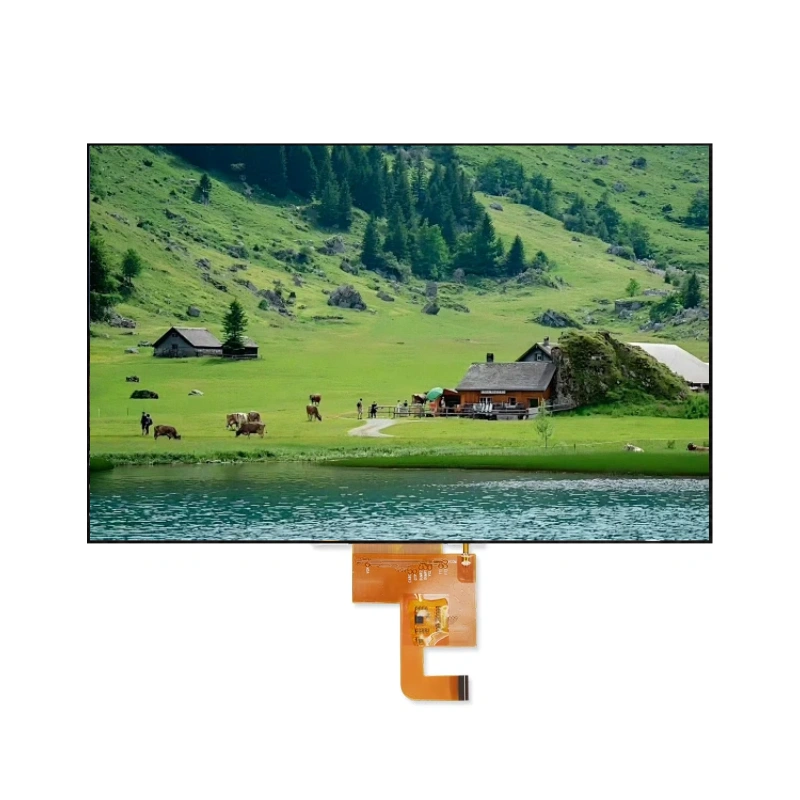
IPS (In-Plane Switching) is a type of LCD technology. Its core structure consists of a liquid crystal layer and a backlight module: the backlight emits light continuously, and the liquid crystals twist in-plane to control how much light passes through to form an image. IPS displays are commonly used in products that require visual stability, color depth, and high brightness.
Power consumption breakdown:
- The vast majority of an IPS display’s power consumption comes from the backlight module
- Power draw is mostly constant regardless of image content
- Efficiency improves with LED backlight and dimming control, but the fundamental characteristic remains: backlight-driven power consumption
- Key characteristic: power consumption is content-independent and relatively predictable
This means that even when displaying a pure black image, an IPS screen’s backlight operates at full power; the liquid crystals merely “block” the light. Consequently, IPS power consumption is stable and predictable, with minimal fluctuation based on content.
1.2 OLED — The “Dynamic Power” Approach with Pixel-Level Independence
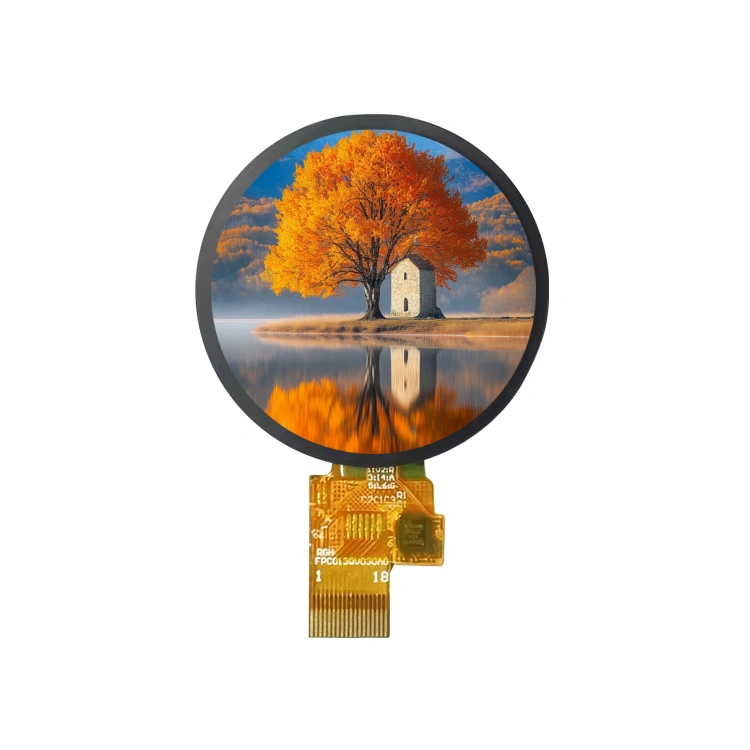
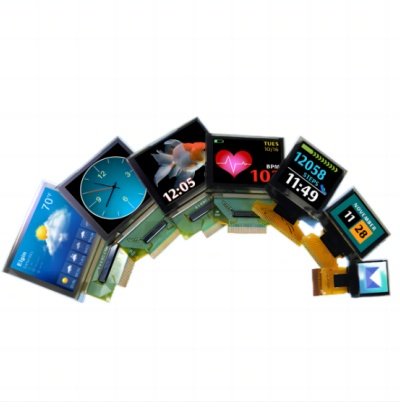
OLED (Organic Light-Emitting Diode) displays use pixels made from organic compounds that emit light when energized. Unlike LCDs, OLED does not require a backlight — each pixel can turn on or off independently, resulting in true blacks, high contrast ratios, and fast response times.
Power consumption breakdown:
- OLED power consumption is proportional to the sum of each pixel’s individual brightness
- When displaying black, corresponding pixels are completely off, consuming zero power
- When displaying white or high-brightness content, all pixels emit at full strength, causing power consumption to surge
- Key characteristic: power consumption is highly content-dependent — “darker content = lower power, brighter content = higher power”
OLED’s self-emissive nature eliminates the need for a backlight, enabling thinner designs. However, the dramatic fluctuation in power consumption is the technology’s greatest variable in energy efficiency.
Part Two: Scenario-Based Comparison — Who Wins and When?
2.1 Dark/Black Scenarios: OLED Dominates
When displaying black or dark content, OLED’s advantage is substantial:
- Black pixels on OLED are completely off, contributing zero to energy consumption
- IPS backlights remain fully on, with no meaningful reduction in power draw
- On a pure black screen, an OLED panel’s power consumption approaches that of an off-state display
Empirical data: OLED consumes significantly less power when showing darker content. The so-called “power savings” of OLED compared to IPS are precisely based on displaying black or dark content.
2.2 White/Light Scenarios: IPS Takes the Lead
When displaying white or light content, the situation reverses entirely:
- OLED requires all pixels to emit at full power, causing power consumption to spike
- IPS backlight power remains constant regardless of content
Empirical data: In UI-heavy industrial applications with mostly light user interfaces, OLED often uses more power than IPS. When displaying bright or full-color visuals, OLED power usage increases significantly, whereas IPS power draw remains predictable.
2.3 Mixed Content Scenarios: Depends on Average Picture Level (APL)
OLED power consumption varies dynamically with the content being displayed:
- High dark content (dark mode apps, dark scene monitoring) → OLED is more efficient
- High light content (document editing, industrial HMI with light UIs) → IPS may be more efficient
- Mixed usage → depends on individual usage patterns and application requirements
Part Three: Empirical Test Data — Industrial Display Applications
3.1 General Power Consumption Ranges by Panel Size
For industrial and embedded displays, power consumption varies significantly by size:
| Panel Size | IPS Power Consumption | OLED Power Consumption |
|---|---|---|
| < 10 inches | 2–10W | 3–15W |
| 10–15 inches | 10–20W | (varies by content) |
These ranges illustrate that while OLED can be competitive in smaller sizes, its power draw is more variable and can exceed IPS in bright-content scenarios.
3.2 Industrial Application Context: Why the “Use Case” Matters
In industrial settings, the choice between IPS and OLED is rarely made on power consumption alone — but power is a critical factor.
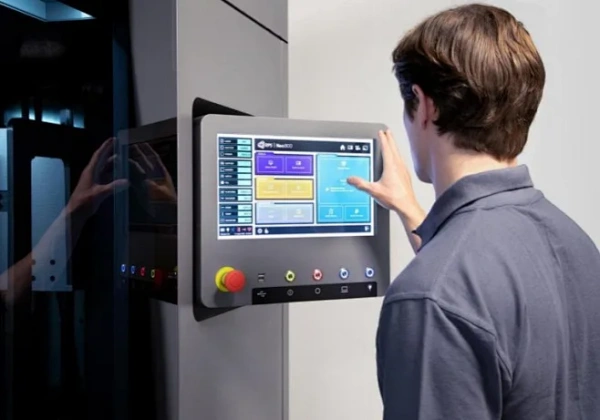
Industrial Control Panels and HMIs (Human-Machine Interfaces):
- These applications typically feature static UI elements (status bars, toolbars, dashboards) displayed for months or years
- IPS draws stable, predictable power regardless of content — a key advantage for 24/7 operation
- OLED’s power consumption in these scenarios depends on the UI color scheme: a light-themed industrial HMI would drive OLED power consumption significantly higher than IPS
Transportation Displays (railway information boards, bus displays, air traffic control panels):
- These rely on IPS for durability and brightness
- Power predictability is essential for infrastructure that operates continuously
- OLED is rarely used in large outdoor signage due to brightness limitations (500–700 nits vs. IPS up to 1500 nits)
Healthcare Equipment (medical imaging systems, surgical displays, patient monitoring):
- IPS is preferred for consistent color accuracy and wide viewing angles
- Power consumption must be stable and predictable in critical care environments
- Some medical monitors (e.g., ASUS HA3281A) operate at under 23.2W
Energy Monitoring (power plants, smart grid stations):
- IPS displays are preferred for continuous performance in extreme conditions
- OLED is not commonly used here because of potential burn-in and temperature sensitivity
3.3 Dark Mode Power Savings in Practice
Dark mode delivers substantial power savings on OLED devices across all application types:
- Switching to dark mode can reduce power consumption of OLED screens by approximately 24.5–25%
- By reducing the On Pixel Ratio (the ratio of working pixels to total display pixels), dark mode cuts display energy consumption significantly
- Crucially, only OLED displays can take advantage of these savings — LCD screens require a backlight even when displaying black, providing no reduction in power consumption in dark mode
For industrial applications that can adopt dark-themed UIs, OLED offers a tangible power-saving pathway. For those stuck with light UIs (common in legacy industrial systems), IPS provides more predictable power behavior.
Part Four: Other Key Factors Affecting Power Consumption
4.1 Brightness and Outdoor Readability
Brightness is a decisive factor in power consumption, especially for outdoor or high-ambient-light environments:
- IPS: High-brightness industrial models can reach 1000–2000 nits, especially with optical bonding to reduce reflections
- OLED: Generally limited to 600–1000 nits sustained, with short bursts higher; prolonged high brightness can accelerate aging
For sunlight-readable displays, IPS remains the safer choice. The higher brightness capability of IPS comes with higher absolute power draw, but it is predictable — OLED’s power consumption at high brightness can spike dramatically and is constrained by thermal throttling.
4.2 Burn-In and Lifetime
Power consumption considerations cannot be separated from lifespan:
| Metric | IPS | OLED |
|---|---|---|
| Operational lifespan | Up to 70,000 hours | 30,000–50,000 hours |
| Industrial panel rating | 50,000–70,000 hours | 20,000–30,000 hours to 50% brightness |
| Burn-in risk | None | Possible with static content |
In industrial applications where displays run 24/7 with static UI elements, IPS offers a clear longevity advantage. OLED’s shorter lifespan and burn-in risk limit its use in continuous industrial operations.
4.3 Temperature Tolerance
Industrial environments demand displays that perform reliably under extreme conditions:
- IPS: Maintains performance from –30°C to +85°C
- OLED: Some panels have narrower operating temperature ranges; moisture sensitivity may require extra sealing
Power consumption in extreme temperatures can vary significantly, and IPS’s wider temperature tolerance makes it more predictable in harsh environments.
4.4 Content Type and UI Design
| Content Type | Better Choice | Technical Rationale |
|---|---|---|
| Dark-themed HMIs / monitoring dashboards | OLED | Dark pixels consume minimal power |
| Light-themed industrial UIs | IPS | Stable power draw; OLED would spike |
| Video surveillance (mixed content) | Depends | Analyze average picture level |
| Outdoor / high-ambient-light environments | IPS | Higher sustained brightness; better sunlight readability |
| 24/7 continuous operation | IPS | Longer lifespan; no burn-in risk |
Part Five: Summary and Application Recommendations
5.1 Core Conclusion
OLED does not universally consume more or less power than IPS — the answer depends entirely on the use case and content:
- Dark content dominant (dark mode UIs, dark-scene monitoring) → OLED is more power-efficient
- Light/white content dominant (document-centric HMIs, bright industrial UIs) → IPS is more power-efficient
- Mixed usage → depends on individual usage patterns and UI design choices
IPS offers the advantage of predictability and stability — power consumption varies little regardless of content. OLED power consumption is highly content-dependent, with power differences of several times between extreme scenarios (pure black vs. pure white).
5.2 Industrial Application Recommendations
| Application Scenario | Recommended Panel | Technical Rationale |
|---|---|---|
| Industrial control panels / HMIs (24/7 operation) | IPS | Stable power; 70,000-hour lifespan; no burn-in |
| Outdoor kiosks / transportation displays | IPS | Up to 1500 nits brightness; sunlight readability |
| Medical imaging / surgical displays | IPS | Consistent color accuracy; stable power |
| Energy monitoring / power plants | IPS | Extreme temperature tolerance (–30°C to +85°C) |
| Premium handheld diagnostic tools | OLED | Superior contrast; thinner form factor |
| Compact wearable industrial devices | OLED | Low power in dark mode; flexible design |
| Indoor digital signage | OLED | Dark content = power savings; superior image quality |
5.3 Technical Optimization Tips for OLED Deployments
- Adopt dark-themed UIs: Can reduce total power consumption by approximately 24.5–25%
- Avoid prolonged maximum brightness: Higher brightness disproportionately increases OLED power draw and accelerates aging
- Minimize static UI elements: Reduce burn-in risk and power consumption from constantly illuminated pixels
- Consider ambient light sensors: Automatically adjust brightness to optimize power consumption
Conclusion
The question “Does OLED consume more power than IPS?” has no universal answer. These two display technologies each have distinct power consumption characteristics rooted in their fundamental operating principles. IPS offers consistent, predictable power draw regardless of content, making it a reliable choice for industrial applications requiring 24/7 operation, high brightness, and long lifespan. OLED delivers exceptional efficiency in dark-content scenarios but can become power-hungry when displaying bright content.
For industrial engineers and system integrators, the decision between IPS and OLED must consider not only power consumption but also lifespan, brightness requirements, temperature tolerance, burn-in risk, and total cost of ownership. Understanding these technical principles empowers decision-makers to select the right display technology for their specific application — there is no absolute “better” or “worse,” only “better suited” for a given scenario.