






소개
If you’re designing an industrial product right now and trying to figure out which display technology to use, you’ve probably noticed that every supplier tells you their solution is the best.
The problem is, there’s no single “best” display technology for industrial applications. There’s only the one that fits your specific requirements—power budget, environment, content type, lifespan, and cost.
Let’s walk through the three main options—TFT LCD, OLED, and E-Paper—and figure out which one actually belongs in your product.
What to Figure Out First
Before comparing technologies, get clear on your own requirements. The answers to these questions will point you in a direction before you even look at spec sheets:
How often does the content change? Every millisecond? Every hour? Once a day? Almost never?
Where will the device live? Indoors with controlled lighting? Outdoors in direct sun? A cold warehouse? A hot factory floor?
How is it powered? Wall outlet? Battery that gets replaced monthly? Battery that needs to last years? Solar?
How long does the device need to last? Three years? Five? Ten?
What’s your total cost of ownership budget? Cheaper upfront but higher maintenance? Or higher upfront but lower long-term costs?
Write these down. They’ll matter in every section that follows.
TFT LCD: The Workhorse
작동 방식
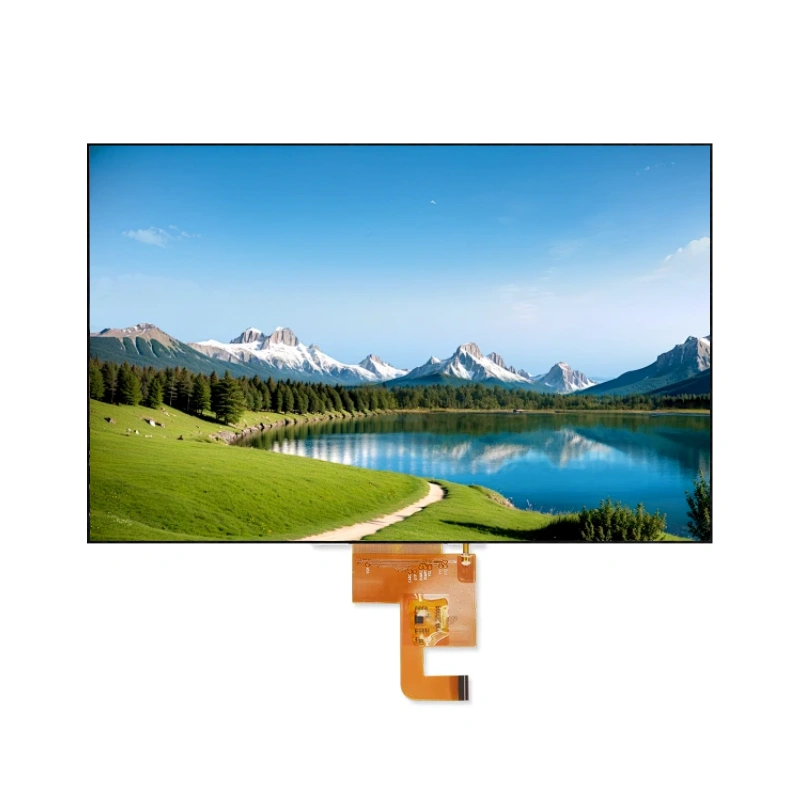
TFT LCD stands for Thin-Film Transistor Liquid Crystal Display. The name tells you what’s inside: a layer of liquid crystal sandwiched between two glass substrates, with a thin-film transistor array on the bottom glass that controls each pixel individually.
Think of it this way: each pixel has its own tiny switch (the transistor). When the switch is turned on, it creates an electric field that twists the liquid crystal molecules. That twisting changes how light passes through, and with a color filter on top, you get a full-color image.
The key thing to understand is that an LCD doesn’t produce its own light. It needs a backlight—usually LEDs—shining through from behind. That’s both its biggest weakness (constant power draw) and its biggest advantage (you can make it incredibly bright).
TFT is the active-matrix version of LCD, meaning each pixel is controlled independently. This gives you faster response times, no flicker, and much better image quality than the older passive-matrix LCDs you might remember from early laptops.
Where It Excels
Reliability. Industrial-grade TFT LCDs are rated for 50,000 to 100,000+ hours of continuous operation. That’s 5 to 11 years of 24/7 use.
Temperature tolerance. Industrial TFT modules operate from -30°C to +85°C. Some extended-range versions go from -40°C to +90°C. That covers pretty much any industrial environment you can think of.
No burn-in. LCDs use inorganic materials. You can leave a static HMI screen on for years and it won’t leave a permanent ghost image.
Cost. TFT LCDs are cheaper than OLEDs—typically 40-60% less for custom sizes. The supply chain is mature and established.
Brightness. You can get TFT LCDs with 1000+ nits of brightness—some custom units go up to 2300 nits. That makes them readable in direct sunlight, though at the cost of higher power consumption.
Size range. From 0.66 inches to 65 inches. You can find a TFT LCD for almost any industrial display need.
Where It Falls Short
전력 소비량. The backlight is always on. A 32-inch LCD in static display mode pulls about 34W. That’s fine if you’re plugged into the wall. It’s a problem if you’re running on batteries.
Black levels. Because the backlight is always on, you can’t get true black. The best you can do is a dark gray.
Sunlight readability requires power. To make an LCD readable outdoors, you need a high-brightness backlight, which means even more power draw.
Viewing angles. Even with IPS technology, LCDs shift color and contrast when viewed from extreme angles.
Where You See It
- HMI panels and operator terminals
- Medical diagnostic displays
- Industrial control and measurement equipment
- Automotive dashboards and infotainment
- Aerospace instrumentation
- Transportation information displays
Jictech offers a full range of TFT LCD modules from 0.66″ to 65″, with industrial-grade temperature ranges and customization options. Learn more at https://jiclcd.com/tft-lcd-module/ . For industrial-specific applications, see https://jiclcd.com/industrial-display/ . Jictech also provides automotive-grade displays (https://jiclcd.com/automotive/ ), medical-grade modules with ISO 13485 certification (https://jiclcd.com/medical-display/ ), and aerospace-grade displays meeting MIL-STD-810G standards (https://jiclcd.com/aerospace-displays/ ).
OLED: The Visual Performer
작동 방식
OLED stands for Organic Light Emitting Diode.
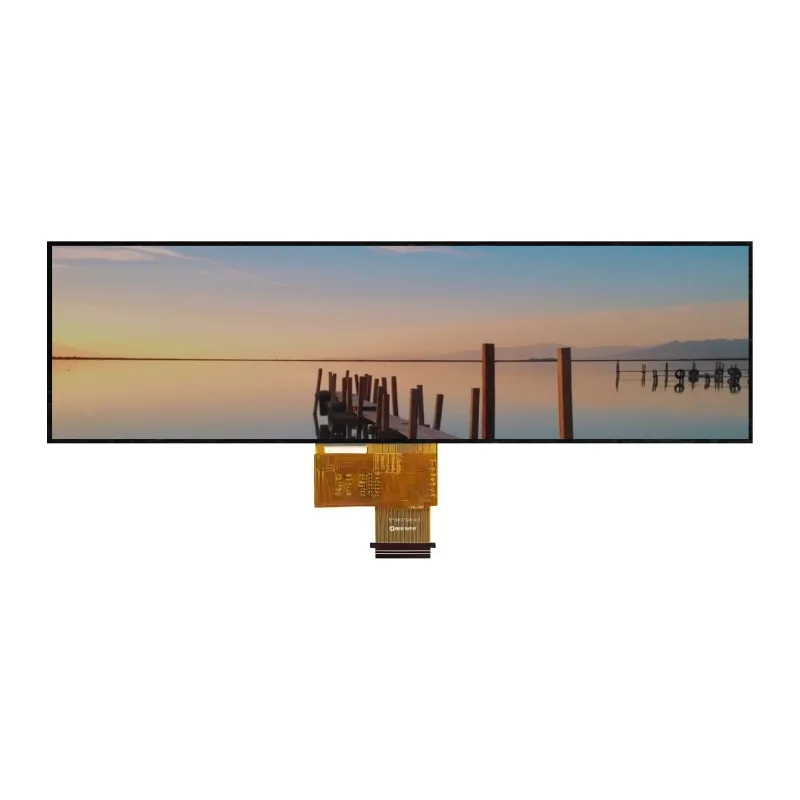
Instead of using a backlight and liquid crystals to block or pass light, each pixel in an OLED display is its own light source. The organic compounds inside each pixel emit light when current flows through them.
This is the fundamental difference: LCD is like shining a flashlight through a stained-glass window. OLED is like having thousands of tiny light bulbs, each one individually controllable.
When an OLED pixel needs to show black, it simply turns off. No light, no glow, no backlight bleed. That’s why OLEDs have what people call “infinite contrast.”
The organic materials are sandwiched in layers—a cathode, an electron injection layer, an emissive layer, a hole transport layer, and an anode. When voltage is applied, electrons and holes meet in the emissive layer and produce light.
Where It Excels
Image quality. Perfect blacks, infinite contrast ratio, vibrant colors. Nothing else comes close.
Response time. Microseconds, compared to milliseconds for LCD. No motion blur, no ghosting on fast-moving content.
Thinness. No backlight means OLEDs can be less than 1mm thick.
Flexibility. OLEDs can be manufactured on flexible substrates, enabling curved or even foldable displays.
Viewing angles. Nearly 180 degrees with no color shift.
Power efficiency (sometimes). When displaying dark content—where most pixels are off—OLED consumes less power than LCD.
Cold temperature performance. OLEDs work well at -40°C.
Where It Falls Short
Burn-in. This is the big one. OLED pixels use organic materials that degrade over time. If a static image stays on the screen long enough—like a logo or a status bar on an HMI—those pixels wear out faster than the surrounding ones and leave a permanent ghost image. In industrial applications where displays often show the same screen for weeks or months, this is a real problem. Some OLED modules use pixel-shifting and compensation algorithms to reduce the risk, but it’s never eliminated entirely.
Lifespan. OLEDs are typically rated for 20,000 to 30,000 hours. That’s about 2.5 to 3.5 years of 24/7 operation. For many industrial applications, that’s not enough.
Temperature range. Consumer OLEDs are rated for -10°C to +60°C. Extended-range industrial OLEDs exist but are less common and more expensive.
Cost. OLEDs are more expensive to manufacture. A custom 7-inch OLED module can cost $1,200 to $3,000, compared to $300 to $800 for an equivalent LCD.
햇빛 아래에서도 가독성. OLEDs are emissive, not reflective. In bright sunlight, they struggle to compete with ambient light.
Limited industrial ecosystem. OLEDs don’t have the same breadth of industrial certifications (IATF 16949, ISO 13485, etc.) as LCDs.
Where You See It
- High-end industrial and precision instrumentation
- Automotive instrument clusters and infotainment
- Premium medical monitoring equipment
- Wearable industrial devices
- Consumer electronics and smart home devices
- Premium digital signage
Jictech offers OLED display modules from 0.66″ to 3.12″, supporting monochrome, dual-color, and full-color configurations. Visit https://jiclcd.com/oled/ for more information. Jictech’s OLED modules are available for consumer electronics applications at https://jiclcd.com/consumer-electronics-displays/ .
E-Paper: The Power-Sipping Specialist
작동 방식
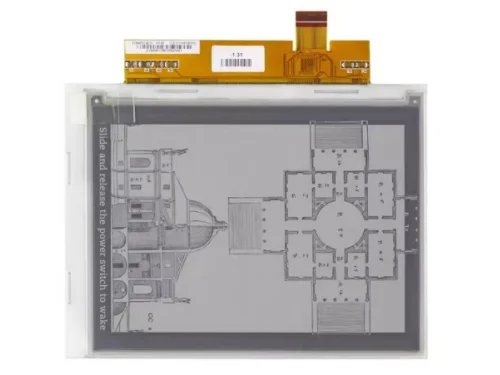
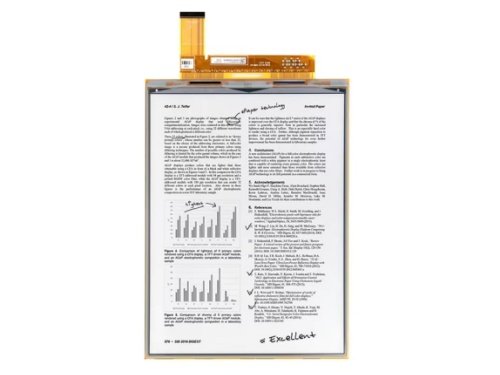
E-Paper uses electrophoretic display (EPD) technology.
Inside each pixel are microcapsules—tiny spheres about the width of a human hair—filled with a clear fluid. Suspended in that fluid are positively charged white particles and negatively charged black particles.
When you apply a voltage, the particles move. Positive voltage pulls the black particles to the top and the white particles to the bottom. Negative voltage does the opposite. The particles stay where they are even after you remove the voltage.
That’s the key property: 이중안정성. The display holds its image with zero power once it’s set. Power is only consumed when the image changes.
E-Paper is also 반사성. It uses ambient light—like a printed page—rather than generating its own light. The brighter the environment, the easier it is to read.
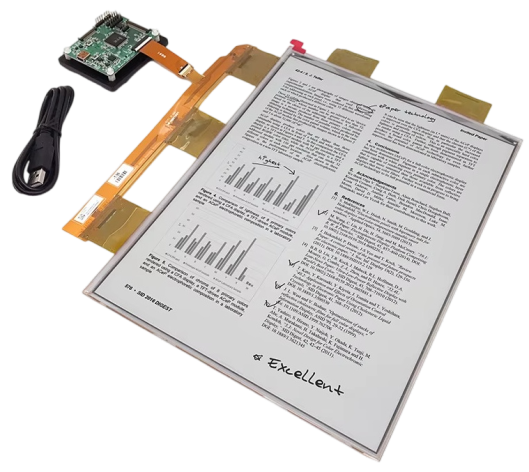
Where It Excels
전력 소비량. This is the headline feature. E-Paper consumes less than 1/230 of LED power, less than 1/60 of LCD power, and less than 1/35 of OLED power. In static display, a 32-inch e-paper screen draws about 0.4W (and that’s mostly the controller electronics—the display itself draws zero). An equivalent LCD draws 34W.
햇빛 아래에서도 가독성. E-Paper is at its best in bright light. No glare, no washout—it just looks like paper in the sun.
Bistability. The image stays even when power is removed. If a safety warning says “DANGER” and the battery dies, that message stays visible.
No burn-in. E-Paper uses inorganic particles. No degradation, no ghosting, no permanent image retention.
Longevity. E-Paper modules have long operational lifespans with no organic material to degrade.
Flexibility. E-Paper can be manufactured on flexible substrates.
Wide temperature options. Industrial E-Paper modules are available from -20°C to 70°C, with extended-range versions from -40°C to 85°C.
Where It Falls Short
Refresh rate. Monochrome E-Paper refreshes in about 0.3 to 1 second. Color E-Paper takes 1.5 to 2 seconds. You’re not watching video on this thing.
색상. Color E-Paper exists and is improving, but it doesn’t match LCD or OLED for saturation or gamut.
Temperature sensitivity. Cold temperatures slow down refresh and reduce contrast. Temperature-compensated waveforms help, but the effect is still there.
Cost. E-Paper modules are more expensive than equivalent LCDs, though the total cost of ownership (especially power savings) can make them cheaper over time.
Where You See It
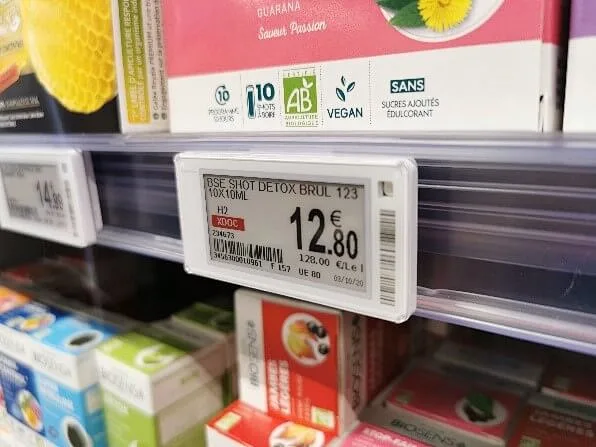
- Electronic shelf labels and retail signage
- Warehouse and logistics labeling
- Production line work-in-progress tags
- Asset tracking and inventory management
- Industrial status displays
- Outdoor public information displays(bus stops, etc.)
- Smart tags and IoT devices
- 의료 기기
Jictech offers E-Paper display modules from 1.54″ to 13.3″, supporting monochrome, three-color(black/white/red or black/white/yellow), and 16-level grayscale. Visit https://jiclcd.com/e-paper/ for detailed specifications and customization options.
Side by Side: The Numbers That Matter
| 기능 | TFT LCD | OLED | 전자 종이 |
|---|---|---|---|
| 작동 방식 | 액정 + 백라이트 | Organic materials self-emit | Electrophoretic particles reflect light |
| Static power | Moderate(backlight always on) | Low(dark content advantage) | Near zero(0W to hold image) |
| 햇빛 가독성 | Fair(needs high brightness) | 공정 | 우수 |
| 대비 | Good | 우수 | Good |
| 새로 고침 속도 | Fast(milliseconds) | Very fast(microseconds) | Slow(0.3-2 seconds) |
| 색상 | 우수 | Superior | 제한적 |
| Lifespan(24/7) | 50,000-100,000+ hours | 20,000-30,000 hours | Long |
| 번인 위험 | 없음 | High with static images | 없음 |
| Temp range(industrial) | -30°C ~ +85°C | -10°C to +60°C(typical) | -20°C to +70°C(extended -40°C to +85°C) |
| 사이즈 범위 | 0.66″ to 65″+ | 0.66″ to 3.12″(typical) | 1.54″ to 13.3″ |
| Cost(custom 7″) | $300-800 | $1,200-3,000 | 보통 |
| Industrial certs | Extensive(IATF, ISO) | 제한적 | Growing |
| 가장 적합한 대상 | Dynamic content, reliable 24/7 | Premium image quality | Static content, battery power |
There’s no clear winner across all categories. Each technology leads in some areas and lags in others. The right choice depends entirely on your application.
Making the Choice: Real Scenarios
Scenario 1: Warehouse Shelf Labels
Your displays need to show product codes and quantities. They update a few times a day. They run on batteries that should last years. The warehouse has harsh lighting.
Recommendation: E-Paper
E-Paper’s near-zero static power means battery life measured in years, not months. It’s readable under harsh lighting. It holds the last image even if the battery dies. It’s a perfect fit.
Scenario 2: Factory HMI Control Panel
Your display needs to show real-time machine data, update every second, run 24/7 for years, and survive a hot, dusty factory floor.
Recommendation: TFT LCD
TFT LCD’s 50,000+ hour lifespan, wide temperature tolerance, no burn-in risk, and proven industrial reliability make it the safe choice. You need something that just works, day after day, year after year.
Scenario 3: Premium Medical Monitoring Display
Your display needs exceptional image quality for diagnostic imaging. It’s in a controlled environment. The device has a premium price point.
Recommendation: OLED or high-end LCD
If image quality is the priority and budget allows, OLED’s contrast and color are unmatched. For a more conservative approach with longer proven lifespan, a high-end medical-grade LCD works too.
Scenario 4: Outdoor Equipment Status Indicator
Your display shows equipment status in direct sunlight. It updates a few times an hour. It’s solar-powered.
Recommendation: E-Paper
Nothing beats E-Paper in sunlight. And with near-zero power consumption, it can run on solar indefinitely.
Scenario 5: Automotive Dashboard
Your display needs to look premium, work in extreme temperatures, last the life of the vehicle, and show dynamic content.
Recommendation: TFT LCD(mainstream)or OLED(premium)
Most automotive applications use TFT LCD because of proven reliability and temperature tolerance. Premium vehicles are adopting OLED for the visual impact, but they have to manage the burn-in risk carefully.
Scenario 6: Aerospace HMI
Your display needs to survive extreme temperature swings, vibration, and shock. Failure is not an option.
Recommendation: TFT LCD(ruggedized)
TFT LCDs with MIL-STD-810G certification are proven in aerospace applications. The technology is mature, the supply chain is reliable, and the performance is predictable.
Scenario 7: Consumer Smart Home Device
Your display needs to be thin, look good, and handle occasional use.
Recommendation: OLED or small LCD
OLED’s thinness and image quality work well in consumer products. Small LCDs are more cost-effective for budget-conscious designs.
A Few More Things to Consider
Total Cost of Ownership
The upfront cost of the display is only part of the story. Consider:
- Power costs. An E-Paper display that runs on a battery for years versus an LCD that needs wiring or frequent battery changes.
- Maintenance costs. Replacing an OLED that burns out after three years versus an LCD that runs for ten.
- Installation costs. Running power to a display versus mounting a battery-powered unit.
Supply Chain and Longevity
Industrial products often have long lifecycles—five, ten, even fifteen years. LCDs have mature, stable supply chains. You can typically source replacement panels years after the original design. OLEDs are more consumer-focused, with shorter product cycles.
인증
If your product needs IATF 16949(automotive), ISO 13485(medical), or other industrial certifications, LCDs have a proven track record. OLEDs are catching up, but the ecosystem is less mature.
결론
There’s no universal “best” display technology for industrial applications.
- TFT LCD is the reliable workhorse. It’s the safest choice for most industrial applications—proven, durable, and cost-effective.
- OLED delivers unmatched image quality but comes with trade-offs in lifespan and burn-in risk. Use it where visuals matter more than longevity.
- 전자 종이 is the specialist for low-power, static-content applications. Use it where battery life and sunlight readability are critical.
The right question isn’t “which is best?” It’s “which fits my specific requirements?”
Get clear on what you actually need—power budget, environment, content type, lifespan, and cost—and the choice becomes a lot clearer.
Jictech supports all three technologies with custom display modules tailored to industrial applications. Whether you need a rugged TFT LCD for a factory HMI, a high-contrast OLED for medical imaging, or an ultra-low-power E-Paper module for a warehouse labeling system, we can develop a solution that fits your project. Visit https://jiclcd.com/ to explore our full range of display solutions.
자주 묻는 질문
TFT LCDs are generally the most durable for industrial use, with 50,000–100,000+ hour lifespans, wide temperature ranges(-30°C to +85°C), and no burn-in risk.
Yes, for specific use cases like work-in-progress tags, production status displays, and warehouse labeling. It’s not suitable for HMIs that need fast refresh or dynamic content.
A 32-inch E-Paper display draws about 0.4W in static mode(mostly controller power), while an equivalent LCD draws 34W. E-Paper consumes less than 1/60 of LCD power.
OLEDs struggle in direct sunlight because they’re emissive, not reflective. They also have narrower temperature ranges than industrial LCDs. For outdoor applications, E-Paper or high-brightness LCDs are better choices.
If the display updates frequently or shows dynamic content, choose LCD. If it shows static content that changes infrequently, choose E-Paper—it will extend battery life from months to years.
TFT LCD: 50,000–100,000+ hours. OLED: 20,000–30,000 hours. E-Paper: Long lifespan with no organic degradation, though specific ratings vary by module.
Yes. Jictech provides custom TFT LCD, OLED, and E-Paper display modules with tailored specifications including size, resolution, interface, temperature range, and form factor. Contact us to discuss your project requirements.