








introduction
Si vous êtes allé récemment dans un supermarché et que vous avez remarqué que les étiquettes de prix avaient l'air un peu différentes — plus nettes, plus propres, d'un aspect plus uniforme —, vous avez probablement vu une étiquette électronique sans vous en rendre compte.
Le secteur de la grande distribution connaît actuellement une révolution discrète en matière d'affichage. Et au cœur de cette révolution se trouve la technologie du papier électronique.
Voyons ce qui se passe au niveau des bords des rayons, ce qui fait son apparition sur les murs, et pourquoi les commerçants opèrent ce changement.
Pourquoi les commerçants se tournent vers le papier électronique
Avant d'aborder les applications spécifiques, il est utile de comprendre ce qui rend le papier électronique si attractif pour les commerçants.
Consommation électrique. Un écran à encre électronique ne consomme de l'énergie que lorsque l'image change. Une fois l'image affichée, il la conserve sans aucune consommation d'énergie. Comparez cela à un écran LCD qui nécessite un rétroéclairage constant, et la différence est spectaculaire.
Lisibilité en plein soleil. Le papier électronique est réfléchissant : il utilise la lumière ambiante pour afficher une image, tout comme le papier classique. Plus l'environnement est lumineux, plus la lecture est aisée. C'est un atout dans les espaces commerciaux dotés de grandes baies vitrées ou d'un éclairage zénithal intense, où les écrans traditionnels perdent de leur contraste.
L'aspect papier. L'e-paper a quelque chose qui s'intègre parfaitement dans un magasin. Il ne crie pas “ numérique ” à tout va. Il se fond discrètement dans le décor, sur une étagère ou au mur, et remplit sa fonction sans détourner l'attention des produits.
Développement durable. Moins de gaspillage de papier, une consommation d'énergie réduite, moins de piles à remplacer au fil du temps. Pour les commerçants soumis à la pression d'atteindre leurs objectifs ESG, tout cela compte.
Étiquettes électroniques de rayon : la transformation des bords de rayon
Qu'est-ce qu'un ESL ?
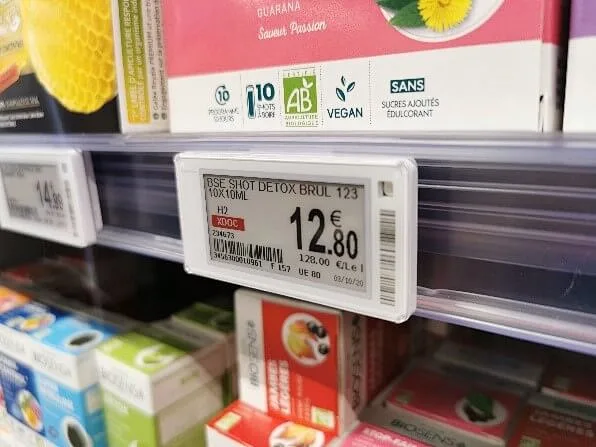
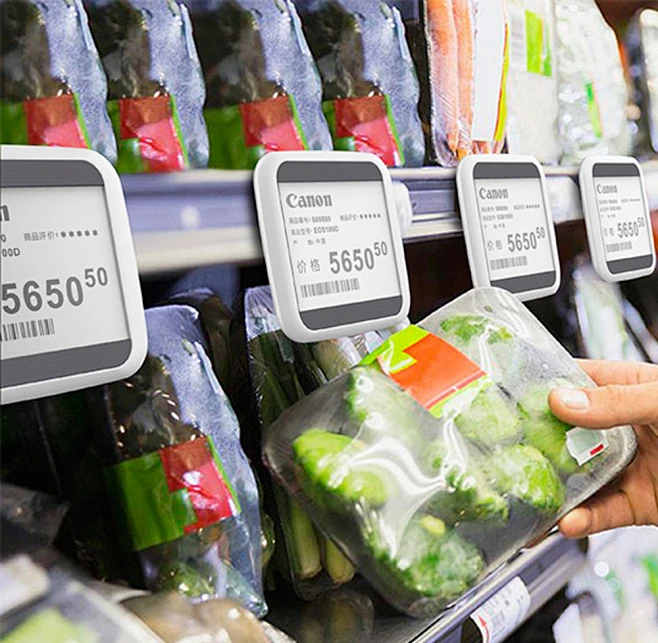
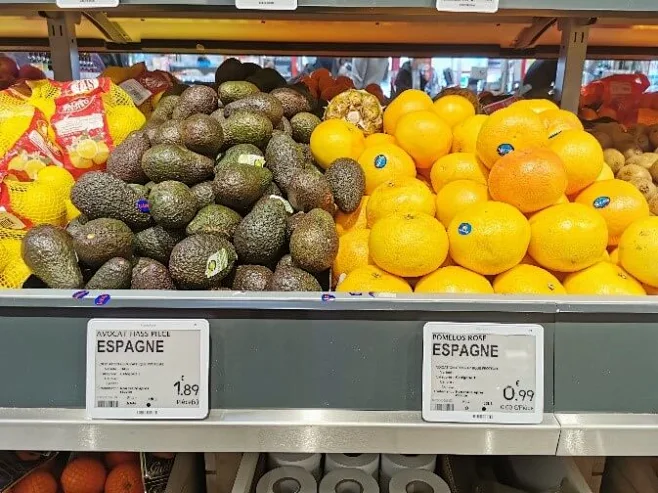
Une étiquette électronique de rayon, c'est exactement ce que son nom indique : une petite écran e-paper qui est placé au bord d'un rayonnage de magasin et qui affiche le prix et les informations relatives à l'article situé juste au-dessus.
Mais il ne s'agit pas simplement d'un écran. C'est un système complet : un module d'encre électronique, une puce de communication sans fil et une batterie dont l'autonomie s'étend sur plusieurs années. L'ensemble est relié à un système de gestion centralisé qui permet au commerçant de mettre à jour simultanément toutes les étiquettes du magasin.
Les chiffres parlent d'eux-mêmes
Le marché de l'ESL connaît une croissance rapide. En 2025, il était évalué à environ $1,97 milliard. D'ici 2030, ce chiffre devrait atteindre $3,78 milliards, avec un taux de croissance annuel composé de 13,9%. D'autres estimations tablent sur une croissance encore plus forte : certaines prévoient que le marché passera de $2,17 milliards en 2025 à $4,8 milliards d'ici 2030, pour atteindre $10,8 milliards d'ici 2035.
Quelles sont les raisons de cette évolution ? L'automatisation du commerce de détail, la tendance à l'omnicanal et le simple fait que les commerçants en ont assez du papier.
Un chiffre retient particulièrement l'attention : les écrans à encre électronique ont représenté 64% de la demande en étiquettes électroniques (ESL) en 2025. Les détaillants privilégient l'encre électronique en raison de sa faible consommation d'énergie et de sa capacité à conserver une image sans apport d'énergie continu.
Ce que les cours d'anglais langue seconde apportent réellement
Le temps. Auparavant, la mise à jour des étiquettes papier dans un magasin prenait deux jours. Grâce aux étiquettes électroniques (ESL), cela ne prend plus que quelques minutes. Un propriétaire de supermarché a ainsi économisé jusqu’à 50 heures de travail par semaine après avoir adopté ce système.
Travail. East of England Co-op a déployé des étiquettes électroniques (ESL) dans environ 40% de ses magasins et a réduit ses coûts d'impression de 50%. Ce même détaillant a économisé 1 million de livres sterling en coûts de main-d'œuvre dès la première année. Company Shop, un supermarché britannique spécialisé dans les invendus, a constaté une amélioration de 5% de sa productivité après le déploiement des étiquettes électroniques.
Précision. Fini les erreurs de prix dues à des étiquettes mal imprimées ou mal comptées. Les mises à jour sont centralisées et automatisées.
Tarification dynamique. Les commerçants peuvent modifier leurs prix en temps réel, que ce soit dans le cadre de promotions, de soldes ou pour s'aligner sur les prix de la concurrence.
Qui s'en charge ?
La liste des commerçants qui adoptent les étiquettes électroniques ne cesse de s'allonger.
Morrisons déploie actuellement 10,8 millions d'étiquettes électroniques (ESL) dans l'ensemble de ses 497 supermarchés au Royaume-Uni, devenant ainsi le premier grand groupe de supermarchés britannique à passer entièrement au numérique au niveau des rayons.
Tesco va déployer des étiquettes électroniques (ESL) dans l'ensemble de ses magasins au cours des deux prochaines années, en collaboration avec la société chinoise Hanshow, afin de réduire les coûts de main-d'œuvre et d'améliorer la précision des prix.
Waitrose déploie actuellement des ESL à l'échelle nationale en collaboration avec SOLUM, la fin des travaux étant prévue pour 2026.
Walmart a été l'un des principaux moteurs de l'adoption des étiquettes électroniques (ESL). Le distributeur a annoncé son intention de déployer des étiquettes électroniques dans 2 300 magasins à travers le monde. Rien qu’au premier semestre 2025, les livraisons de modules d’étiquettes électroniques ont totalisé 324 millions d’unités, soit une hausse de 244,41 TP3T par rapport à l’année précédente.
Décathlon a équipé 700 magasins d'étiquettes de rayon connectées.
Coopérative du Lincolnshire investit 4 millions de livres sterling pour déployer des étiquettes électroniques en rayon dans l'ensemble de ses 100 magasins d'alimentation.
Carrefour prévoit de numériser l'ensemble de ses hypermarchés et supermarchés en France d'ici 2030, les étiquettes électroniques (ESL) constituant un élément clé de ce projet.
Le bilan du retour sur investissement
La plupart des détaillants amortissent leur investissement dans les étiquettes électroniques (ESL) en 18 à 24 mois. Une étude de Forrester a révélé que la solution ESL de Pricer offrait un retour sur investissement sur cinq ans de 277%. À elles seules, les économies de main-d’œuvre représentent généralement entre 60% et 90% du temps auparavant consacré au remplacement des étiquettes.
Pour un supermarché de taille moyenne, cela se traduit par un gain de temps de 45 à 50 heures par semaine, soit l'équivalent de plus d'un salarié à temps plein.
Affichage numérique sur papier électronique : au-delà du bord de rayon
Les étiquettes électroniques ne sont qu'un début. Les commerçants s'intéressent désormais au reste du magasin.
Le problème du papier et des écrans LCD
La signalétique sur papier est statique. On l'imprime, on l'affiche, et si l'on souhaite la modifier, il faut en imprimer une autre et l'afficher à la place. C'est source de gaspillage et cela prend du temps.
L'affichage LCD est dynamique, mais il est gourmand en énergie. Il nécessite une alimentation électrique constante pour le rétroéclairage, génère de la chaleur et nécessite un entretien. Pour une affiche qui ne doit être changée qu'une fois par jour ou par semaine, l'écran LCD est une solution excessive.
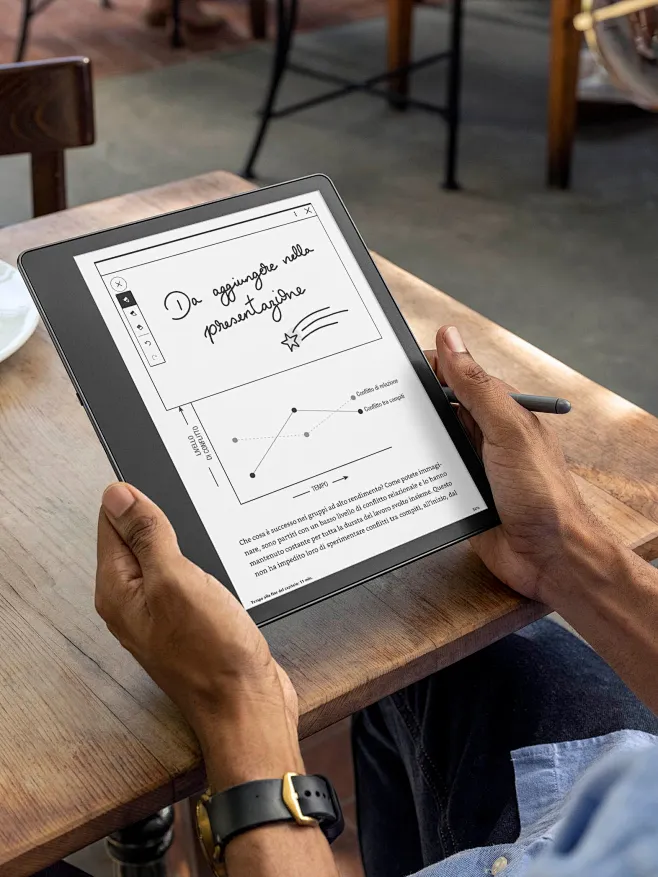
Le papier électronique occupe une position intermédiaire. Il est suffisamment dynamique pour être mis à jour à distance, mais ne consomme de l'énergie que lorsqu'il change d'affichage. Il ressemble à du papier, se lit comme du papier et ne produit pas d'éblouissement sous l'éclairage des magasins.
La couleur change tout
Le papier électronique en noir et blanc convient très bien pour les étiquettes de prix. Mais pour la signalétique, les commerçants préfèrent la couleur.
E Ink Spectra 6 est la plateforme spécialement conçue à cet effet. Elle offre une gamme de 60 000 couleurs et un rapport de contraste pouvant atteindre 30:1. De nature réfléchissante, elle permet une lecture aisée en pleine lumière et offre un angle de vision de près de 180 degrés.
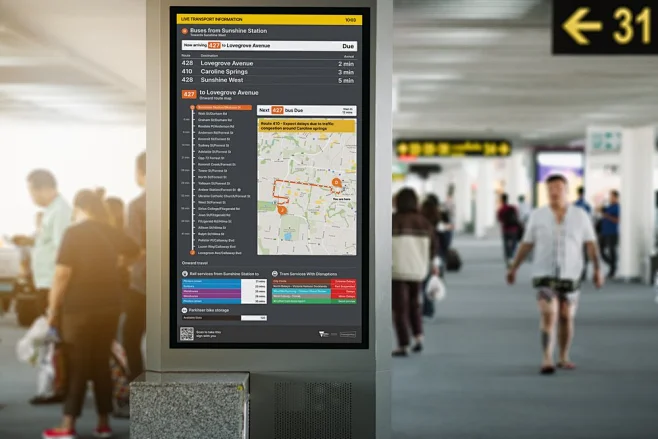
Cette technologie s'est rapidement développée. E Ink propose désormais une Écran Spectra 6 de 75 pouces— le plus grand module d'écran électronique couleur à ce jour. Il est conçu pour remplacer les affiches statiques dans les cadres existants, transformant ainsi les espaces inutilisés en supports publicitaires dynamiques, sans les coûts énergétiques liés à un écran LCD.
Samsung s'est lancé sur ce marché avec un écran en papier électronique couleur de 32 pouces, basé sur la technologie Spectra 6, capable de fonctionner pendant 200 jours avec une seule charge. LG a également lancé un écran en papier électronique à très faible consommation d'énergie destiné aux espaces commerciaux.
Où le trouver dans le magasin
Présentoirs d'extrémité et espaces promotionnels. Les zones très fréquentées où les messages changent souvent. Un affichage mis à jour à distance, c'est fini le temps où il fallait courir partout avec une pile d'affiches et un pistolet à ruban adhésif.
Panneaux de menu. Les restaurants et les enseignes de restauration peuvent modifier instantanément leurs prix et leurs menus dans tous leurs établissements.
Espaces de vente et de caisse. Messages promotionnels, opportunités de vente incitative, inscriptions au programme de fidélité : tout cela est présenté sur un présentoir qui ne fait pas concurrence à l'emballage du produit pour attirer l'attention.
Rayons de la chaîne du froid et des surgelés. La technologie « e-paper » fonctionne à basse température, là où les écrans LCD peuvent rencontrer des difficultés. Elle convient donc parfaitement aux portes de congélateurs affichant des prix numériques et des contenus promotionnels.
Fenêtres et vitrines. Des présentoirs pouvant être mis à jour en dehors des heures d'ouverture, afin d'afficher les nouvelles promotions avant l'ouverture du magasin.
Le réseau unifié de présentoirs en magasin
C'est là que ça devient intéressant. Les systèmes ESL et l'affichage numérique ne doivent pas nécessairement être des systèmes distincts.
Une seule plateforme de gestion de contenu permet de diffuser simultanément les mises à jour des prix sur les étiquettes de rayon et les contenus promotionnels sur la signalétique en magasin. Lorsqu’une promotion est lancée, le prix change sur le rayon et le message marketing s’affiche sur le présentoir de bout d’allée — exactement au même moment, sans aucune intervention manuelle.
C'est ce que les commerçants entendent par “ magasins connectés ”. Il ne s'agit pas d'une technologie en particulier, mais d'un réseau d'écrans qui fonctionnent de concert.
Morrisons intègre déjà ses étiquettes électroniques (ESL) à des caméras numériques installées au niveau des rayons, qui signalent aux employés les produits en rupture de stock. Les données issues des mises à jour des prix sont intégrées au système de gestion des stocks. La signalétique reflète les niveaux de stock en temps réel. Tout est interconnecté.
L'angle du développement durable
C'est plus important qu'avant.
Les détaillants sont soumis à une forte pression pour réduire leurs déchets, diminuer leurs émissions de carbone et atteindre leurs objectifs ESG. Le papier électronique leur apporte une aide précieuse sur ces trois fronts.
Moins de papier. Une seule épicerie peut utiliser des dizaines de milliers d'étiquettes imprimées par an. Les étiquettes ESL permettent d'éliminer complètement ce besoin.
Moins d'énergie. Un écran à encre électronique ne consomme aucune énergie pour afficher une image. Par rapport aux écrans LCD, l'encre électronique d'E Ink est environ 12 000 fois plus efficace en termes d'émissions de CO₂. Par rapport aux affiches en papier traditionnelles, elle est 60 000 fois plus efficace.
Moins de déchets. Les piles des étiquettes ESL ont une durée de vie de plusieurs années. Certains systèmes adoptent même des étiquettes ESL alimentées par la lumière, ce qui permet de se passer complètement des piles jetables.
E Ink s'est engagée à utiliser 100% d'énergie renouvelable d'ici 2030 et à atteindre la neutralité carbone d'ici 2040. Pour les détaillants qui ont pris leurs propres engagements en matière de développement durable, il est logique de travailler avec des fournisseurs qui partagent ces objectifs.
Comment choisir le module d'écran à encre électronique adapté au secteur de la vente au détail
Si vous êtes développeur de produits ou responsable des achats et que vous recherchez des modules d'écran à encre électronique pour une application destinée au commerce de détail, voici les éléments à prendre en compte.
Taille. Les écrans ESL mesurent généralement entre 1 et 5 pouces. Les écrans d'affichage numérique vont de 7 pouces à 75 pouces. Choisissez la taille en fonction de la distance de visionnage et de la quantité d'informations que vous souhaitez afficher. Les formats courants sont notamment 1,54″, 2,13″, 2,66″, 2,9″, 4,2″, 5,83″, 7,5″, 10,2″ et 13,3″, mais des formats personnalisés sont disponibles selon les fabricants.
Couleur. Le noir et blanc convient parfaitement pour l'affichage des prix. Une combinaison de trois couleurs (noir, blanc, rouge) ou de noir, blanc et jaune renforce l'impact promotionnel. L'impression en couleur devient une option viable pour la signalétique, mais elle est plus coûteuse et son renouvellement est plus lent. Des options en niveaux de gris à 16 niveaux sont également disponibles pour les applications nécessitant un rendu plus fin des détails de l'image.
Fréquence de rafraîchissement. Un écran ESL qui change une fois par jour n'a pas les mêmes exigences qu'un écran d'affichage qui se met à jour toutes les heures. Le rafraîchissement standard dure environ 0,3 à 1 seconde. Le rafraîchissement rapide prend en charge les mises à jour partielles, tandis que le rafraîchissement ultra-rapide permet de gérer des animations simples. Des mises à jour plus fréquentes entraînent une consommation d'énergie plus importante et une durée de vie de la batterie plus courte.
Environnement. Intérieur ou extérieur. Plage de températures. Humidité. Les environnements de vente au détail varient considérablement. Les modules de qualité industrielle fonctionnent généralement entre -20 °C et 70 °C, avec des options étendues allant de -40 °C à 85 °C pour les conditions les plus exigeantes.
Connectivité. Quel protocole sans fil votre système utilise-t-il ? Les interfaces SPI, I²C et parallèles sont des choix courants. Le module doit s'intégrer à votre infrastructure existante.
Format et structure. Rigide, souple ou pliable ? Le papier électronique souple est particulièrement adapté aux appareils portables, aux cartes à puce et aux surfaces courbes. Certaines applications dans le secteur de la grande distribution tirent parti de modules ultra-minces, de découpes de formes irrégulières ou de couches tactiles et d'éclairage frontal intégrées.
Fonctionnalités supplémentaires. Des capteurs de température intégrés permettent de préserver la qualité d'affichage malgré les variations de température. Le contrôle du rafraîchissement partiel réduit la consommation d'énergie. La mémoire flash intégrée permet de stocker des images localement.
Collaborer avec un fabricant de modules
Tous les fournisseurs de modules d'écran à encre électronique ne se valent pas. Voici les critères à prendre en compte :
Possibilités de personnalisation. Le fabricant est-il en mesure d'adapter le module à vos exigences spécifiques en matière de dimensions, de résolution, d'interface et de forme ? Un fabricant intégré verticalement peut prendre en charge des personnalisations que d'autres ne sont pas en mesure de réaliser.
Assistance technique. Proposent-ils une assistance technique tout au long de votre cycle de développement ? Une assistance technique complète permet de gagner du temps et d'éviter des erreurs coûteuses.
Flexibilité en termes de volume. Que vous meniez un projet pilote à petite échelle ou que vous passiez à la production de masse, le fournisseur doit s'adapter à vos besoins.
Délais de livraison et réactivité. Un fournisseur qui vous propose un devis sur mesure dans les 24 heures montre qu'il prend votre projet au sérieux.
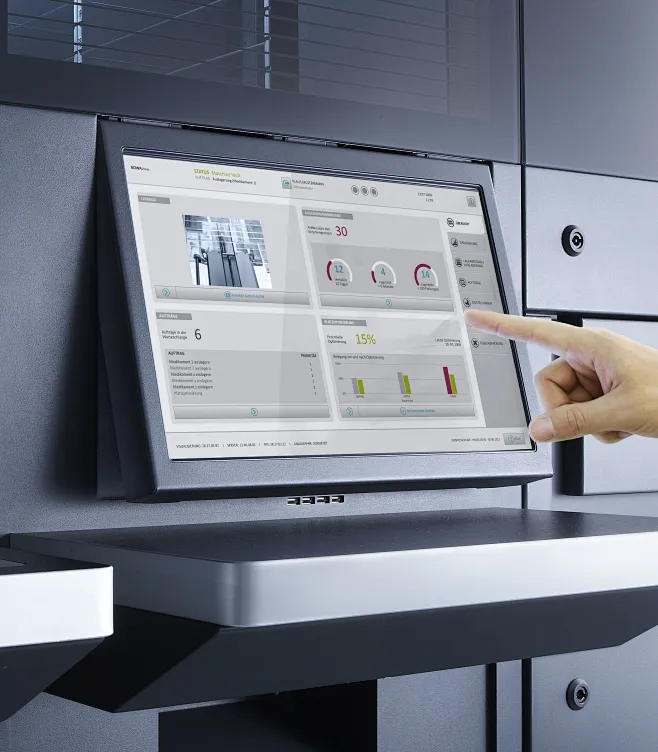
Chez Jictech, nous concevons et fabriquons des modules d’affichage à encre électronique sur mesure destinés aux applications de vente au détail, allant des étiquettes électroniques aux affichages numériques en magasin. Nous proposons une personnalisation poussée sur l’ensemble des paramètres techniques : taille, résolution, couleur, vitesse de rafraîchissement, interface, plage de température et format. Que vous ayez besoin d’un module ESL standard de 2,9 pouces ou d’un écran de forme sur mesure pour un présentoir incurvé, nous pouvons développer une solution adaptée à votre projet. Nous proposons également des options tactiles intégrées (infrarouge ou capacitives) pour les applications interactives en magasin.
Vous pouvez découvrir ici notre gamme complète de modules d'affichage à encre électronique ainsi que leurs caractéristiques techniques : https://jiclcd.com/e-paper/ .
Où cela va-t-il nous mener ?
Quelques tendances à suivre :
Des écrans couleur plus grands. Le Spectra 6 de 75 pouces n'est qu'un début. À mesure que la taille des écrans à encre électronique couleur augmentera, ceux-ci commenceront à remplacer les affichages plus traditionnels dans les commerces.
Papier électronique souple. Des écrans fins et flexibles, capables de s'enrouler autour de colonnes ou de s'intégrer dans des structures courbes. L'aménagement des magasins s'annonce de plus en plus intéressant.
Intégration de l'IA. Les ESL connectés à des systèmes de tarification basés sur l'IA qui ajustent les prix en temps réel en fonction de la demande, de la concurrence et des niveaux de stock.
Le développement durable, un facteur de différenciation. Les détaillants commencent à mettre en avant leur utilisation du papier électronique dans le cadre de leurs engagements environnementaux. Il ne s'agit plus seulement d'un choix opérationnel, mais aussi d'un choix stratégique pour leur image de marque.
Une adoption plus large. Le marché de l'ESL n'en est encore qu'aux prémices de sa croissance. À mesure que les coûts baisseront et que la technologie s'améliorera, de plus en plus de commerçants l'adopteront. La question n'est pas de savoir si le papier électronique deviendra la norme dans le commerce de détail, mais quand.
En résumé
Le secteur de la grande distribution s'éloigne progressivement du papier et des écrans gourmands en énergie. Le papier électronique occupe une place intermédiaire : sa consommation d'énergie est suffisamment faible pour fonctionner pendant des années sur une seule batterie, il est suffisamment dynamique pour être mis à jour à distance, et sa lisibilité est suffisante pour fonctionner dans toutes les conditions d'éclairage.
Des étiquettes de rayon aux panneaux muraux, le papier électronique s'impose comme la technologie d'affichage de prédilection des commerçants qui souhaitent réduire leurs coûts, limiter le gaspillage et optimiser le fonctionnement de leurs magasins.
Si vous prévoyez de mettre en place un projet d'agencement de magasin et que vous souhaitez discuter des caractéristiques techniques des modules, nous sommes là pour vous aider. C'est notre métier.
FAQ
Un ESL est un écran à encre électronique installé sur le rebord d'un rayonnage de magasin et qui affiche les prix et les informations sur les produits. Il se connecte sans fil à un système central qui permet aux commerçants de mettre à jour simultanément toutes les étiquettes du magasin.
Un écran à encre électronique ne consomme aucune énergie pour maintenir une image et ne consomme de l'énergie que lors de la mise à jour. Par rapport aux écrans LCD, l'encre électronique d'E Ink est environ 12 000 fois plus efficace en termes d'émissions de CO₂.
Oui. Les plateformes d'e-paper couleur telles que l'E Ink Spectra 6 offrent une gamme de 60 000 couleurs avec des rapports de contraste pouvant atteindre 30:1. Des options à trois couleurs (noir, blanc et rouge ou jaune) sont également largement disponibles pour les applications de vente au détail.
Les piles des étiquettes électroniques (ESL) ont généralement une durée de vie de plusieurs années, en fonction de la fréquence de mise à jour de l'affichage. Certains systèmes plus récents s'orientent vers des étiquettes ESL alimentées par la lumière, ce qui permet de supprimer complètement les piles jetables.
Les étiquettes électroniques de rayon constituent l'application la plus courante. Au-delà de cela, le papier électronique est utilisé pour la signalétique promotionnelle, les panneaux de menus, les présentoirs de bout d'allée, la signalétique sur les portes de congélateurs, les vitrines et la signalétique d'orientation.
Oui. Des fabricants tels que Jictech proposent des options de personnalisation en termes de taille, de forme, de résolution, d'interface, de plage de température et de format, notamment l'e-paper flexible, la découpe de formes irrégulières, l'éclairage frontal intégré et les couches tactiles.