








In our increasingly digital world, displays are everywhere—from the smartphone in your pocket to the control panels in factories, hospitals, and transportation hubs. But not all screens are created equal. While the lcd display in your living room TV is designed for comfort and entertainment, the screens powering critical infrastructure demand an entirely different level of performance, durability, and reliability. This is where Industrial Displays come into play.
What Is Industrial Display Technology?
At its core, industrial display technology refers to screen solutions engineered specifically for demanding environments where standard consumer-grade panels would fail. These aren’t just bigger or brighter versions of home screens—they are fundamentally different in design, construction, and capability.
The backbone of most modern industrial screens is the tft lcd (Thin-Film Transistor Liquid Crystal Display) architecture. A tft display uses an active matrix of tiny transistors, with one transistor dedicated to each pixel. This allows for precise voltage control, resulting in faster response times, sharper images, and more consistent color reproduction compared to older passive matrix technologies.
When we talk about a tft lcd display, we’re describing a screen where every pixel is individually controlled. This is crucial in industrial settings where operators need to read precise data, monitor real-time processes, or interact with complex control interfaces. A tft lcd screen in an industrial context isn’t just about showing pictures—it’s about delivering mission-critical information without fail.
How TFT LCD Technology Works (In Simple Terms)
To understand why tft screen display technology dominates the industrial sector, it helps to know the basics of how it functions.
A standard lcd display works by using liquid crystals that twist and untwist to control the passage of light. But in a tft display, each pixel has its own dedicated transistor and capacitor. Think of it like having a personal light switch for every single dot on your screen, rather than controlling rows of lights all at once.
This active matrix approach means that when you look at a tft lcd screen, the image remains stable and clear even when the content changes rapidly. The transistors “remember” the state of each pixel between refreshes, eliminating ghosting and ensuring that critical readouts—like pressure gauges, temperature monitors, or navigation data—remain perfectly legible.
Key Characteristics of Industrial Display Technology
What truly separates Industrial Displays from their consumer counterparts? Let’s break down the defining characteristics:
1. Extreme Durability and Rugged Construction
Consumer lcd display panels are built for climate-controlled living rooms. Industrial tft lcd display units, on the other hand, must survive temperatures ranging from -20°C to 70°C, withstand constant vibration, resist dust and moisture ingress, and endure 24/7 operation for years without degradation.
The enclosures for industrial screens typically feature reinforced glass, anti-glare coatings, and shock-absorbing mounting systems. Many are rated IP65 or higher, meaning they can withstand direct water jets and complete dust protection.
2. Superior Readability in Any Lighting Condition
One of the most significant advantages of an industrial tft screen display is visibility. Factory floors, outdoor kiosks, and vehicle dashboards face wildly varying lighting conditions—from pitch-black environments to direct sunlight glare.
Industrial tft lcd panels address this through:
- High brightness outputs (often 1,000 nits or more, compared to 300-400 nits for consumer screens)
- Optical bonding that eliminates internal reflections
- Anti-reflective and anti-glare surface treatments
- Wide viewing angles that ensure readability from multiple positions
3. Extended Lifespan and Availability
A consumer-grade tft display might be designed for a 3-5 year product cycle before the manufacturer moves to a newer model. In industrial applications, equipment often needs to operate for 10-15 years or more. Industrial tft lcd screen manufacturers commit to long-term production runs and guaranteed availability, ensuring that replacement parts remain accessible for the entire lifecycle of the equipment.
4. Advanced Touch and Interface Capabilities
Modern Industrial Displays frequently incorporate industrial-grade touch technologies—including resistive, capacitive, and surface acoustic wave systems—that work reliably even when operators wear gloves, use styluses, or operate in wet conditions. Consumer touchscreens would struggle or fail under these constraints.
5. Enhanced Color Accuracy and Stability
For applications like medical imaging, broadcast monitoring, and quality inspection, color fidelity is non-negotiable. An ips tft screen (In-Plane Switching Thin-Film Transistor) represents the gold standard here. An ips tft display arranges liquid crystals parallel to the panel surface rather than perpendicular, delivering:
- 178-degree viewing angles with minimal color shift
- Superior color consistency across the entire screen
- Better contrast ratios and black levels
When you need a tft lcd display where the color of a medical scan or the shade of a manufactured product must be judged accurately from any angle, an ips tft screen is often the technology of choice.
Industrial Displays vs. Consumer Displays: A Detailed Comparison
| Feature | Consumer LCD Display | Industrial TFT LCD Screen |
|---|---|---|
| Operating Temperature | 0°C to 40°C | -20°C to 70°C (or wider) |
| Brightness | 250-400 nits | 500-2,500 nits |
| Lifespan | 30,000-50,000 hours | 50,000-100,000+ hours |
| Touch Response | Finger-only, glove-incompatible | Glove, stylus, wet-hand compatible |
| Availability | 1-3 years | 5-10+ years guaranteed |
| Vibration Resistance | None | Certified for heavy machinery |
| 24/7 Operation | Not recommended | Designed for continuous use |
The difference is stark. A standard tft display built for home use would likely fail within weeks if installed in a steel mill, an oil rig, or an outdoor ticketing kiosk. The specialized engineering behind Industrial Displays ensures they thrive where consumer screens would quit.
Real-World Applications of Industrial TFT LCD Technology
The versatility of the tft lcd platform means industrial displays have found their way into virtually every sector:
Manufacturing and Automation
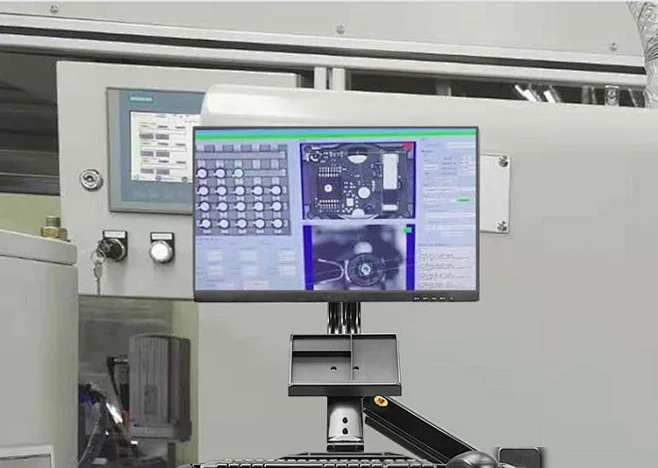
On factory floors, tft screen display panels serve as human-machine interfaces (HMIs) for programmable logic controllers (PLCs). Operators monitor production lines, adjust robotic parameters, and receive fault alerts—all through rugged tft lcd display terminals that withstand oil, metal shavings, and constant vibration.
Medical and Healthcare
From bedside monitors to surgical displays and portable diagnostic equipment, medical-grade tft lcd screen technology must meet strict standards for image clarity, electromagnetic compatibility, and hygiene. An ips tft display is particularly valued in radiology and surgical settings where accurate color reproduction can literally be a matter of life and death.
Transportation and Automotive
Modern vehicles, trains, and aircraft rely on Industrial Displays for navigation, instrumentation, and entertainment. These tft lcd panels must function flawlessly despite temperature swings, humidity, and constant motion. High-brightness tft screen display units are essential for dashboard readability in direct sunlight.
Retail and Hospitality
Outdoor digital signage, self-service kiosks, and point-of-sale terminals all depend on tft lcd display technology built for public use. These screens face tampering attempts, weather exposure, and near-constant operation—challenges only industrial-grade panels can handle.
Energy and Utilities
Power plants, oil refineries, and water treatment facilities use Industrial Displays in control rooms and field equipment. The reliability of a tft lcd screen in these settings ensures that operators can respond instantly to critical system changes.
The Evolution: From Standard TFT to IPS TFT
While traditional tft display technology already offers excellent performance, the evolution toward ips tft screen solutions has pushed industrial display capabilities even further.
IPS (In-Plane Switching) technology was developed specifically to solve the limitations of older twisted nematic (TN) panels, which suffered from narrow viewing angles and color distortion when viewed off-center. In an ips tft display, the liquid crystal molecules rotate parallel to the panel plane rather than tilting toward it. This seemingly small structural change delivers dramatic improvements:
- Color consistency: An ips tft screen shows the same colors whether you’re looking straight on or from a 178-degree angle.
- Better blacks and contrast: Essential for applications like night-vision integration or dark-room medical imaging.
- Stable image quality under pressure: When touched (as in interactive kiosks), an ips tft display doesn’t develop the “water ripple” effect common in older panel types.
For any application where multiple operators view the same tft lcd display from different positions—or where color accuracy is paramount—ips tft screen technology represents a worthwhile investment.
Why Industrial TFT LCD Technology Matters More Than Ever
As Industry 4.0 transforms manufacturing and IoT devices proliferate across every sector, the demand for reliable visualization technology continues to grow. A modern smart factory might have hundreds of interconnected sensors, but without robust Industrial Displays to present that data meaningfully, the information remains useless.
The tft lcd ecosystem has evolved to meet this challenge. Today’s industrial tft screen display solutions integrate seamlessly with network systems, support multiple video inputs, offer sunlight-readable brightness levels, and maintain calibration over years of operation. They are the unsung heroes of our connected industrial world.
Conclusion
Industrial display technology, built on the proven foundation of tft lcd architecture, represents a specialized discipline far removed from consumer screen manufacturing. Whether you’re evaluating a rugged tft lcd screen for a factory floor, a high-brightness tft display for outdoor signage, or a color-accurate ips tft display for medical diagnostics, understanding these distinctions ensures you choose technology that won’t let you down when it matters most.
From the tft lcd display monitoring a city’s power grid to the ips tft screen guiding a surgeon’s hand, these robust visualization solutions prove that in demanding environments, only industrial-grade engineering will suffice. As industries continue to digitize and automate, the role of Industrial Displays will only grow more critical—making now the perfect time to understand what truly sets them apart.