








introduction
As industrial equipment becomes smarter, more connected, and increasingly compact, the role of display technology has never been more critical. Modern factories, medical facilities, and field operations demand interfaces that are not only functional but also highly readable, energy-efficient, and adaptable to harsh environments. Among the various display technologies available today, OLED display modules have emerged as a preferred solution for a wide range of industrial applications.

Unlike traditional display technologies, OLED (Organic Light-Emitting Diode) modules offer self-emissive pixels, eliminating the need for bulky backlights while delivering exceptional contrast ratios, wide viewing angles, and ultra-fast response times. These characteristics make OLED display modules particularly well-suited for industrial equipment where space is limited, power budgets are tight, and visibility under challenging conditions is essential.
In this comprehensive guide, we explore what OLED display modules are, why they are ideal for industrial environments, their most common applications, and how they compare to LCD alternatives. Whether you are an engineer designing the next generation of portable testing instruments, a purchasing manager evaluating display suppliers, or an OEM buyer seeking custom display solutions, this article provides the technical insights you need.
What Is an OLED Display Module?
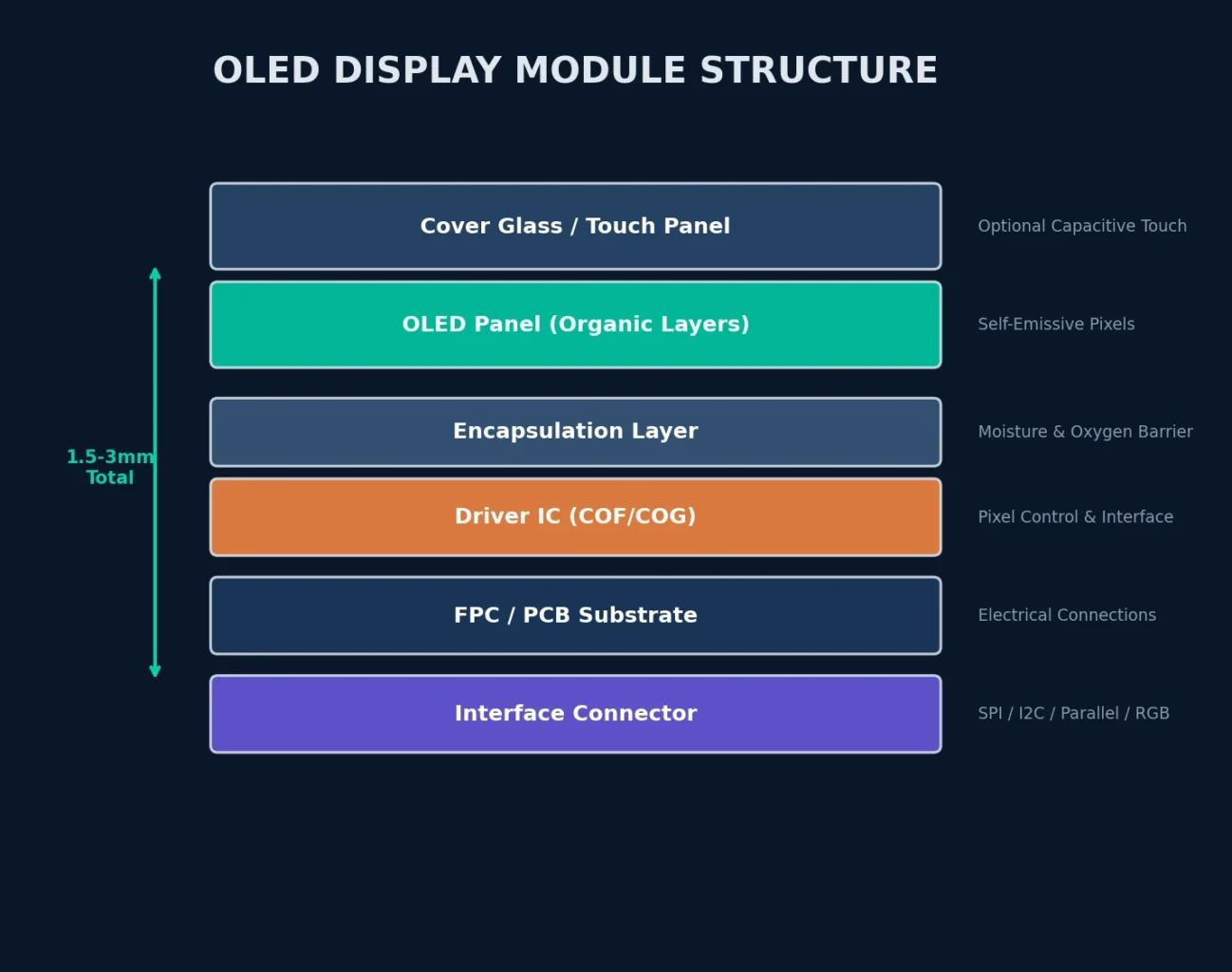
An OLED display module is a complete display unit that integrates an OLED panel with the necessary driver electronics, interfaces, and mechanical structures required for integration into end products. Understanding its fundamental structure and operating principles is essential for selecting the right module for your industrial application.
OLED Technology Overview
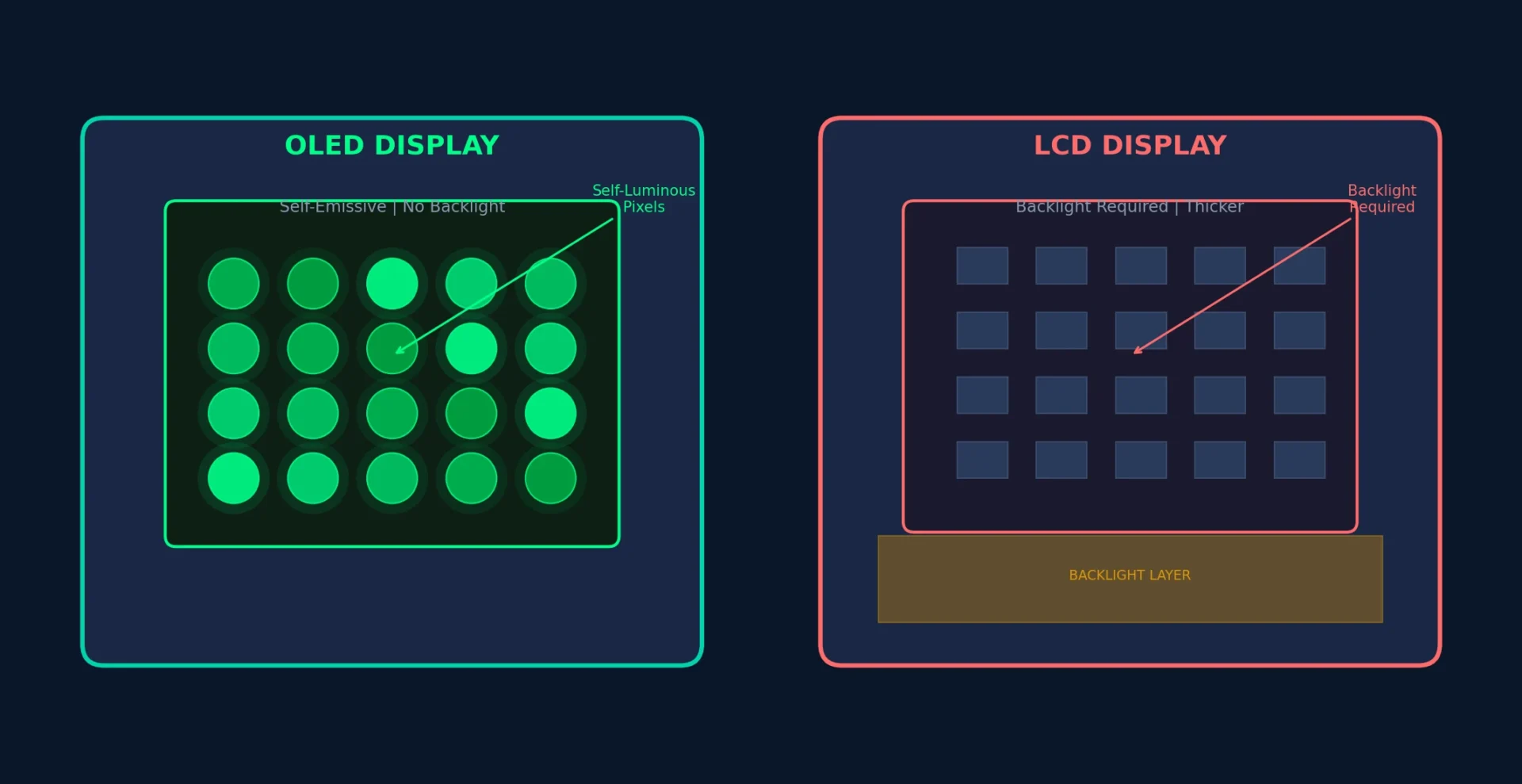
OLED technology represents a significant departure from conventional LCD displays. Instead of relying on a backlight to illuminate liquid crystal pixels, OLED displays use organic compounds that emit light when an electric current passes through them. This self-emissive nature means each pixel generates its own light, resulting in several inherent advantages:
- No backlight required: The absence of a backlight layer allows for significantly thinner and lighter display modules.
- True black levels: When a pixel is turned off, it emits no light, creating infinite contrast ratios and exceptional image depth.
- Simplified structure: Fewer layers translate to reduced mechanical complexity and improved durability.
Main Components of an OLED Module
A typical industrial OLED display module consists of the following core components:
| Component | Function |
| OLED Panel | The core display element containing the organic light-emitting layers arranged in a matrix |
| Driver IC | Controls pixel addressing, brightness, and communication protocols; essential for image rendering |
| PCB/FPC | Provides electrical connections and mechanical stability; FPC (Flexible Printed Circuit) enables compact designs |
| Interface Connector | Facilitates communication between the display module and the host system |
| Touch Panel (Optional) | Adds interactive capabilities through capacitive or resistive touch technologies |
Common OLED Interfaces
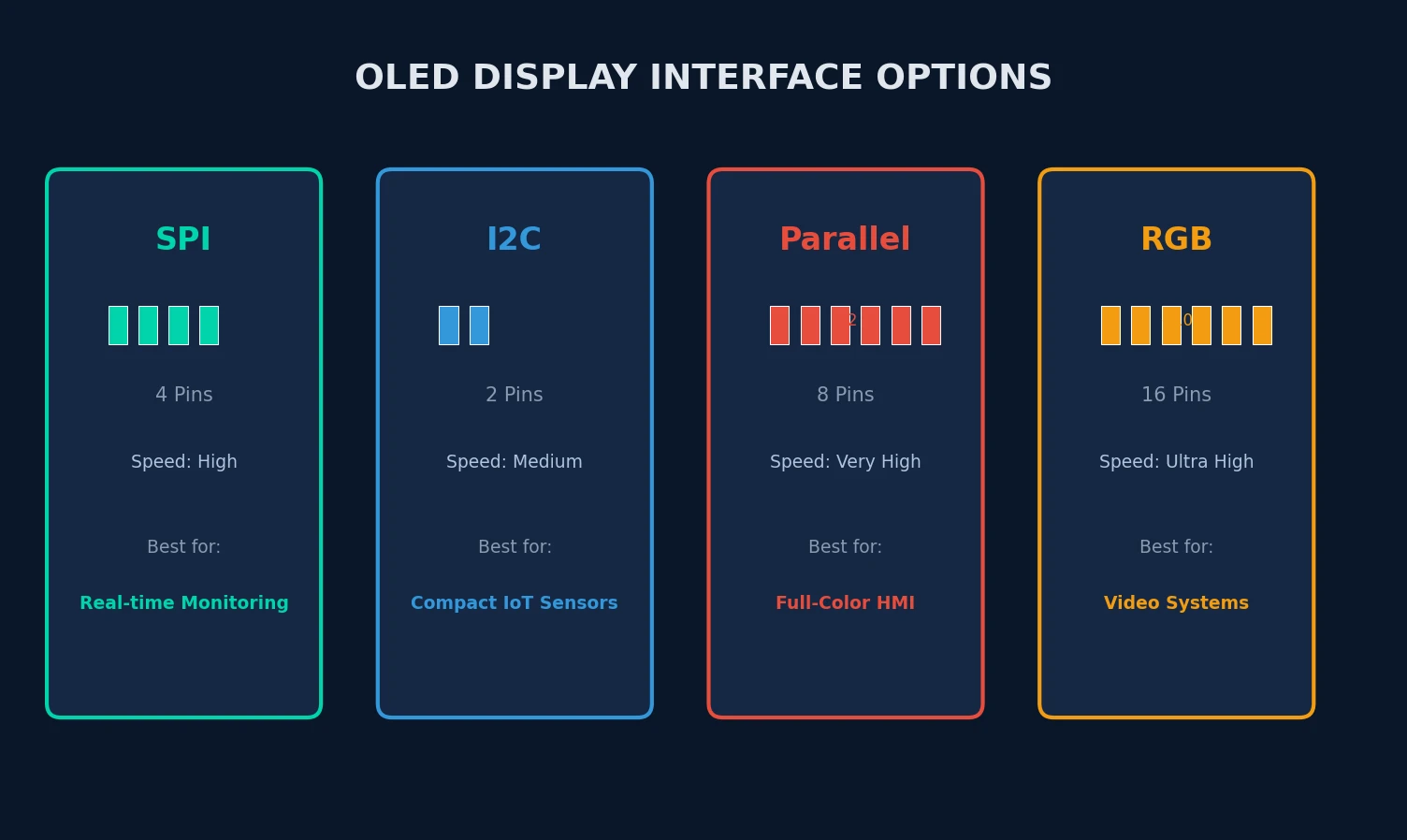
Industrial OLED modules support various communication interfaces to accommodate different microcontroller architectures and system requirements:
- SPI (Serial Peripheral Interface): A widely used, high-speed synchronous serial interface ideal for applications requiring fast refresh rates and simple wiring.
- I2C (Inter-Integrated Circuit): A two-wire serial interface perfect for compact designs where pin count must be minimized.
- Parallel Interface: Offers higher data throughput for applications demanding rapid screen updates and complex graphics.
- RGB Interface: Used primarily in full-color OLED modules for high-resolution, multimedia-capable industrial displays.
Types of OLED Modules
Industrial applications utilize several categories of OLED modules, each suited to specific use cases:
- Monochrome OLED: Displays single-color content (typically white, blue, or yellow) with excellent clarity; ideal for text-based interfaces and simple graphics.
- Graphic OLED: Supports bitmap graphics and custom icons; commonly used in portable instruments and control panels.
- Full-Color OLED: Capable of displaying millions of colors; suitable for advanced HMI systems and medical imaging devices.
- Flexible OLED: Built on flexible substrates, enabling curved or conformable displays for innovative industrial product designs.
Why OLED Display Modules Are Ideal for Industrial Equipment
Industrial environments present unique challenges for display technology: extreme temperatures, vibration, limited power availability, and the need for continuous readability under varying lighting conditions. OLED display modules address these challenges through a combination of optical, electrical, and mechanical advantages.
High Contrast and Visibility
The self-emissive nature of OLED technology produces contrast ratios that are effectively infinite, as black pixels emit absolutely no light. This results in:
- Crystal-clear text and graphics, even in low-ambient-light environments
- Enhanced readability of critical data, alarms, and status indicators
- Reduced eye strain for operators during extended monitoring sessions
In industrial control rooms, medical devices, and outdoor testing equipment, this high-contrast performance ensures that information remains legible and actionable at all times.
Wide Viewing Angle
OLED displays maintain consistent brightness and color accuracy across viewing angles of up to 180 degrees. This is particularly valuable in industrial settings where:
- Operators may view displays from various positions and angles
- Equipment is mounted in tight spaces with non-ideal viewing orientations
- Multiple personnel need to simultaneously read display information
The wide viewing angle capability of industrial OLED displays significantly improves user experience and operational safety.
Low Power Consumption
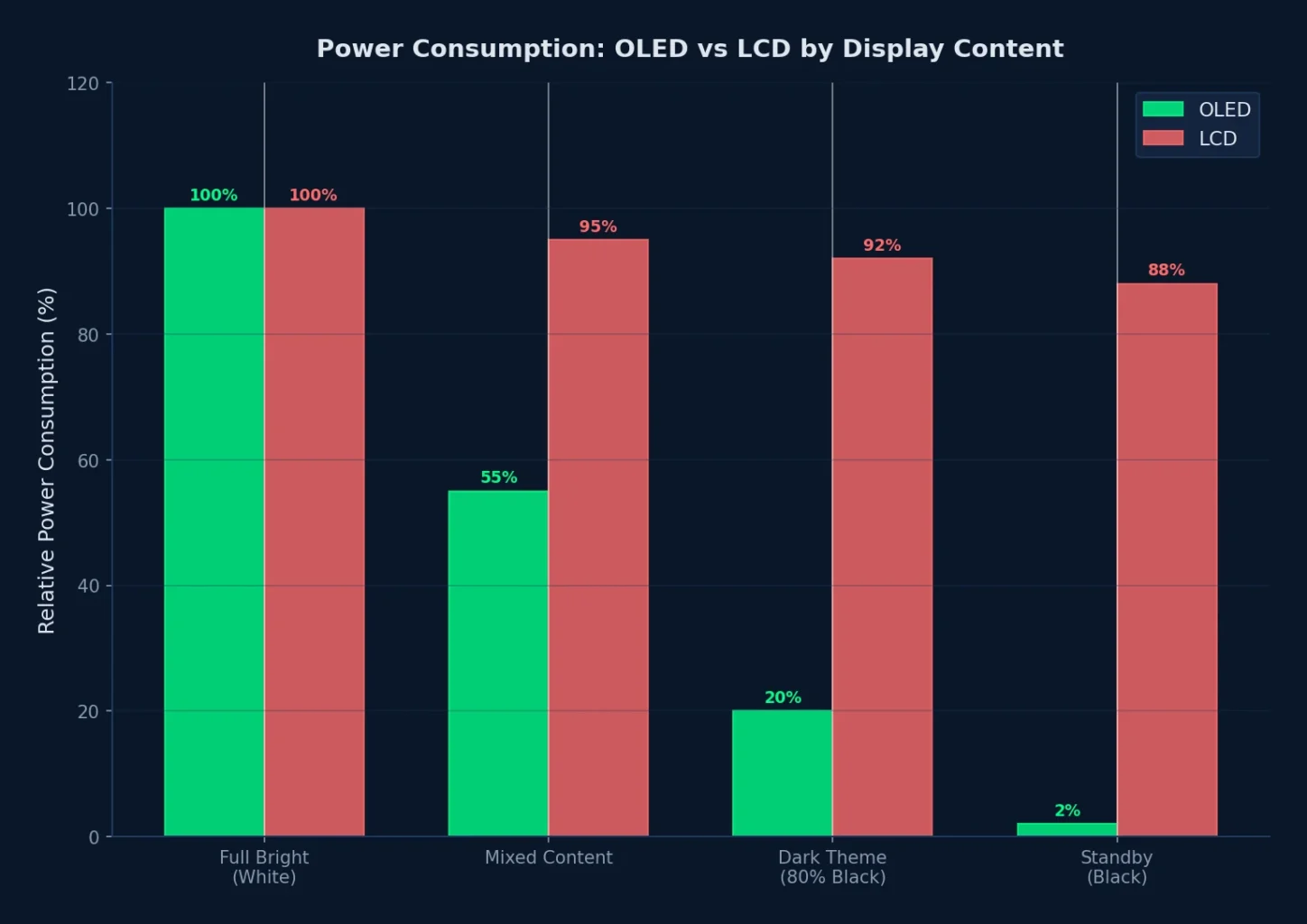
Power efficiency is a critical consideration for battery-powered industrial devices and remote IoT sensors. OLED modules consume power only for the pixels that are active, meaning:
- Dark-themed interfaces consume significantly less energy
- Battery-operated portable instruments achieve extended operating times
- Solar-powered or energy-harvesting industrial devices become more feasible
For applications such as smart metering, environmental monitoring, and wireless sensor networks, the low power profile of OLED technology translates directly to reduced maintenance cycles and lower total cost of ownership.
Compact and Thin Design
The elimination of backlight assemblies allows OLED modules to achieve thicknesses of just a few millimeters. This compact form factor enables:
- Integration into space-constrained portable equipment
- Reduced overall product weight for handheld industrial tools
- Greater design flexibility for miniaturized and wearable industrial devices
Engineers can leverage the slim profile of OLED display modules to create products that meet stringent size and weight requirements without compromising display performance.
Fast Response Time
OLED pixels can switch on and off in microseconds, compared to milliseconds for LCD technologies. This rapid response time is essential for:
- Real-time data visualization in industrial monitoring systems
- Smooth animation of dynamic process variables
- Accurate representation of rapidly changing measurement values
In high-speed automation environments, the fast refresh characteristics of OLED displays ensure that operators receive timely, accurate visual feedback.
Reliability in Harsh Environments
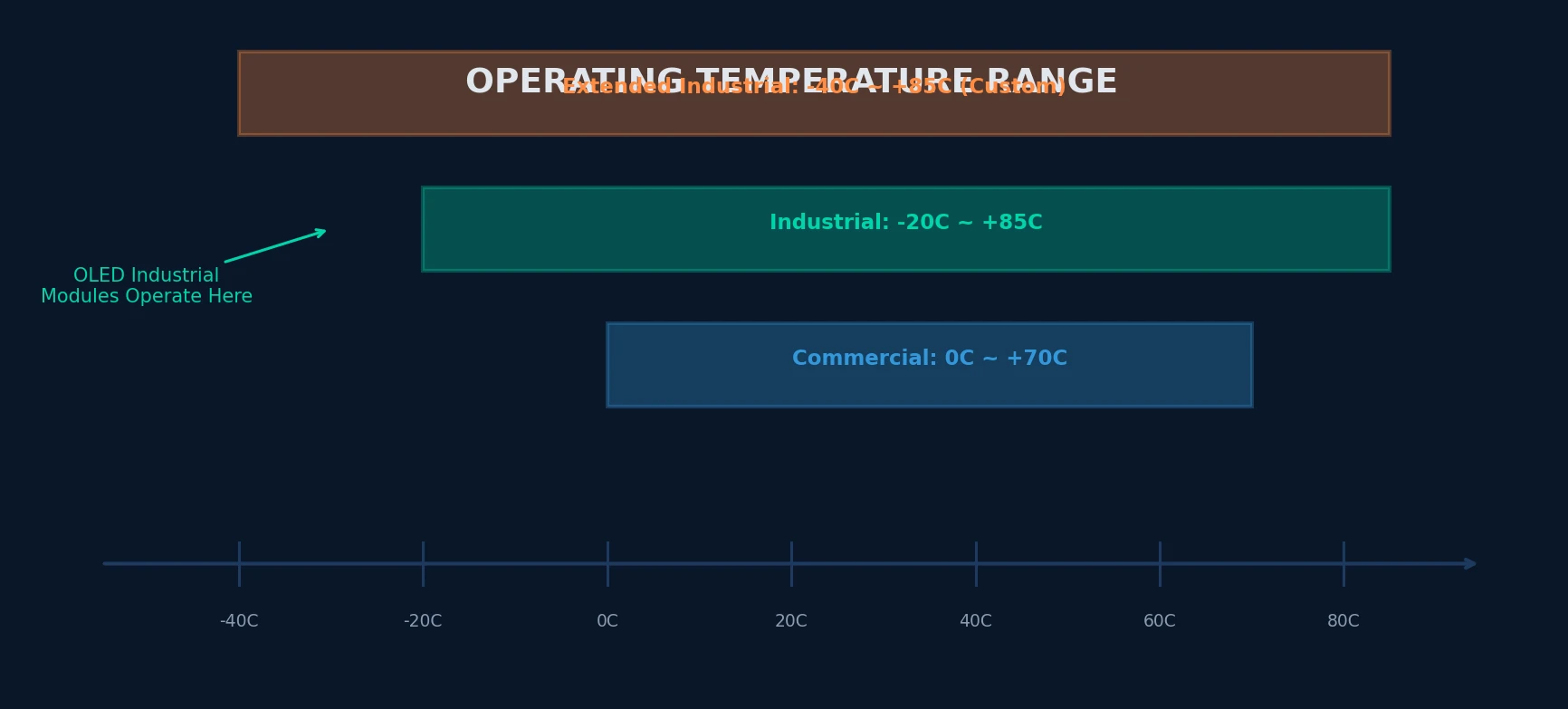
Modern industrial OLED modules are engineered to operate reliably across extended temperature ranges, typically from -40°C to +80°C or wider with custom designs. They exhibit:
- Stable performance under thermal cycling and shock conditions
- Resistance to vibration in heavy machinery applications
- Long operational lifespans when properly implemented with brightness management
These reliability characteristics make OLED display solutions suitable for deployment in factories, oil and gas facilities, transportation systems, and outdoor infrastructure.
Common Industrial Applications of OLED Display Modules
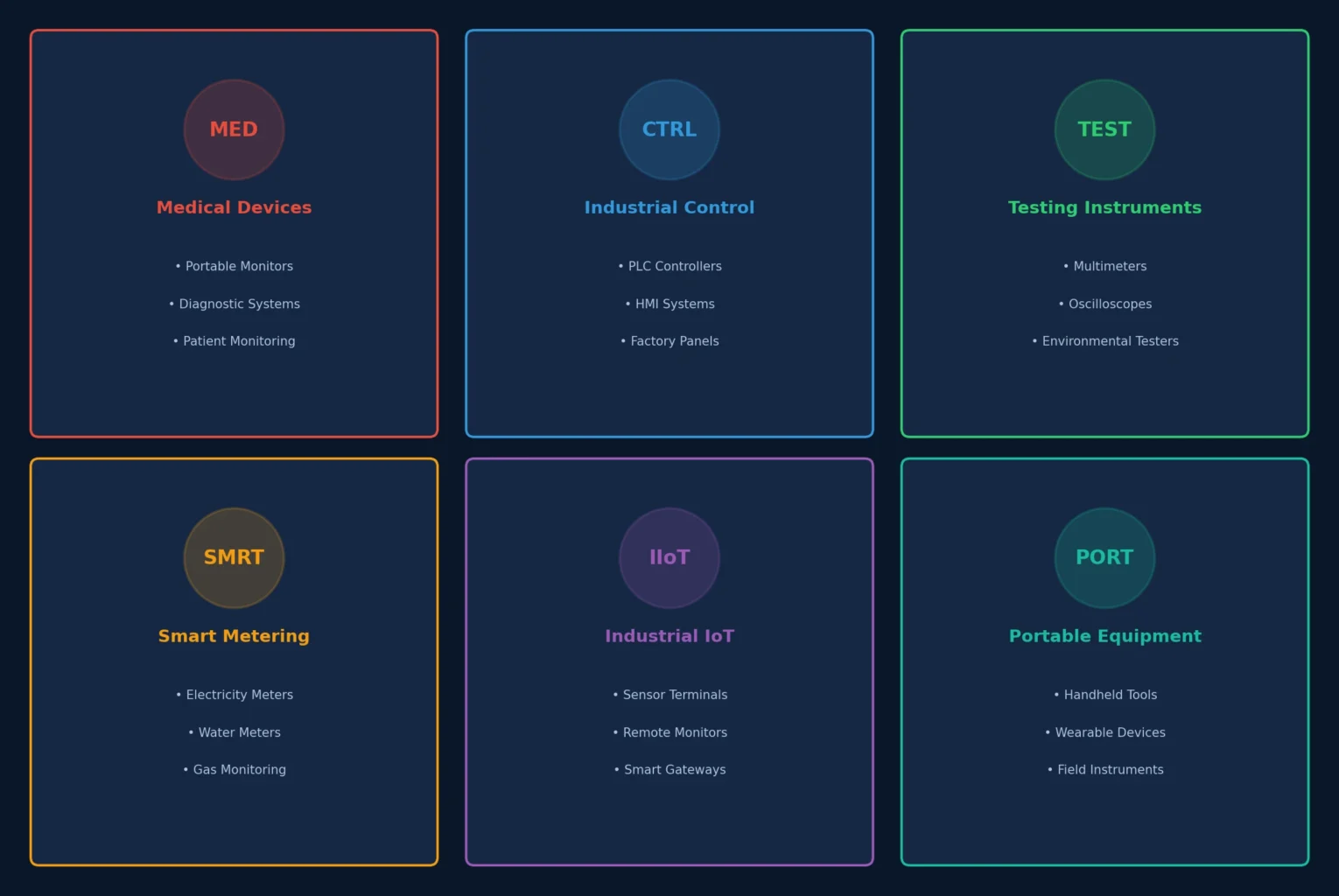
The versatility of OLED technology has led to its adoption across diverse industrial sectors. Below, we examine the most significant application categories and the specific advantages OLED modules bring to each.
Medical Devices
Medical equipment demands displays that combine precision, reliability, and clarity. OLED display modules are increasingly found in:
- Portable monitors: Used in ambulances, remote clinics, and home healthcare settings where compact size and battery efficiency are paramount.
- Diagnostic systems: Blood analyzers, imaging devices, and point-of-care testing equipment benefit from OLED’s high contrast for accurate data interpretation.
- Patient monitoring devices: Continuous monitoring of vital signs requires displays that remain readable under varying clinical lighting conditions.
Key OLED Advantages for Medical Applications: – High contrast ensures critical values and waveforms are immediately visible – Low power consumption supports extended battery life in portable devices – Fast response time enables real-time display of physiological data
Industrial Control Systems
Human-Machine Interface (HMI) systems and programmable logic controller (PLC) interfaces form the backbone of modern automation. OLED modules enhance these systems through:
- PLC controllers: Compact OLED displays provide status feedback and configuration interfaces in space-limited control cabinets.
- HMI systems: Touch-integrated OLED panels enable intuitive operator interaction with production machinery.
- Factory control panels: Wide viewing angles ensure that production line status is visible to multiple operators simultaneously.
Key OLED Advantages for Control Systems: – Real-time information display with minimal latency – Wide viewing angles improve situational awareness on factory floors – Reliable performance under continuous 24/7 operation
Portable Testing Instruments
Field engineers and technicians rely on portable instruments that must perform in diverse environments. OLED display modules are ideal for:
- Multimeters and oscilloscopes: High-contrast displays ensure waveform and measurement readability in bright sunlight or dim electrical rooms.
- Environmental testers: Humidity, temperature, and air quality meters benefit from OLED’s outdoor readability and low power draw.
- Precision measuring tools: Calipers, gauges, and laser measurement devices integrate OLED modules for clear digital readouts.
Key OLED Advantages for Testing Instruments: – Exceptional battery efficiency for all-day field use – Compact integration enables ergonomic, pocket-sized designs – Excellent outdoor readability, even in direct sunlight conditions
Smart Metering Equipment
Utility infrastructure increasingly relies on smart meters that communicate consumption data while providing local readouts. OLED modules serve in:
- Smart electricity meters: Clear numerical displays allow consumers and technicians to verify readings instantly.
- Water and gas monitoring systems: Low-power OLED displays maintain visibility during power fluctuations or battery-backed operation.
Key OLED Advantages for Smart Metering: – Long operational lifespan with appropriate brightness management – Crisp numerical display for accurate reading verification – Ultra-low energy consumption supports grid-independent operation
Industrial IoT Devices
The Industrial Internet of Things (IIoT) relies on distributed sensor networks and edge devices that require compact, efficient displays. OLED modules enable:
- Sensor terminals: Local display of sensor readings for field calibration and diagnostics.
- Remote monitoring devices: Status indicators and configuration interfaces for wireless data loggers.
- Smart gateways: Network status and traffic visualization in compact enclosure designs.
- Wireless control systems: Handheld remotes and configurators with intuitive OLED interfaces.
Key OLED Advantages for IoT Applications: – Small display sizes (down to 0.5 inches) fit within miniature device enclosures – Minimal energy footprint preserves battery life in wireless deployments – Flexible customization options accommodate diverse product form factors
OLED vs LCD for Industrial Equipment
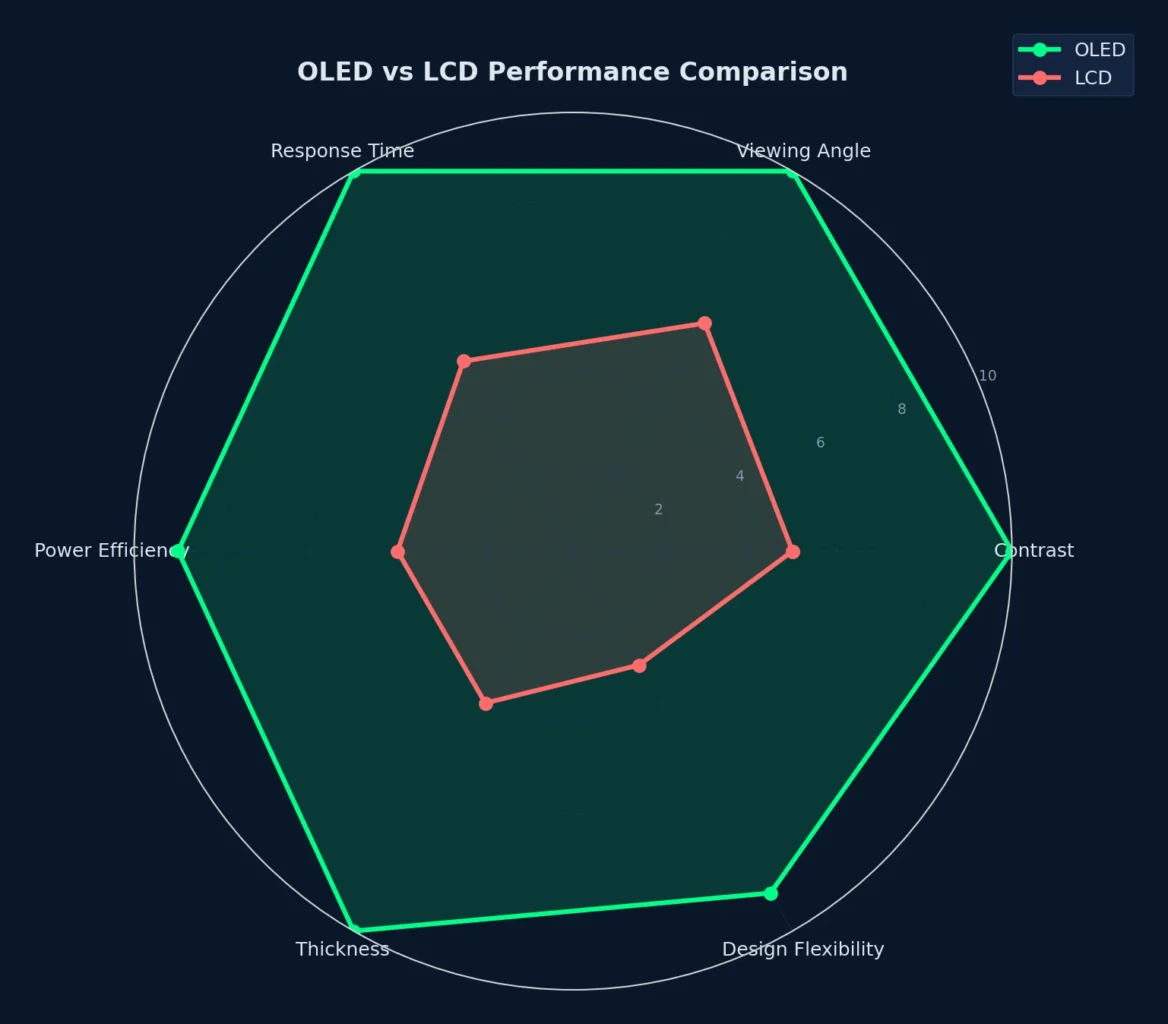
When selecting display technology for industrial applications, engineers and buyers frequently evaluate OLED against traditional LCD alternatives. The following comparison highlights the key differentiators:
| Feature | OLED Display Module | LCD Display Module |
| Contrast Ratio | Effectively infinite (true black) | Limited by backlight bleed |
| Backlight Requirement | Not required (self-emissive) | Required (adds thickness and power draw) |
| Module Thickness | 1–3 mm typical | 5–10 mm typical (including backlight) |
| Viewing Angle | Up to 180° with no color shift | Typically 120–160° with contrast degradation |
| Response Time | Microseconds (μs) | Milliseconds (ms) |
| Power Consumption | Lower (proportional to active pixels) | Higher (backlight always on) |
| Black Level | Perfect black (pixel off) | Grayish black (backlight leakage) |
| Design Flexibility | Supports flexible and transparent substrates | Rigid glass structure |
When to Choose OLED
OLED display modules are the optimal choice when your industrial application requires:
- Superior visibility in low-light or high-contrast viewing conditions
- Minimal power consumption for battery-operated or energy-harvesting devices
- Ultra-compact form factors where every millimeter of thickness matters
- Wide viewing angles for multi-operator or non-ideal mounting scenarios
- Fast refresh rates for real-time data and animation
When LCD May Still Be Appropriate
LCD technology remains viable for applications where:
- Extremely large display sizes (15 inches and above) are required at lower cost
- Static, always-on content with minimal variation in displayed information
- Mature supply chains with established long-term availability requirements
However, for the majority of modern industrial display needs—particularly in portable, embedded, and IoT applications—OLED technology offers compelling advantages that are driving widespread industry adoption.
Key Factors When Choosing an Industrial OLED Display Module
Selecting the appropriate OLED module requires careful evaluation of technical specifications against application requirements. The following factors should guide your decision-making process.
Display Size and Resolution
Determine the optimal screen dimensions and pixel resolution based on:
- Information density: How much data must be displayed simultaneously?
- Viewing distance: Will operators read the display from 30 cm or 3 meters?
- Enclosure constraints: What physical space is available in your product design?
Common industrial OLED sizes range from 0.5-inch status indicators to 5-inch control panels, with resolutions from 128×64 pixels (monochrome graphic) to 800×480 pixels (full-color WVGA).
Brightness and Contrast
Evaluate ambient lighting conditions in your deployment environment:
- Indoor applications (control rooms, laboratories): Standard brightness OLED modules (200–400 cd/m²) are typically sufficient.
- Outdoor applications (field instruments, utility meters): High-brightness options (400–1000+ cd/m²) or transflective enhancements may be necessary for sunlight readability.
Interface Compatibility
Ensure seamless integration with your existing system architecture:
| Interface | Best For | Typical Applications |
| SPI | High-speed, simple wiring | Real-time monitoring, animation |
| I2C | Minimal pin count, daisy-chain capability | Compact IoT sensors, low-pin MCUs |
| Parallel | Maximum throughput, complex graphics | Full-color HMI, video-capable systems |
| UART | Long-distance communication, simple protocol | Remote terminals, legacy system upgrades |
Operating Temperature Range
Industrial environments often exceed commercial temperature specifications. Verify that your selected module supports:
- Standard industrial range: -20°C to +70°C
- Extended industrial range: -40°C to +85°C (available through custom engineering)
- Thermal management: Consider brightness derating curves for high-temperature operation
Touch Function Integration
For interactive industrial applications, evaluate touch technologies:
- Capacitive Touch: Supports multi-touch, gesture recognition, and durable glass cover lenses; ideal for modern HMI applications.
- Resistive Touch: Operates with gloved hands and styluses; preferred in harsh industrial environments where operators wear protective equipment.
Customization Requirements
Many industrial projects require display modules tailored to specific mechanical or electrical constraints. Consider whether you need:
- Custom shapes: Round, bar-type, or irregular form factors
- Custom FPC routing: Specific connector positions and cable lengths
- Special interfaces: Proprietary protocols or legacy system compatibility
- Optical bonding: Enhanced durability and sunlight readability through direct touch panel bonding
Custom OLED Display Solutions for Industrial Applications
For OEMs, ODMs, and industrial equipment manufacturers with specialized requirements, custom OLED display modules offer a pathway to product differentiation and optimized integration. Customization capabilities typically encompass:
Custom Sizes and Shapes
Beyond standard rectangular panels, manufacturers can produce:
- Round displays: Perfect for gauge-style instruments, smartwatches, and circular control knobs
- Bar-type displays: Ideal for status bars, audio level indicators, and elongated information panels
- Ultra-thin displays: Sub-1mm profiles for wearable industrial devices and ultra-compact instruments
Interface Customization
Tailor the electrical interface to your system requirements:
- Protocol adaptation: SPI, I2C, UART, or parallel interfaces with custom pin assignments
- Connector design: Specific pitch, orientation, and locking mechanisms for your PCB layout
- Voltage levels: Logic level shifting for 1.8V, 3.3V, or 5V system compatibility
Touch Integration
Enhance interactivity through advanced touch solutions:
- Projected capacitive touch panels with custom cover glass and anti-reflective coatings
- Optical bonding to eliminate air gaps, improve contrast, and increase impact resistance
- Glove-friendly and wet-operation touch algorithms for industrial field use
Wide Temperature Design
Achieve reliable operation in extreme environments through:
- Industrial-grade driver ICs with extended temperature specifications
- Enhanced PCB materials (polyimide, high-Tg FR4) for thermal stability
- Thermal compensation circuits maintaining consistent brightness across temperature ranges
Engineering Support
Reputable display partners provide comprehensive development support:
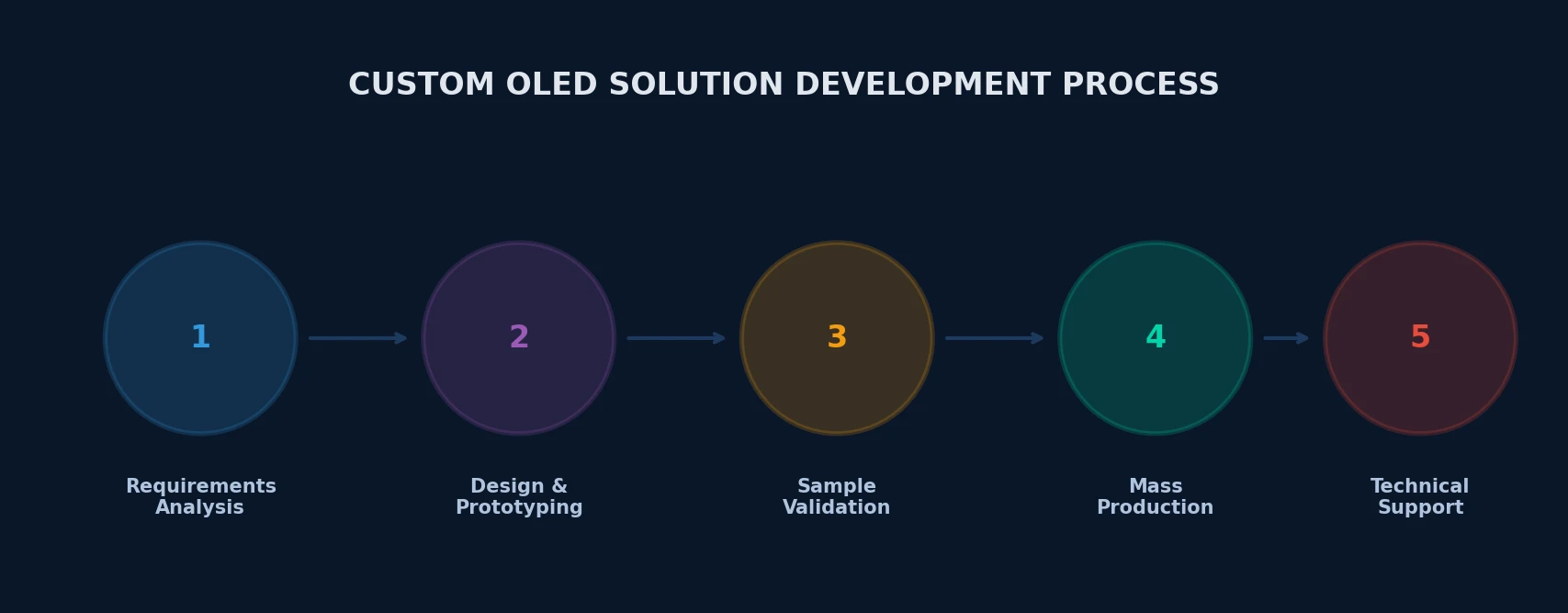
- Rapid prototyping: Quick-turn samples for design validation and testing
- Technical consultation: Display optimization, interface design, and integration guidance
- OEM/ODM development: End-to-end product development from concept to mass production
Future Trends of OLED Display Modules in Industry
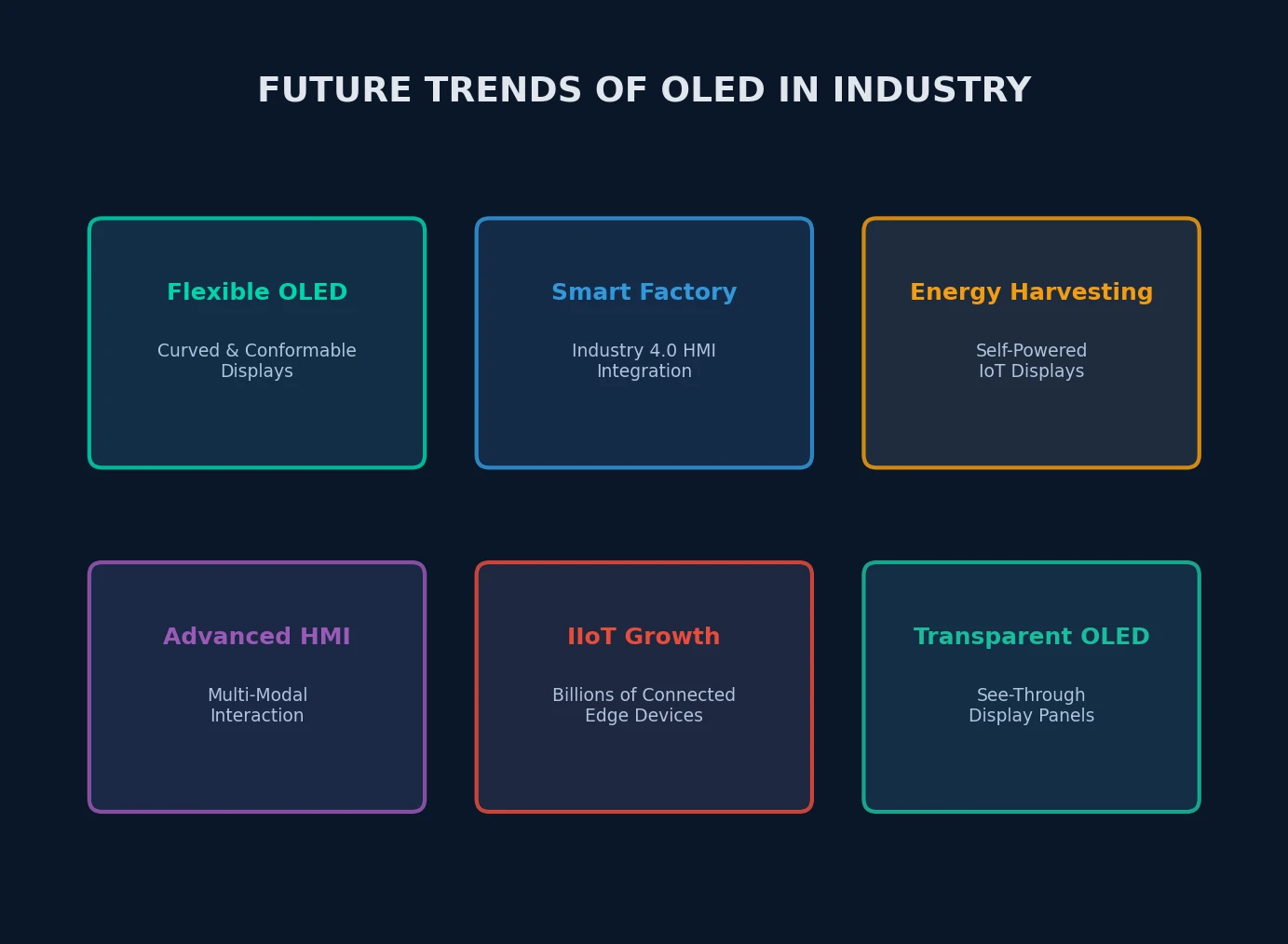
The industrial display landscape continues to evolve, with OLED technology at the forefront of several emerging trends:
Flexible OLED Technology
Flexible and foldable OLED substrates are opening new possibilities for industrial product design. Curved control surfaces, conformable wearable displays, and rollable inspection equipment interfaces are transitioning from concept to production reality.
Smart Factory Integration
As Industry 4.0 and smart manufacturing initiatives accelerate, OLED displays are becoming integral components of cyber-physical systems. Edge devices with OLED HMIs provide local visualization while feeding data into centralized analytics platforms, bridging the gap between operational technology and information technology.
Energy-Efficient Industrial Displays
Sustainability pressures are driving demand for ultra-low-power display solutions. Advances in OLED materials and driver circuits continue to reduce power consumption, enabling self-powered industrial sensors and displays that operate indefinitely on harvested energy.
Advanced Human-Machine Interfaces
The next generation of industrial HMIs incorporates OLED technology with haptic feedback, voice recognition, and augmented reality overlays. These multimodal interfaces reduce cognitive load on operators while improving response times to critical system events.
Industrial IoT Growth
With billions of industrial IoT devices projected to deploy over the coming decade, the demand for compact, efficient, and reliable displays will surge. OLED modules—particularly small-size, low-power variants—are positioned to become the default display choice for IIoT endpoints.
Conclusion
OLED display modules represent a transformative technology for industrial equipment, combining exceptional visual performance, energy efficiency, and design flexibility in a compact, reliable package. From medical devices and portable testing instruments to industrial control systems and IoT sensors, OLED technology addresses the core display challenges faced by modern equipment manufacturers.
The advantages of OLED over traditional LCD technology—including infinite contrast, wide viewing angles, faster response times, and lower power consumption—make it the preferred choice for an expanding range of industrial applications. As flexible OLED technology matures and smart factory integration deepens, the industrial adoption of OLED display modules will only accelerate.
For engineers, purchasing managers, and OEM buyers seeking to enhance their products with advanced display technology, custom OLED display solutions offer a pathway to competitive differentiation and superior user experience.
Ready to integrate OLED display technology into your industrial equipment? Contact our engineering team today to discuss your project requirements, request a quotation, or explore our comprehensive range of standard and custom OLED display modules designed specifically for industrial applications.
Frequently Asked Questions
1.What are OLED display modules used for?
OLED display modules are used in a wide range of industrial applications including medical devices, industrial control systems, portable testing instruments, smart metering equipment, and IoT devices. Their high contrast, low power consumption, and compact design make them ideal for applications requiring reliable data visualization in space-constrained or battery-powered environments.
2.Are OLED displays suitable for industrial environments?
Yes, modern industrial OLED display modules are engineered to operate reliably across extended temperature ranges (-40°C to +80°C or wider), resist vibration, and maintain stable performance under continuous operation. Custom industrial-grade designs further enhance durability for harsh environment deployment.
3.OLED vs LCD: which is better for industrial equipment?
OLED is generally superior for industrial applications requiring high contrast, wide viewing angles, fast response times, low power consumption, and compact form factors. LCD may be preferred for very large displays or cost-sensitive applications where these OLED advantages are less critical.
4.Can OLED display modules be customized?
Absolutely. Custom OLED display solutions can be tailored to specific sizes, shapes, interfaces, touch integrations, temperature ranges, and mechanical requirements. OEM and ODM manufacturers offer comprehensive engineering support from prototyping through mass production.
5.What interfaces are commonly used in OLED modules?
The most common interfaces for industrial OLED modules are SPI (Serial Peripheral Interface), I2C (Inter-Integrated Circuit), parallel interface, and RGB interface. The choice depends on application requirements for speed, wiring complexity, and compatibility with the host microcontroller or processor.