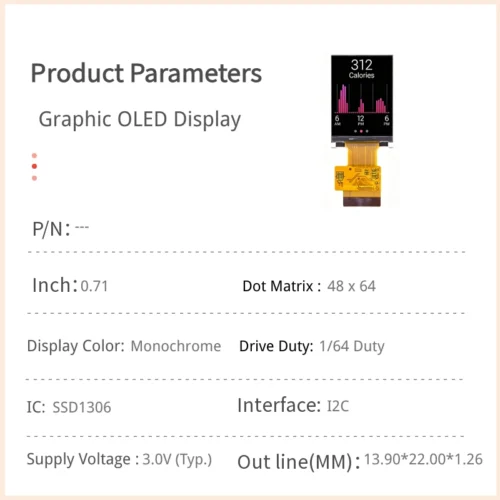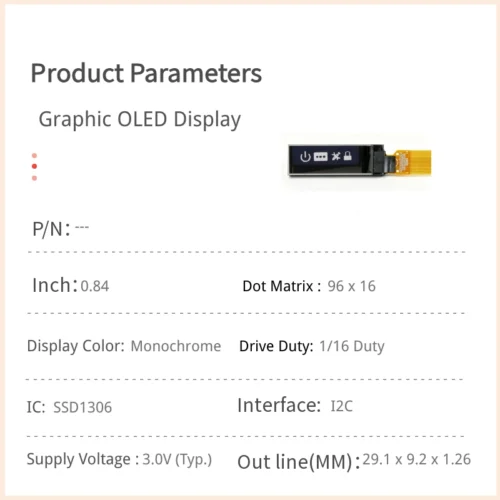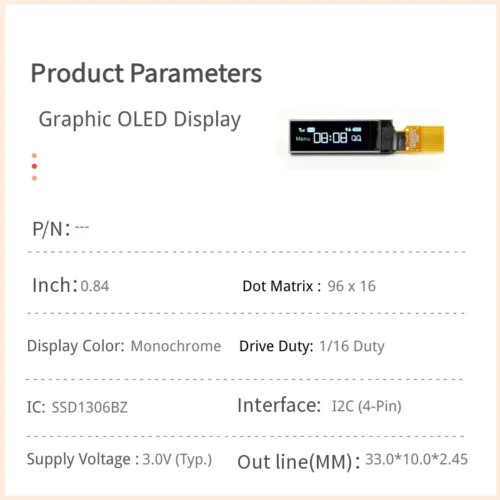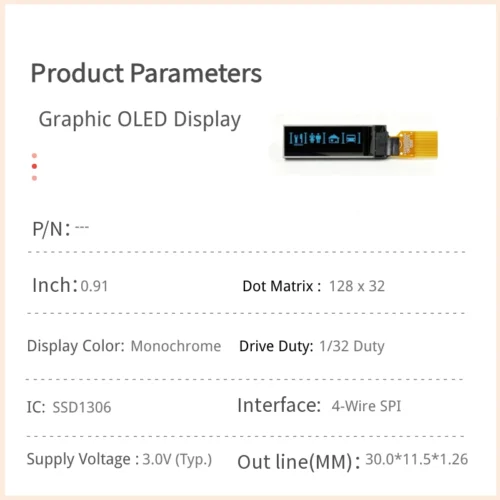


High-Performance OLED Display Modules for Your Innovative Designs
• Vivid Colors & High Contrast
• Wide Viewing Angles & Fast Response
• Customizable Size, Interface & Integration
• Prototype to Mass Production Support
-

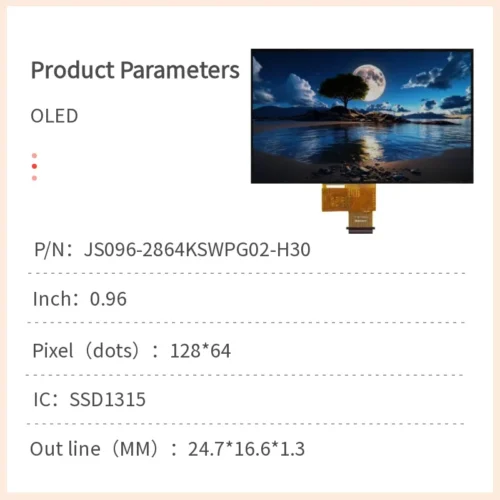
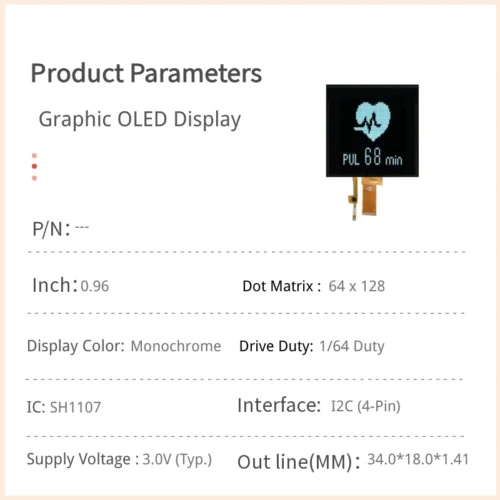
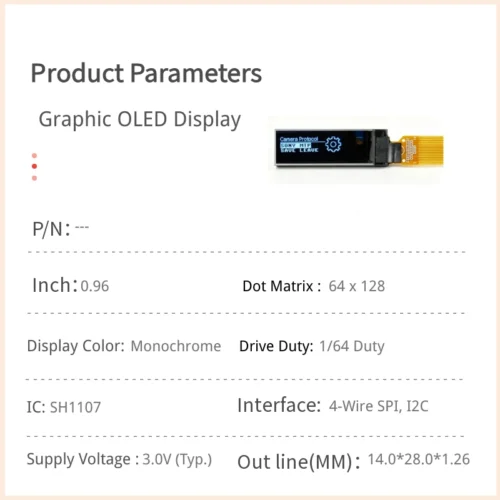
0.96‑inch OLED Display – High Contrast 128×64 Screen
-

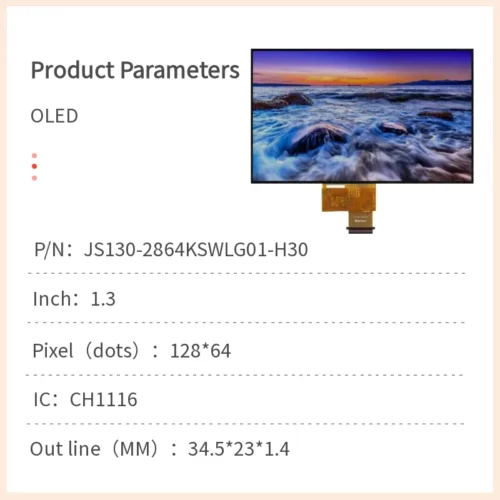
1.3‑inch OLED Display Module – High Contrast 128×64 Screen
-

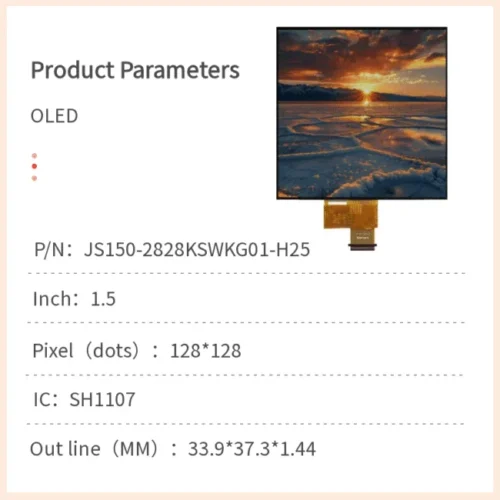
1.5‑inch OLED Display Module – 128×128 High Contrast Screen
-

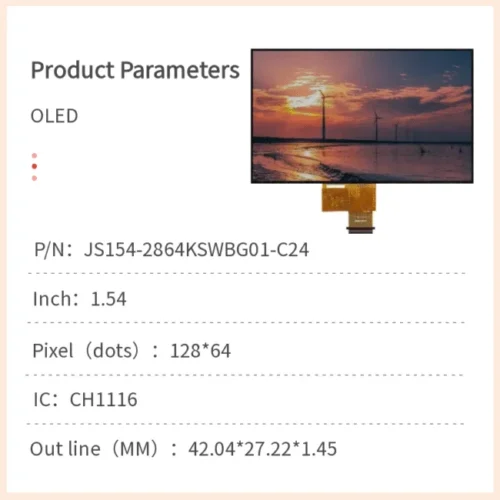
1.54‑inch OLED Display Module – 128×64 High Contrast Screen
-

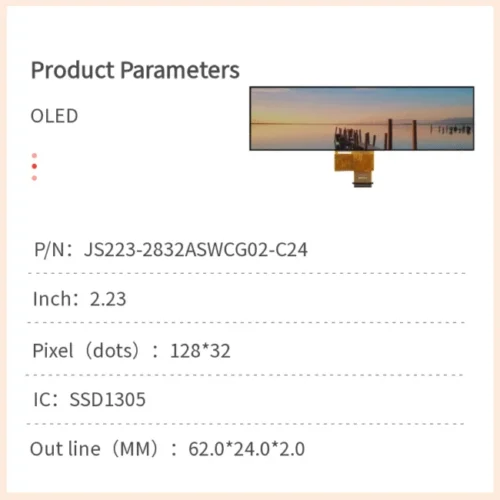
2.23‑inch OLED Display Module – 128×32 High Contrast Screen
-

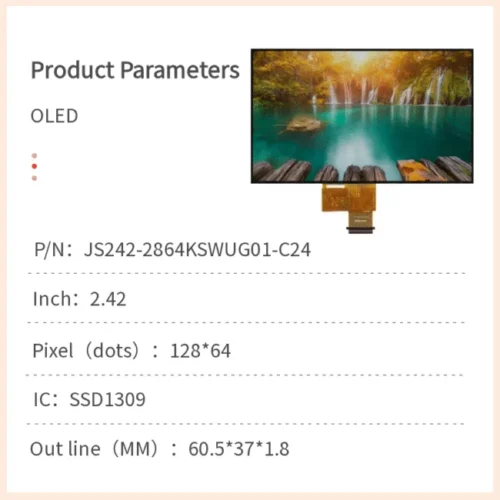
2.42‑inch OLED Display Module – 128×64 High Contrast Screen
-

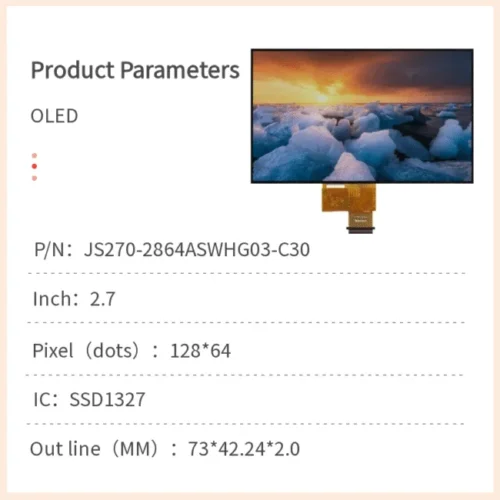
2.7‑inch OLED Display Module – 128×64 High Contrast Screen
-

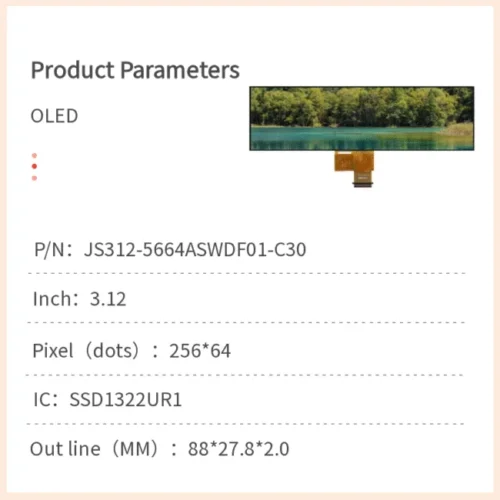
3.12-inch Wide OLED Display Module | 256×64 Pixels, 2000:1 Contrast
OLED Display Module Customization Service
Core Advantages of OLED Customization
Paramètres techniques personnalisables
The specifications below represent our standard capabilities. We provide deep customization across all parameters to meet your exact product requirements.
| Catégorie de paramètres | Exemples de configuration | Description |
|---|---|---|
| Taille de l'écran | 0.66″, 0.96″, 1.3″, 1.5″, 1.54″, 2.23″, 2.42″, 2.7″, 3.12″, etc. | Non-standard sizes and flexible cutting supported |
| Résolution | 64×48, 128×64, 128×128, 256×64, etc. | Higher resolutions and custom aspect ratios available |
| Display Colors | Monochrome (white/blue/yellow), dual-color, zone-color, full-color (RGB) | Select grayscale or color mode based on application |
| CI du conducteur | SSD1306, SSD1315, CH1116, SH1107, SSD1309, SSD1327, SSD1322, etc. | I²C, SPI interfaces supported; custom initialization code available |
| Type d'interface | I²C, SPI, 8080/6800 parallel interface | Matched to host controller resources and speed requirements |
| Supply Voltage | 3.3V, 5V, wide voltage input (2.8V–5.5V) | Adapts to different system power designs |
| Brightness Control | PWM dimming, command dimming, auto-brightness sensing | Multi-level brightness and dynamic adjustment supported |
| Facteur de forme et structure | Rigid PCB, flexible FPC, ultra-thin module, irregular cutting, transparent window design | Curved designs and wearable device integration supported |
| Additional Features | Integrated touch (capacitive/resistive), ambient light sensor, under-display components | Modular integration reduces peripheral components |
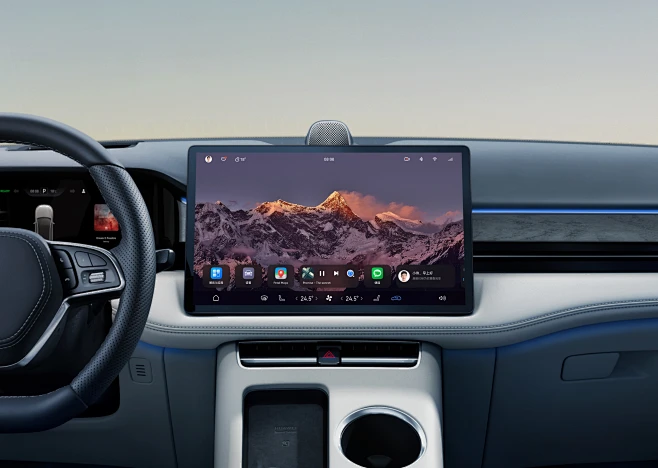
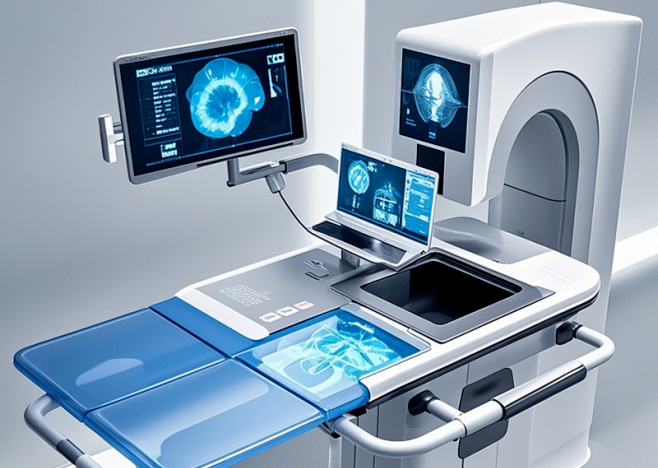
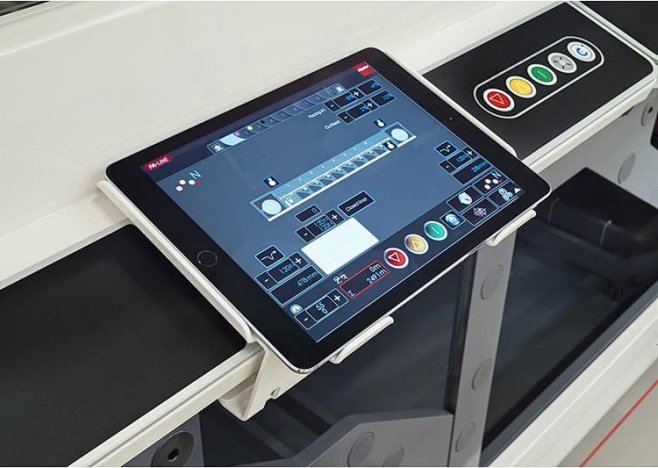
| Scénarios d'application | Wearables, medical instruments, industrial HMI, smart home, automotive secondary displays, portable devices, etc. | Low-power, high-reliability solutions provided |
Contact us with your specifications for a tailored quote within 24 hours.
Scénarios d'application
Quand la technologie rencontre la demande : Comment nous relevons les défis de l'industrie
Écrans LCD, OLED et EPD haute performance pour les appareils grand public modernes et les systèmes intelligents
Questions fréquemment posées
Si vous ne trouvez pas votre réponse ici, contactez immédiatement nos ingénieurs professionnels pour obtenir de l'aide.
A : OLED displays offer superior image quality with perfect black levels (since each pixel is self-emissive), an extremely high contrast ratio, faster response time for smoother motion, and a wider viewing angle. They are also thinner, lighter, and can be made flexible, enabling more innovative product designs.
A : Absolutely. Our OLED products are developed with high-reliability standards, and our IATF 16949 certification specifically supports our commitment to the automotive industry. They are designed to meet stringent requirements for temperature stability, brightness, and long-term durability in vehicles.
A : We utilize advanced OLED materials and driver technologies to maximize operational lifespan. While OLEDs can be susceptible to burn-in under extreme static content conditions, we implement pixel shifting and other compensation algorithms in our modules to significantly mitigate this risk, making them robust for industrial and automotive use.
A : Yes. Our vertically integrated production lines and R&D focus allow for extensive customization. We can tailor the size, special shapes (cut-outs), interface (LVDS, MIPI, etc.), and even develop flexible OLED solutions to fit your unique mechanical and electrical design requirements.
A : Power consumption depends heavily on the content being displayed. OLEDs are more energy-efficient when showing dark or black images because the individual pixels can be turned off completely. For predominantly bright content, an LCD with a constant backlight might be more efficient. We can help you analyze which technology is optimal for your specific application.
A : Yes. We provide complete solutions by integrating high-performance capacitive touch panels (such as On-Cell or Cover Glass) with our OLED displays. This offers a sleek, integrated module with excellent optical clarity and responsive touch experience for interactive applications.
Prêt à donner vie à votre projet d'affichage ?
Contactez nos experts en affichage dès aujourd'hui pour une consultation et un devis gratuits.