








Short answer: for a modern, connected motorcycle dashboard, a TFT display is usually the better choice. It gives you full colour, a flexible UI, sunlight-readable brightness and the headroom for navigation, Bluetooth and ride modes. But a segment LCD is still the smarter engineering choice for entry-level bikes, backup clusters and any product where cost, power draw and long-term simplicity matter more than pixels.
The real decision is not “TFT vs LCD” in the abstract. It is which display survives the electrical, thermal, vibration and optical environment of a motorcycle — and which one fits the rider interface you are building. This guide compares the two technologies on the parameters that actually fail in the field, and gives you a specification checklist you can send to any supplier.
Part of the TFT vs LCD guide: TFT vs LCD · Is TFT LCD? · How TFT LCD works · Standard sizes · TFT vs IPS vs TN
TFT vs LCD at a glance
| Use case | Recommended display | Why |
|---|---|---|
| Premium or connected bike | TFT, IPS, 800–1,000+ nits, optical bonding | Colour UI, maps, Bluetooth, ride modes, brand differentiation |
| Commuter or entry-level bike | Segment LCD or mono TFT | Low cost, very low power, proven reliability |
| Direct sunlight, touring, outdoors | High-brightness TFT with anti-reflective bonding | Readability is dominated by reflections, not only nits |
| Extreme cold or heat | Wide-temperature TFT or LCD, qualified to your range | Response time and backlight behaviour change with temperature |
| Safety-critical, minimal UI | Segment LCD | Fewer failure modes, simpler software, no distraction |
What is a TFT display on a motorcycle?
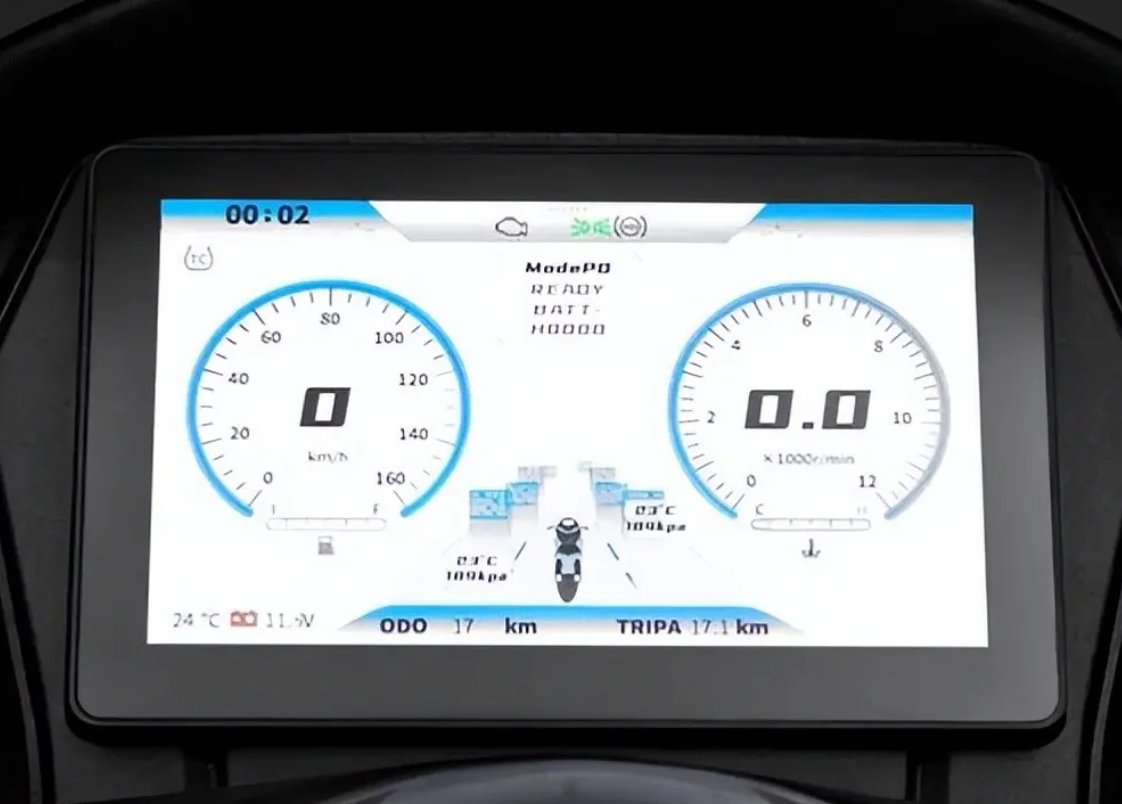
A TFT (thin-film transistor) display is an active-matrix LCD. Every pixel has its own transistor, which is what allows fast response, full colour, high contrast and a phone-like interface. On a motorcycle, the TFT usually works as the instrument cluster: speed, gear, revs, navigation, media, tyre pressure, riding modes and warnings all share one screen.
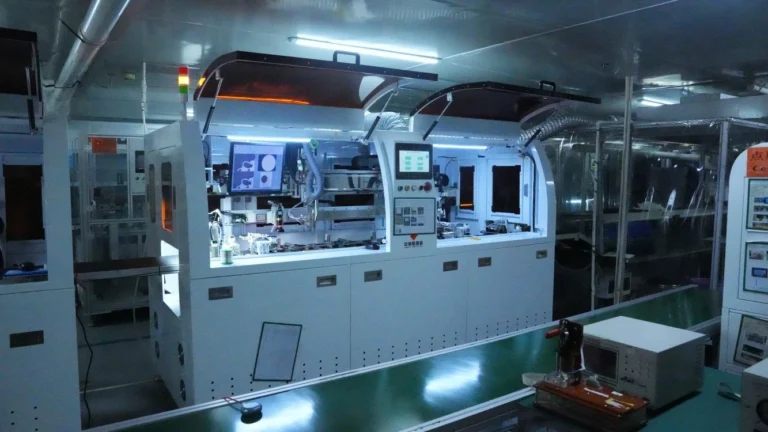
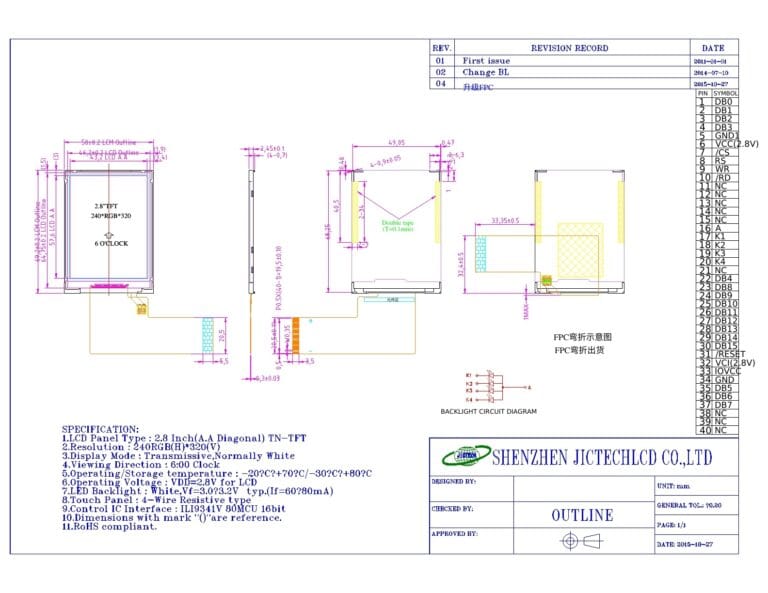
For a bike, the display itself is only part of the module. JicTech builds custom TFT LCD modules around this full stack, not just the panel. The module also includes the backlight, driver IC, FPC, cover glass or touch panel, optical bonding and the mechanical stack. Most field failures happen in that stack — not in the liquid crystal layer.
What is an LCD cluster on a motorcycle?
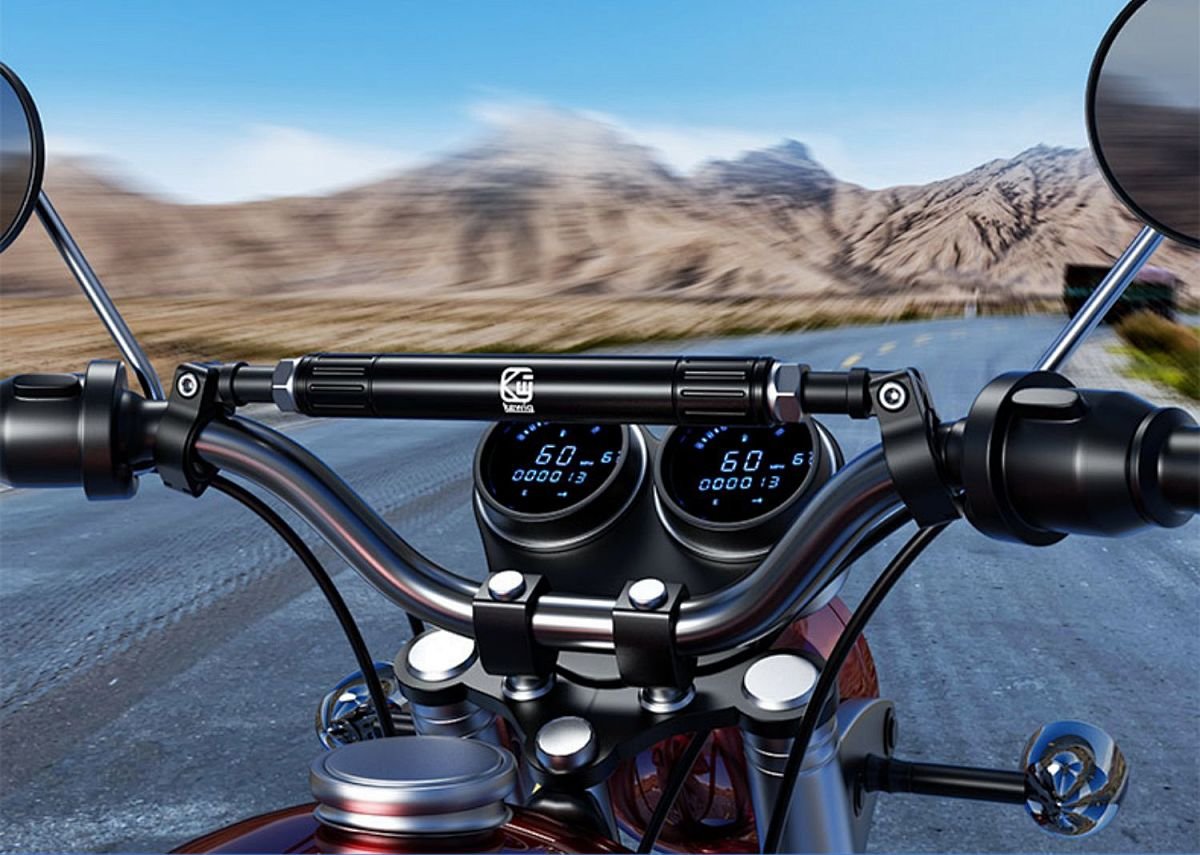
When riders say “LCD” on a motorcycle, they usually mean a segment LCD or a passive-matrix display. It shows fixed icons and digits: speed, fuel, odometer, neutral, turn signals. It is cheap, extremely low power and very reliable because there is little to go wrong.
That is why LCD still dominates commuter bikes, scooters, utility vehicles and cost-sensitive platforms. It is not “old technology” — it is the right technology when the product needs a simple, sunlight-readable cluster at the lowest possible cost.
TFT vs LCD: engineering comparison
| Parameter | TFT display | Segment / passive LCD |
|---|---|---|
| Display type | Active-matrix LCD | Passive matrix or segment |
| Colour | Full colour, 16.7M | Monochrome or limited colour |
| Brightness | Typically 800–1,500 nits for outdoor modules | Typically 300–800 nits, often with a transflective option |
| Sunlight readability | Excellent when brightness and bonding are specified correctly | Good with transflective LCD, limited with transmissive types |
| UI flexibility | Very high: layouts, animation, branding | Low: fixed segments and icons |
| Response time | Fast; suitable for animation and maps | Slow; suitable for digits and icons |
| Power consumption | Moderate; backlight dominates | Very low |
| Operating temperature | Wide-temp models available; confirm your target | Very wide; mature chemistry |
| Sealing | IP65–IP67 achievable at module level | IP65–IP67 achievable |
| Cost | Medium to high | Low |
| Best fit | Premium, connected, high-experience bikes | Entry-level, utility, cost-driven platforms |
Do not choose a display only by the numbers on a datasheet. A 1,000-nit display with poor optical bonding can be less readable in sunlight than an 800-nit display with a good anti-reflective stack. A wide-temperature panel can still fail if the backlight or driver is only rated for 70°C. Specify the whole module, not just the panel.
The five things that actually fail on a motorcycle dashboard
1. Sunlight readability
Riders look at the cluster at midday, through a visor, with the sun behind them. Contrast ratio collapses when ambient light reflects off the cover glass. The fix is a combination of high brightness, anti-reflective coating and optical bonding (or at least a bonded air gap). If sunlight is a primary requirement, start with a sunlight-readable TFT module rather than a standard panel. Ask for a sunlight-readability test, not just a nits figure.
2. Vibration and connector fatigue
Handlebar and fork-mounted clusters see continuous high-frequency vibration. The weak points are the FPC, the board-to-board connector, the backlight connector and the mounting tabs. Specify a locked connector, strain relief on the FPC and a vibration profile that matches the bike’s mounting location. A display that passes a drop test can still fail a 10–200 Hz sweep.
3. Temperature and cold start
Parked bikes reach high temperatures in summer and low temperatures in winter. TFT response slows in the cold and backlight heat must be managed in the heat. Wide-temperature LCD and TFT modules are available, but the driver IC, polariser and backlight must all be rated for the same range. See our wide-temperature display modules for the typical options. Ask for the operating and storage range of the complete module, not the panel alone.
4. Sealing and condensation
Rain, washing and humidity find every gap. IP65 is a minimum for an exposed cluster; IP67 is common for adventure and outdoor vehicles. Sealing alone is not enough: temperature cycling can pull moisture through the cable entry. Specify a breathable membrane or a properly sealed connector system, and test with thermal cycling, not just a water spray.
5. EMI and electrical noise
Ignition, injectors, motors and LED drivers all generate noise. A display that works on the bench can show flicker, ghosting or touch errors on the bike. Specify EMC requirements early, use shielded FPCs where needed and test the module in the actual electrical environment — not only with a lab power supply.
Validation matrix: sunlight, vibration and temperature
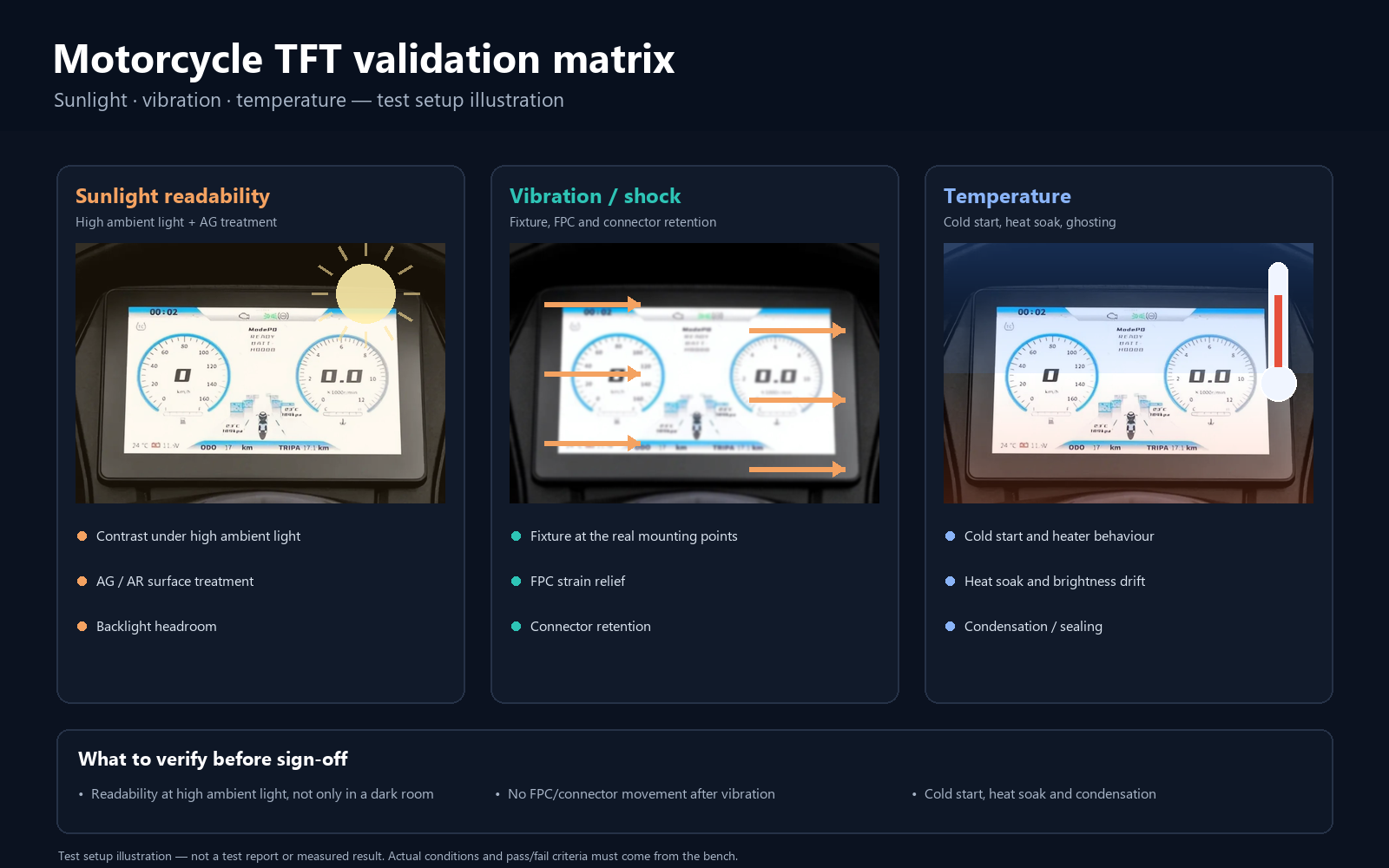
A motorcycle cluster is not validated by one “high brightness” number. The panel, backlight, cover glass, FPC and mounting all have to survive the same environment. The matrix below is a test-plan starting point, not a claim that any specific module has passed it.
| Test area | What to control | What to verify | Common failure |
|---|---|---|---|
| Sunlight readability | High ambient light, fixed camera exposure, rider viewing angle | Contrast, reflection, AG/AR treatment, backlight headroom | Washed-out speed or warning icons |
| Vibration / shock | Fixture at the real mounting points; random vibration and shock | FPC strain relief, connector retention, mounting bosses | Intermittent display or cracked solder joint |
| Temperature | Cold start, heat soak and thermal cycling | Start-up, brightness drift, ghosting, sealing/condensation | No start at cold, haze or delamination |
Reference standards for a test plan include ISO 16750-3 (mechanical loads), ISO 16750-4 (climatic loads), IEC 60529 and ISO 20653 (IP protection). These are references, not a certificate for a particular display.
When an LCD cluster is still the right choice
- Cost is the primary constraint. A segment LCD can be a fraction of the cost of a TFT module at the same size.
- The UI is fixed. Speed, fuel and warning icons do not need colour or animation.
- Power budget is tight. Small bikes and electric scooters cannot spare the backlight power.
- Safety and simplicity matter more than features. Fewer pixels means fewer distraction and software failure modes.
- The product is a backup or secondary display. A mono LCD can complement a TFT instead of competing with it.
Selection checklist for a motorcycle display
| Parameter | What to specify | Why it matters |
|---|---|---|
| Size and resolution | 3.5–7 inch, 480×320 to 1280×720 | Fits the cluster; enough pixels for maps and warnings |
| Brightness | 800–1,000+ nits, with anti-reflective treatment | Sunlight readability |
| Contrast | 800:1 or higher, measured with the cover glass | Black levels and legibility |
| Viewing angle | IPS, 80/80/80/80 or better | Rider position and off-axis visibility |
| Operating temperature | At least −20 to 70°C; wider for extreme markets | Cold start and heat soak |
| Storage temperature | −30 to 80°C or wider | Parked vehicles |
| Sealing | IP65 minimum; IP67 for exposed clusters | Rain, washing, dust |
| Vibration | Profile matched to the mounting location | Connector and FPC fatigue |
| Interface | SPI, RGB, LVDS, MIPI or CAN-enabled module | MCU/SoC choice and harness |
| Touch | PCAP with glove support, or no touch | Rider interaction and safety |
| Lifetime | Backlight and module lifetime at your duty cycle | Warranty and field returns |
What the datasheet does not tell you
“TFT vs LCD” is not a clean either/or. TFT is a transistor type used in an LCD; a “TFT cluster” is still an LCD cluster. What matters is the full stack: panel, backlight, polariser, cover glass, touch, driver and mounting. Compare those, not the label on the spec sheet.
Nits are not sunlight readability. A 1,000-nit panel can still look washed out if the cover glass reflects the sky or the UI uses thin grey text. Ask for contrast under high ambient light and the AG/AR treatment, not only the brightness headline.
A vibration spec is not a mounting design. The FPC, connector, adhesive and bosses can fail even when the panel passes a component-level vibration test. Validate the cluster in its real housing.
An IP rating is not condensation protection. A sealed cluster can still fog when temperature cycles move moisture inside. Ask about breathers, desiccant, lamination and the actual test sequence.
Seven questions to ask a display supplier
- Can you supply the complete module — panel, backlight, driver, FPC, cover glass and bonding — not just the panel?
- What is the measured sunlight readability with the final cover glass, not the bare panel?
- What is the operating and storage temperature of the complete module, including the driver and backlight?
- What vibration and shock profile has the module passed, and at what mounting location?
- What is the sealing method at the cable entry, and has it passed thermal cycling?
- Can you support custom FPC, connector, brightness, cover glass and touch options without a huge MOQ?
- What is the change-control and PPAP process, and how long will the module be available?
Why JicTech
JicTech has been manufacturing display modules since 2003 and is IATF 16949 certified. We build custom TFT LCD, OLED and E-Paper modules for industrial, medical, automotive and consumer applications, including sunlight-readable and wide-temperature versions for outdoor and vehicle use. Our team can support the full module: brightness and bonding, FPC and connector, cover glass, touch and firmware interface.
If you are selecting a display for a motorcycle cluster, send us the environment, the UI requirements and the target cost. We will recommend the right technology — TFT or LCD — rather than the most expensive one.
Request a sample or talk to our display engineers →
Sources and scope
This article is a selection and validation guide, not a test report. It draws on public display specifications, automotive environmental-test standards and JicTech’s module-integration experience. Requirements differ by vehicle, market and OEM; confirm the final test plan with your quality team.
Standards referenced: ISO 16750-3, ISO 16750-4, IEC 60529, ISO 20653. Manufacturer names and trademarks belong to their owners.
FAQ
Is TFT better than LCD for motorcycles?
For a modern, connected bike, yes: TFT gives colour, flexibility and a better rider experience. For a low-cost commuter cluster, a segment LCD is often the better engineering choice.
Can a TFT display survive rain and vibration?
Yes, if the module is specified correctly: IP65–IP67 sealing, locked connectors, strain relief on the FPC and a vibration profile matched to the mounting location.
Why are TFT clusters more expensive?
The cost is in the active-matrix panel, the high-brightness backlight, the driver and the optical bonding. A TFT module also needs more software and validation than a segment LCD.
Which is more readable in sunlight?
A high-brightness TFT with good optical bonding is usually more readable than a transmissive LCD. A transflective LCD can be excellent in direct sunlight but has limited colour and contrast.
Can you customize the display for a specific bike?
Yes. Custom FPC, connector, brightness, cover glass, touch and mounting are all possible. Send your mechanical and electrical requirements to start.
About the author: Bill Hu is the founder of JicTech and has worked in display module engineering and manufacturing since 2003. Read his profile. Last updated: October 2026.