








When you’re sourcing displays for a new product—whether it’s a medical device, industrial control panel, or consumer gadget—one of the first decisions you’ll face is choosing the right screen technology. Two terms you’ll hear constantly are IPS and TFT LCD. But which one actually suits your project? And more importantly, is one truly “better” than the other?
The short answer: it depends. Neither technology is universally superior—it all comes down to your application’s specific needs. Let’s cut through the marketing jargon and break down what really matters.
Understanding the Basics: What Is a TFT LCD?
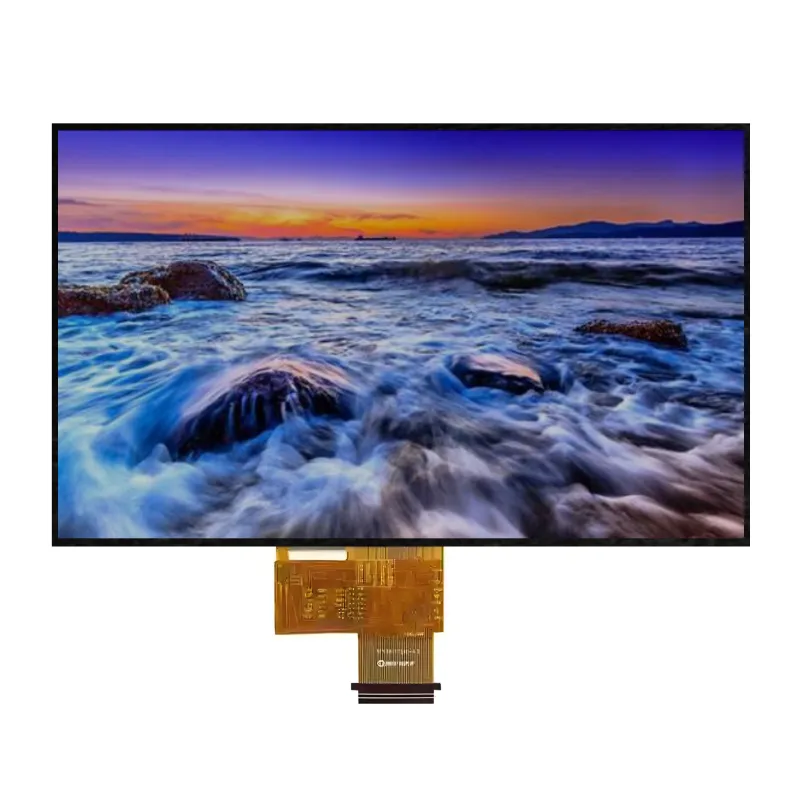
First, let’s clear up a common point of confusion. TFT (Thin-Film Transistor) isn’t a display type—it’s a method of controlling pixels in an LCD. Almost all modern color LCDs use TFT backplanes, including IPS panels. So when people say “TFT LCD,” they usually mean a standard or conventional LCD with a basic TN (Twisted Nematic) or VA (Vertical Alignment) panel—not IPS.
These standard TFT displays are widely used because they’re cost-effective and reliable. They work well in applications where viewing angles and color precision aren’t critical—think basic HMIs, kitchen appliances, entry-level handheld devices, or simple status monitors.
Pros of standard TFT LCDs:
- Lower cost per unit
- Lower power consumption (in many cases)
- Faster pixel response in some models
- Proven reliability in mass production
Limitations:
- Narrow viewing angles (colors shift or invert when viewed off-axis)
- Limited color gamut and contrast
- Poor performance in bright ambient light without optical enhancements
What Sets IPS Apart?
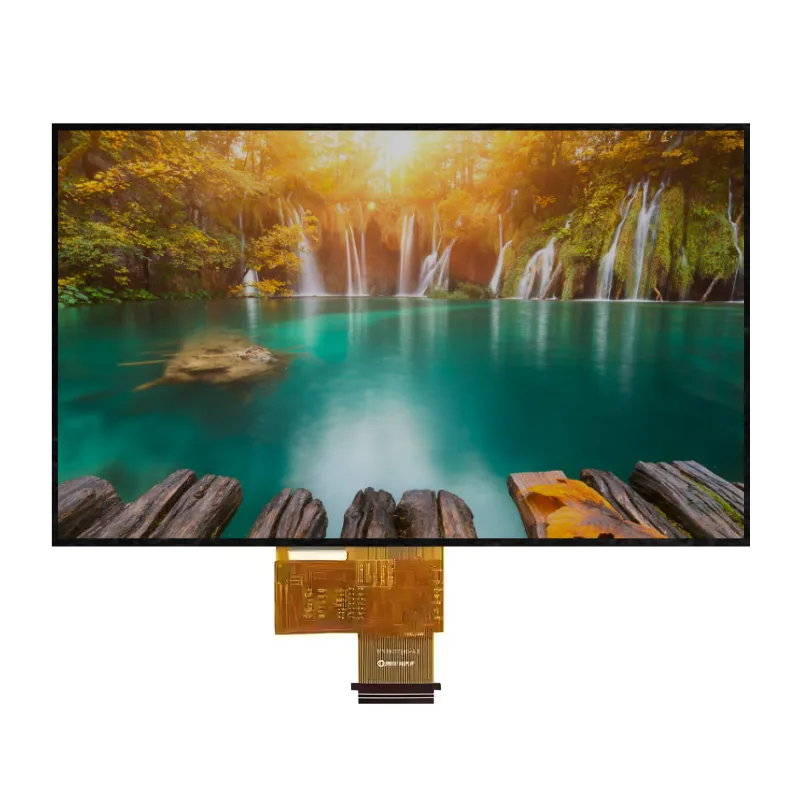
IPS (In-Plane Switching) is an advanced LCD technology developed to solve the shortcomings of traditional TFT panels. In an IPS display, liquid crystal molecules move horizontally rather than twisting vertically. This small change makes a big difference in visual performance.
The most noticeable advantage? Consistent image quality from nearly any angle. Whether you’re looking straight on or from the side, colors stay true and brightness remains stable—up to 178 degrees in either direction.
This is why IPS panels dominate in fields where accuracy matters: medical imaging, automotive dashboards, aviation interfaces, and professional monitors.
Key strengths of IPS:
- Wide viewing angles with minimal color shift
- Superior color reproduction (often covering 100% sRGB or more)
- Better sunlight readability (especially with anti-glare coatings)
- More uniform backlighting
Trade-offs to consider:
- Higher manufacturing cost
- Slightly higher power draw
- Potential for minor backlight bleed (“IPS glow”) in dark scenes
Head-to-Head: IPS vs. Standard TFT LCD
To make the comparison concrete, here’s how they stack up across key criteria:
| Feature | Standard TFT LCD | IPS LCD |
|---|---|---|
| Viewing Angle | ~120° (horizontal) | Up to 178° |
| Color Accuracy | Moderate (60–70% NTSC) | High (90–100%+ NTSC) |
| Response Time | Often faster | Slightly slower (but improving) |
| Power Consumption | Generally lower | Moderate to higher |
| Cost | Low | 20–50% higher (depending on size/resolution) |
| Outdoor Visibility | Poor without enhancements | Good with AR/AG coatings |
| Typical Applications | Basic HMIs, toys, low-end electronics | Medical, automotive, premium devices |
Keep in mind: “Standard TFT” here refers to non-IPS LCDs. All IPS panels are technically TFT-based—they just use a more sophisticated pixel architecture.
Choosing the Right Display for Your Project
Ask yourself these questions before deciding:
- Will users view the screen from multiple angles? → Go IPS.
- Is color fidelity critical (e.g., diagnostics, design)? → IPS is almost always better.
- Are you working with tight power or cost constraints? → A standard TFT may be the smarter choice.
- Will the device operate outdoors or in bright environments? → IPS with anti-reflective treatment performs significantly better.
For example:
- A factory-floor machine operator glancing at a control panel from the side? IPS ensures they see accurate data.
- A battery-powered IoT sensor with a simple status readout? Standard TFT keeps costs and power use down.
There’s no one-size-fits-all—but there is a best fit for your use case.
Clearing Up Common Myths
Let’s address a few misconceptions we often hear:
- “IPS isn’t a type of TFT.”
False. IPS is a subset of TFT LCD technology. The “TFT” refers to the transistor layer; “IPS” describes how the liquid crystals are aligned. - “TFT means low quality.”
Not true. Many rugged, long-lifecycle industrial displays use standard TFTs successfully. Quality depends more on build and components than panel type alone. - “IPS always has better brightness.”
Brightness is determined by the backlight, not the panel type. However, IPS’s consistent viewing angles make it appear brighter off-axis.
Final Thoughts
So, which is better: IPS or TFT LCD?
If your priority is visual performance, color accuracy, and wide-angle usability, IPS is worth the extra investment. But if you’re building a cost-sensitive product with straightforward display needs, a standard TFT LCD delivers solid performance without over-engineering.
At the end of the day, the “best” display isn’t the most advanced—it’s the one that aligns with your product’s requirements, budget, and user experience goals.
Need help selecting the right display module?
We’ve supported hundreds of OEMs in choosing between IPS and standard TFT solutions. [Contact our engineering team] for a no-obligation consultation—or browse our catalog of industrial-grade LCD modules ready for integration.
Frequently Asked Questions
Q: Can I use a standard TFT display outdoors?
A: It’s possible with optical bonding and high-brightness backlights, but IPS generally performs better under direct sunlight due to its stable viewing angles.
Q: Does IPS consume significantly more power?
A: Typically 10–25% more, depending on brightness and resolution. For battery-powered devices, run a power budget analysis early in your design phase.
Q: Are all IPS panels high-resolution?
A: No. Resolution is independent of panel type. You can find both HD and low-res IPS displays—focus on specs that matter for your application.
This article is written to inform, not to sell—while still guiding qualified buyers toward a solution. It balances technical depth with clarity, avoids robotic repetition, and speaks directly to engineers, product designers, and procurement professionals.
Let me know if you’d like a version tailored to a specific industry (e.g., medical, automotive, or retail POS)!