






If you are looking for the absolute best display technology for a modern smartwatch, the answer is unequivocally Micro LED. While OLED currently dominates the market due to its vibrant colors and deep blacks, Micro LED represents the pinnacle of display engineering, combining the self-emissive benefits of OLED with the durability and extreme brightness of inorganic LEDs. With recent prototypes reaching up to 6,000 nits of peak brightness and offering superior energy efficiency, Micro LED solves the two biggest pain points of wearable tech: outdoor visibility and battery life. However, for most consumers buying off the shelf today, high-end AMOLED (specifically LTPO variants) remains the practical “best” choice due to availability and cost.
The Evolution of Smartwatch Screens: From LCD to Micro LED
To understand why Micro LED is the superior choice, we have to look at the trajectory of display technology in wearables. In the early days, we relied on TFT-LCD screens. While reliable and cheap, they require a backlight, which results in “washed out” blacks and higher power consumption. Then came OLED and AMOLED, which changed the game by allowing pixels to turn off completely for true blacks.
However, the “best” display must survive the real world. As of 2025 and heading into 2026, the industry has shifted again. We are seeing a divergence where Micro LED is taking the crown for performance, while specialized Electronic Paper (E-Ink) displays are carving out a niche for ultra-low power usage.
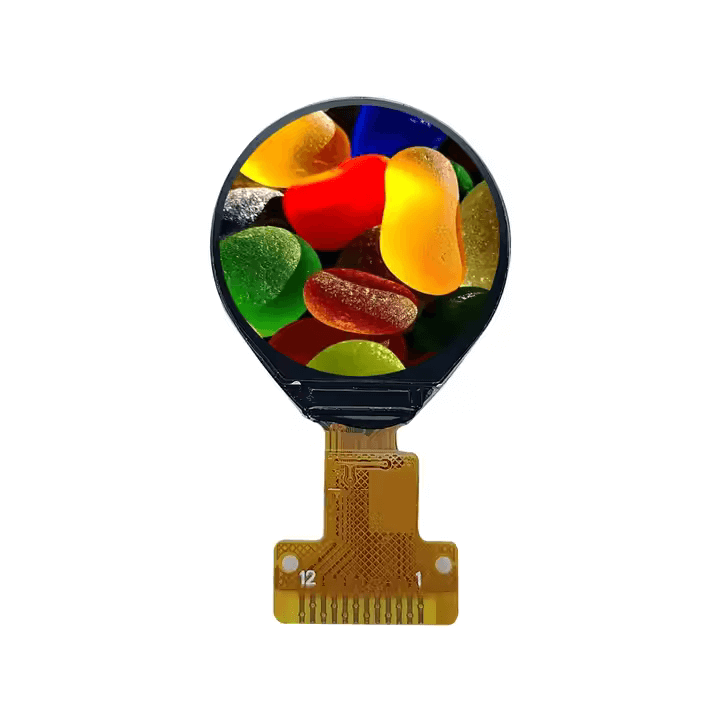
Technical Deep Dive: Why Micro LED Wins
From a professional engineering standpoint, Micro LED is the “holy grail” because it removes the organic material found in OLEDs. This simple change has massive implications for the longevity and performance of a smartwatch.
1. Unmatched Brightness and Outdoor Visibility
The most critical metric for a wearable is readability in direct sunlight. Standard OLED panels usually cap out around 1,000 to 2,000 nits. In contrast, Samsung Display showcased a Micro LED smartwatch panel at the K-Display 2025 event that hit a staggering 6,000 nits. This isn’t just a number; it means your watch is perfectly readable while skiing or running on a beach at noon without you having to cup your hand over the screen.
2. Efficiency and Longevity
OLEDs suffer from “burn-in” because the organic compounds degrade over time, especially the blue sub-pixels. Micro LED uses inorganic materials (Gallium Nitride), meaning it is immune to burn-in and has a significantly longer lifespan. Furthermore, Micro LED is more power-efficient. It consumes roughly 50% less power than OLED for the same brightness level, directly translating to better battery life—a crucial factor for any smartwatch user.
3. Pixel Density and Clarity
We are also seeing pixel densities soar. Recent advancements have pushed Micro LED pixel density to 326 PPI (pixels per inch) and beyond for watch applications, ensuring that text and health metrics look razor-sharp.
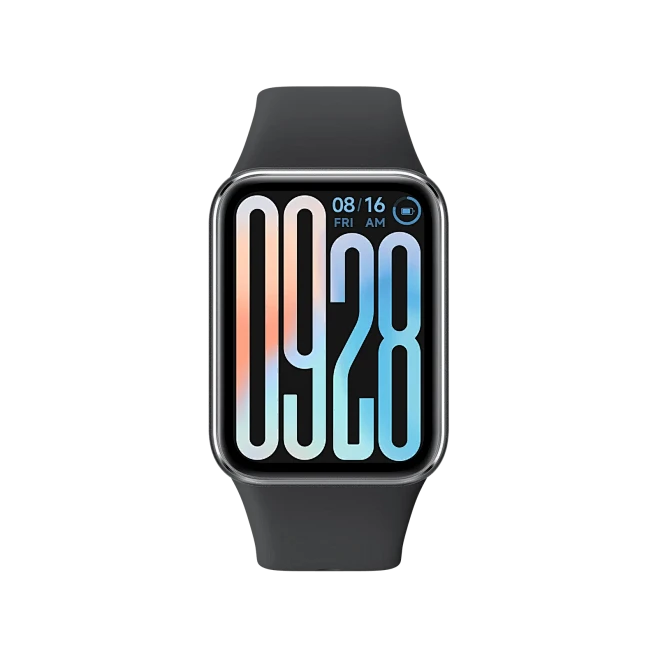
Comparison Table: Display Technologies at a Glance
Here is a breakdown of how the top contenders stack up based on current 2026 market data:
| Feature | Micro LED (The Winner) | AMOLED / OLED (The Standard) | LCD / TFT (The Budget Option) | Electronic Paper (The Niche) |
|---|---|---|---|---|
| Peak Brightness | Extreme (3,000 – 6,000 nits) | High (1,000 – 2,500 nits) | Moderate (400 – 1,000 nits) | Low (Reflective) |
| Power Consumption | Very Low | Moderate | High (Backlight always on) | Ultra-Low (Zero power for static) |
| Lifespan | Excellent (No burn-in) | Good (Risk of burn-in) | Excellent | Excellent |
| Contrast Ratio | Infinite | Infinite | ~1,000:1 | Moderate |
| Cost | Very High | Moderate | Low | Low/Moderate |
Real-World Considerations: What Should You Buy?
While Micro LED is technically the “best,” your purchasing decision depends on your specific use case. Here is my professional recommendation based on user profiles:
For the Extreme Athlete & Tech Enthusiast: Choose Micro LED
If you see a smartwatch sporting a Micro LED display (like the newer high-end Garmin or Samsung Ultra models expected in late 2025/2026), buy it. It offers the best visibility and durability. You are paying a premium, but you are getting a screen that will likely outlast the device itself.
For the General Consumer: Choose LTPO AMOLED
For 90% of users, a high-quality AMOLED screen with LTPO (Low-Temperature Polycrystalline Oxide) technology is the sweet spot. LTPO allows the screen to drop its refresh rate to 1Hz for the “Always-On Display,” saving battery without sacrificing the vibrant colors you love. The upcoming Apple Watch Ultra 3, for instance, is rumored to use advanced wide-viewing-angle OLEDs with LTPO3, offering a fantastic balance of clarity and efficiency.
For the “Week-Long” Battery Seeker: Choose E-Ink
If you don’t care about video or colorful watch faces and just want data that lasts for weeks, look for Electronic Paper displays. These use electrophoretic technology (similar to Kindles). They are readable in direct sun (the brighter the sun, the better they look) and consume almost zero power when the image is static.
Factors to Consider When Evaluating Smartwatch Screens
When analyzing spec sheets, keep these three technical factors in mind to ensure you are getting a quality display:
- PPI (Pixels Per Inch): For a crisp look, ensure the watch has at least 300 PPI. Anything lower will look pixelated, especially on curved screens.
- Protective Glass: The display tech is only as good as the glass protecting it. Look for Sapphire Crystal or high-strength ceramic shields. A Micro LED screen is useless if the glass scratches or cracks.
- Anti-Reflective Coatings: Even with high brightness, glare can be an issue. Modern watches use circular polarizers and anti-reflective coatings to improve contrast in bright environments.
Frequently Asked Questions (FAQ)
Yes, Micro LED is technically superior. It offers higher brightness (up to 6,000 nits vs. ~2,000 for OLED), better energy efficiency, and does not suffer from burn-in because it uses inorganic materials. However, it is currently more expensive to manufacture.
For active use in bright sunlight, Micro LED is the best due to its extreme peak brightness. However, Electronic Paper (E-Ink) displays are also excellent for outdoor visibility as they are reflective rather than emissive, meaning they become clearer the brighter the ambient light is.
Traditional OLED and AMOLED screens can suffer from burn-in (permanent image retention) over time, especially if the “Always-On Display” shows the same static elements for years. Micro LED and LCD screens do not suffer from this issue.
LTPO (Low-Temperature Polycrystalline Oxide) is a backplane technology used in OLED screens. It allows the watch to dynamically change its refresh rate (e.g., from 60Hz down to 1Hz). This is crucial for smartwatches as it enables battery-saving “Always-On” modes without flickering.
For high-end devices, yes, they are largely obsolete due to their poor contrast and high power consumption. However, they are still used in budget-friendly or rugged industrial smartwatches because they are durable, cheap to produce, and can be very bright without the risk of burn-in.