







By Display Industry Analyst | April 2026
The organic light-emitting diode (OLED) display module market has reached an inflection point in 2026. With global valuations hitting approximately $65 billion and projections suggesting a surge toward $400 billion by 2036, the competitive landscape has never been more dynamic . Having tracked this industry through countless factory tours, supply chain disruptions, and technology transitions, I’ve observed how the battle for OLED supremacy has shifted from pure volume to value-driven differentiation.
This comprehensive analysis examines the ten most influential OLED display module manufacturers shaping the industry today. Our evaluation framework covers flagship product portfolios, manufacturing quality standards, R&D innovation pipelines, production scale, intellectual property holdings, customer ecosystems, and after-sales service infrastructure.
1. Samsung Display Co., Ltd. — The Premium Market Architect
Headquarters: Asan, South Korea | 2026 Revenue Share: 48%
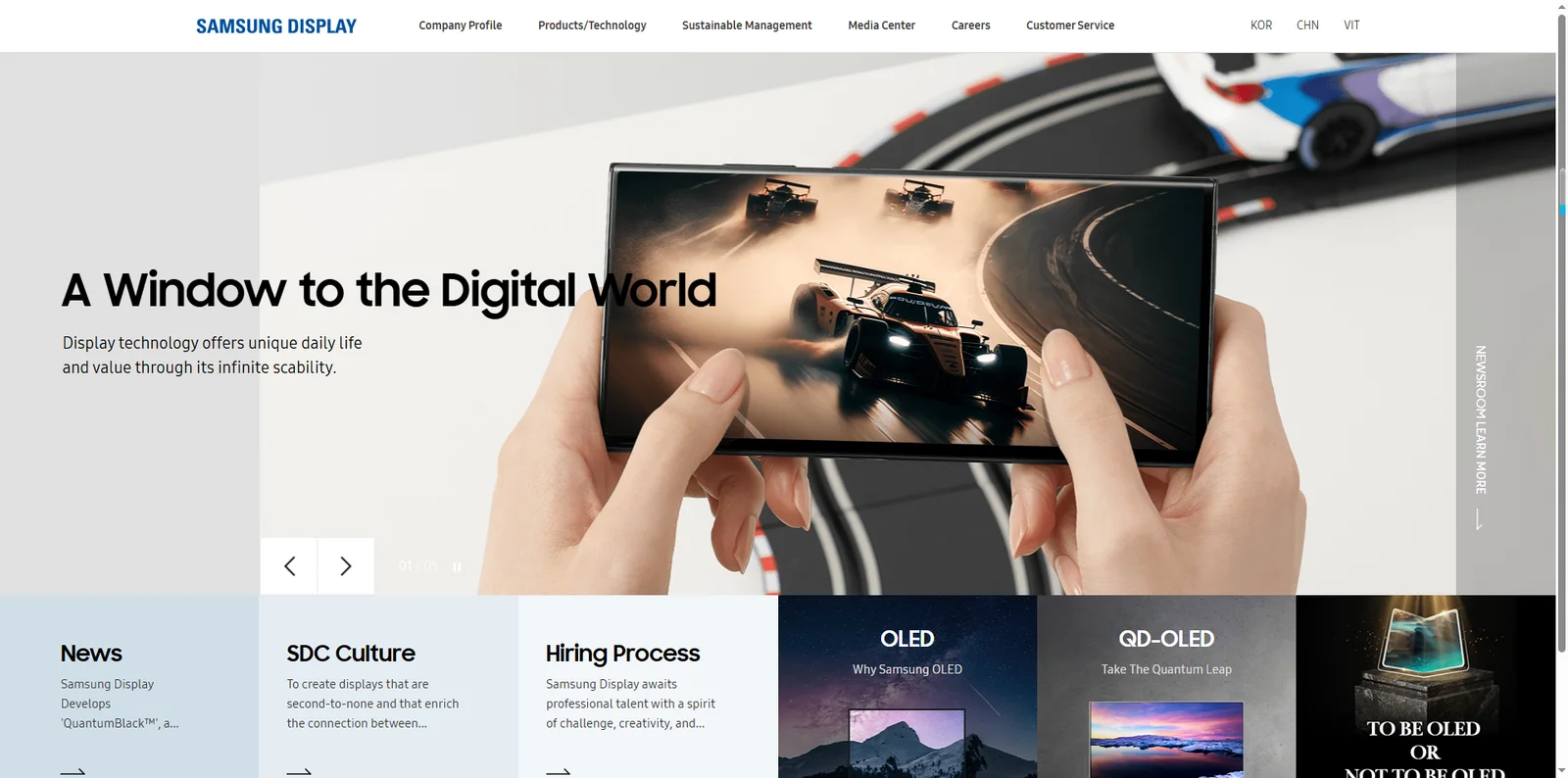
Samsung Display maintains its position as the undisputed revenue leader in the global OLED display module market, commanding nearly half of all industry revenue despite facing intensifying competition from Chinese manufacturers . What separates Samsung from the pack isn’t merely scale—it’s their ability to consistently monetize technological leadership.
Flagship Product Portfolio
The company’s 2026 lineup centers on three pillars: the Gen-8.6 IT OLED line targeting Apple’s MacBook Pro and iPad Pro refresh cycles, QD-OLED panels pushing peak brightness to 4,500 nits for premium televisions, and their revolutionary LEAD 2.0™ platform integrating Flex Magic Pixel™ privacy technology . At MWC 2026, Samsung demonstrated basketball-shooting durability tests on foldable panels—a theatrical but telling display of confidence in their mechanical reliability .
Manufacturing Quality & Innovation
Samsung’s quality metrics remain industry benchmarks. Their A5 OLED factory in Asan represents a $4.1 trillion won investment specifically targeting Gen-8.7 IT OLED production . The company’s SmartPower HDR technology, developed jointly with Intel, reduces laptop OLED power consumption by up to 22% during general tasks—a critical advantage as AI PCs proliferate .
R&D and Patent Position
Samsung’s patent fortress encompasses thousands of OLED-specific filings, with particular strength in tandem OLED architectures and under-panel sensor integration. Their acquisition of eMagin in 2022 accelerated OLED microdisplay development, positioning them for the spatial computing wave .
Customer Ecosystem
Apple remains Samsung’s most strategically significant customer, though the Korean giant has successfully diversified into automotive displays—scaling from 100,000 units in Q1 2024 to 500,000 units by Q3 2025 . The vertical integration within the Galaxy ecosystem provides de-risked R&D environments that competitors struggle to replicate.
Verdict: Samsung Display continues to define the premium OLED display module standard. Their challenge lies in maintaining pricing power as Chinese manufacturers close the quality gap in mid-tier segments.
2. LG Display Co., Ltd. — The Automotive & Large-Format Specialist
Headquarters: Seoul, South Korea | 2026 Revenue Share: 21%
LG Display’s revenue share surged from 14% in 2024 to 21% in 2025, driven by strategic pivots toward automotive applications and tandem OLED technology . While Samsung dominates smartphone panels, LG has carved an almost monopolistic position in large-format OLED displays for vehicles and premium televisions.
Flagship Product Portfolio
LG’s 2026 showcase centers on Tandem OLED 2.0 technology—dual-stack architectures delivering 2x lifespan extension critical for 10-year automotive warranties . Their 51-inch Pillar-to-Pillar (P2P) automotive display, unveiled at CES 2026, represents the industry’s first single-panel implementation spanning driver to passenger zones . The Slidable OLED concept—rolling displays with 30R curvature—demonstrates their plastics OLED (P-OLED) manufacturing mastery.
Manufacturing Quality & Scale
LG Display operates production facilities across Korea, China, and Vietnam, with cumulative annual capacity of approximately 3.4 million glass sheets (8th-generation equivalent) . Their Paju E6 fab expansion—adding 15,000 monthly substrates—specifically targets Apple’s iPhone 17 series requirements, with mass production commencing 2026 .
Innovation & IP Portfolio
With 31,163 domestic patents and 38,108 international filings as of September 2025, LG maintains one of the display industry’s densest intellectual property thickets . Their META Technology 2.0 (Micro Lens Array) implementation achieves brightness improvements without compromising the infinite contrast ratios that define OLED superiority.
Customer Relationships
Mercedes-Benz, BMW, General Motors, and Genesis constitute LG’s automotive display clientele. In consumer electronics, Apple reliance has grown—LG is expected to supply 45.6 million iPhone 17 panels in 2026 . However, financial markets remain skeptical; the company trades at forward P/E of 4.8x, reflecting concerns about sustainable profitability amid Chinese competition .
Verdict: LG Display’s tandem OLED expertise creates defensible moats in automotive and IT applications. Their challenge is translating technological leadership into consistent financial returns.
3. BOE Technology Group Co., Ltd. — China’s Volume Champion
Headquarters: Beijing, China | 2026 Shipment Share: 14-15%
BOE represents the vanguard of China’s display industry ascent. While Korean manufacturers dominate revenue, BOE leads in shipment volume—accounting for approximately 15% of global OLED panel shipments in Q4 2025 . The gap between volume and revenue share illustrates BOE’s positioning: high-scale production with ongoing premium pricing challenges.
Flagship Product Portfolio
BOE’s 2026 strategy centers on their Chengdu and Wuhan Gen-8.6 OLED lines—a CNY 46 billion investment targeting IT applications . Their foldable OLED shipments lead Chinese manufacturers, supplying Huawei, Oppo, and Vivo with panels that have narrowed the quality gap with Korean alternatives . The company has also secured positions in Apple’s supply chain, though reportedly facing order diversification pressures .
Manufacturing Scale & Quality Evolution
BOE’s monthly substrate capacity across OLED lines positions them as the primary challenger to Korean dominance. Their quality metrics have improved substantially—yield rates on flexible AMOLED lines now approach 85%, up from sub-70% levels just three years ago. The company’s 14% market share in rigid AMOLED displays reflects their strength in cost-optimized solutions .
R&D and Patent Strategy
BOE’s patent portfolio emphasizes oxide TFT backplanes and LTPO (Low-Temperature Polycrystalline Oxide) technology for variable refresh rate applications. Their investment in high-value product mix improvement remains ongoing—UBI Research notes that Chinese manufacturers must transition beyond volume expansion to value capture .
Customer Ecosystem
Domestic Chinese brands (Huawei, Xiaomi, Oppo, Vivo) constitute BOE’s core customer base, providing volume stability but limiting pricing power. Apple’s qualification represents a potential inflection point for margin expansion.
Verdict: BOE has successfully scaled OLED manufacturing to world-class volumes. Their 2026 challenge is breaking through the premium pricing ceiling that currently constrains revenue per unit.
4. TCL CSOT (China Star Optoelectronics Technology) — The Inkjet Printing Pioneer
Headquarters: Shenzhen, China | 2026 Status: Pre-mass production
TCL CSOT embodies the most audacious manufacturing bet in the 2026 OLED landscape: the world’s first Gen-8.6 inkjet printing (IJP) OLED production line. With a $4.15 billion investment in their Guangzhou T8 facility, CSOT is attempting to leapfrog traditional FMM (Fine Metal Mask) limitations through additive manufacturing .
Flagship Product Portfolio
CSOT’s IJP OLED technology promises material utilization exceeding 90%—triple the efficiency of vacuum evaporation processes—and manufacturing cost reductions of 20% . Their MWC 2026 demonstrations included a 28-inch tri-fold monitor (4.48mm unfolded thickness, 1.8mm folding radius) and a 14-inch laptop panel weighing just 77 grams—50% lighter than conventional alternatives .
Manufacturing Innovation
The T8 line targets 22,500 monthly substrates (2290 × 2620mm), with equipment installation scheduled through 2026 and mass production targeted for Q4 2027 . This timeline carries execution risk—inkjet printing faces challenges in drying control, production speed, and material limitations compared to established evaporation methods .
Technology Differentiation
CSOT’s Super Pixel technology re-engineers pixel arrangements to increase sub-pixel density by 1.8% while reducing power consumption by 25%—a efficiency-over-resolution approach that contrasts with competitors’ density races . Their APEX brand philosophy prioritizes “human-centric benefits and sustainability over pure specifications.”
Customer Positioning
Motorola, Xiaomi, and Honor currently receive CSOT foldable OLED panels. The T8 line’s IT focus suggests future supply relationships with laptop and monitor OEMs seeking cost-competitive OLED alternatives.
Verdict: TCL CSOT’s inkjet printing gamble represents either industry disruption or cautionary tale. Success would democratize mid-size OLED adoption; delays would cede the IT transition to Korean competitors.
5. Visionox Technology Inc. — The Foldable Specialist
Headquarters: Beijing, China | 2026 Shipment Share: 14%
Visionox has emerged as Huawei’s preferred foldable OLED supplier, capturing exclusive positions in the Mate X series and establishing technical credibility in the most demanding flexible display applications . Their 2026 focus centers on BT.2020 color gamut performance—targeting 94% coverage through pTSF (phosphor-sensitized fluorescence) technology .
Flagship Product Portfolio
Visionox’s foldable OLED shipments exceeded 3 million units in 2025, with the company ranking among the top three Chinese suppliers alongside BOE and CSOT . Their ViP (Visionox Intelligent Pixel) technology represents an alternative path to high-resolution OLED manufacturing, potentially circumventing FMM constraints that limit competitors.
Manufacturing & Quality
Visionox maintains production facilities in Hebei and Anhui provinces, with ongoing capacity expansion targeting the 8.6G generation. Their quality metrics in foldable applications—particularly crease visibility and hinge durability—have achieved parity with Samsung Display in third-party testing.
Innovation Trajectory
The company’s BT.2020 competitive positioning signals a shift from resolution-focused marketing to color accuracy differentiation. As Changwook Han of UBI Research notes, “competition in the 94% to 96% range is no longer just about numerical superiority, but is evolving into a broader performance race encompassing efficiency and lifetime” .
Customer Relationships
Huawei and Honor represent Visionox’s anchor customers, providing high-visibility platforms in the premium foldable segment. The company’s exclusion from Apple’s supply chain limits volume upside but reduces margin compression risks.
Verdict: Visionox has carved a defensible niche in foldable OLED technology. Their challenge is expanding beyond Chinese brand ecosystems to achieve global OEM qualifications.
6. Tianma Microelectronics — The Automotive & Industrial Powerhouse
Headquarters: Shenzhen, China | 2026 Position: Automotive display leader
Tianma has executed a strategic pivot that many display manufacturers attempt but few achieve: transitioning from commodity smartphone panels to high-reliability automotive and industrial applications. Their 2026 positioning reflects this evolution.
Flagship Product Portfolio
Tianma leads the global automotive display market in shipment volume and certification breadth . Their 2026 breakthrough achieves 96% BT.2020 color gamut coverage through PSF (Phosphor-Sensitized Fluorescence) technology—surpassing competitors in color purity metrics . The company’s foldable OLED entry in 2025 marks their expansion into consumer premium segments.
Manufacturing Quality & Certifications
Tianma’s automotive focus necessitates stringent quality protocols—AEC-Q100 compliance, extended temperature operation (-40°C to 85°C), and 10-year lifecycle guarantees. Their medical display certifications (ISO 13485) enable supply to diagnostic imaging equipment manufacturers, a high-margin, low-volume segment with significant barriers to entry.
R&D Focus
Tianma’s research investments concentrate on under-display camera technology and ultra-wide color gamut performance. Their 2025 introduction of AMOLED displays optimized for smartwatches—featuring enhanced outdoor visibility and reduced power consumption—demonstrates diversification beyond automotive .
Customer Ecosystem
European and American Tier 1 automotive suppliers constitute Tianma’s core clientele, providing revenue stability through multi-year program commitments. Their limited presence in flagship smartphone launches constrains brand recognition but supports margin preservation.
Verdict: Tianma’s automotive specialization creates recession-resistant revenue streams. Their emerging foldable and color-gamut capabilities suggest potential premium market expansion.
7. Japan Display Inc. (JDI) — The eLEAP Technology Innovator
Headquarters: Tokyo, Japan | 2026 Status: Restructuring with technology licensing focus
Japan Display represents the industry’s most intriguing technology story in 2026. Having exited smartphone LCD production, JDI has pivoted toward eLEAP—an OLED manufacturing process eliminating fine metal masks entirely through lithographic patterning .
Flagship Technology: eLEAP
eLEAP achieves aperture ratios exceeding 60%—double conventional FMM OLEDs—delivering 2x peak brightness and 3x lifetime extension . The technology enables free-form OLED shapes impossible with mask-based manufacturing, opening automotive dashboard and wearable applications. LG Display has begun testing eLEAP on their Paju E4 line, suggesting potential licensing revenue streams .
Manufacturing Position
JDI’s Mobara 6-Gen fab produces eLEAP panels for laptop and automotive applications, with mass production commencing ahead of schedule in late 2024 . A proposed $13 billion U.S. factory—under discussion with Japanese and American government support—would represent a geopolitically significant display manufacturing onshoring initiative .
Customer & Partnership Strategy
Rather than competing on volume, JDI pursues technology licensing and niche high-value applications. Their 32-inch automotive-grade eLEAP+HMO (High Mobility Oxide) display targets luxury vehicle cockpits where brightness and longevity justify premium pricing .
Verdict: JDI’s eLEAP technology could disrupt OLED manufacturing economics if adopted by major panel makers. Their survival depends on successful licensing negotiations and strategic partnership execution.
8. AU Optronics Corp. (AUO) — The Specialized Applications Expert
Headquarters: Hsinchu, Taiwan | 2026 Focus: Medical and industrial OLED
AU Optronics has deliberately avoided the smartphone OLED price wars, instead cultivating expertise in high-reliability medical imaging, industrial control, and premium wearable applications. This strategy has preserved margins while competitors battle for volume.
Flagship Product Portfolio
AUO’s medical OLED panels target diagnostic imaging—radiology workstations, surgical displays, and endoscopic monitors—where color accuracy (ΔE < 1.0) and luminance stability are non-negotiable. Their high-PPI Micro-OLED development targets AR/VR headsets, with the company maintaining a VMR Sentiment Score of 9.2/10 in specialized display segments .
Manufacturing Quality
AUO’s quality systems emphasize ISO 13485 medical device certification and extended MTBF (Mean Time Between Failures) ratings exceeding 50,000 hours. Their circular and non-standard form factor capabilities—demonstrated in wearable and automotive applications—provide differentiation against rectangular-panel competitors.
R&D and Innovation
The company’s stable 12.2% CAGR within medical imaging reflects successful execution of the specialization strategy . Their technical scalability in non-standard form factors addresses emerging automotive free-form display requirements.
Verdict: AUO demonstrates that OLED profitability doesn’t require smartphone volume. Their medical and industrial focus provides sustainable margins, though growth ceiling is lower than mass-market competitors.
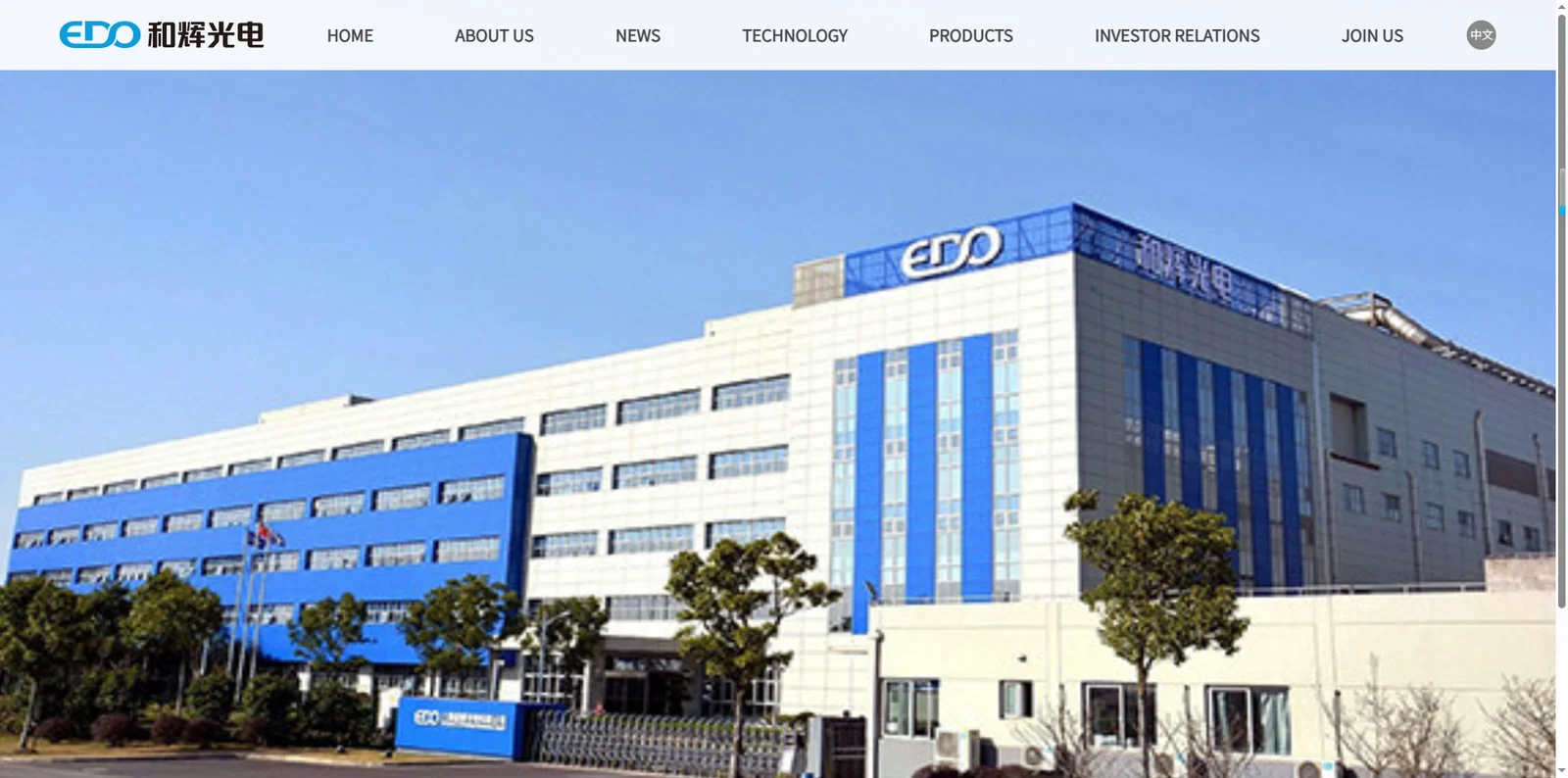
9. EverDisplay Optronics (EDO) — The Emerging Large-Format Player
Headquarters: Shanghai, China | 2026 Position: Large-size OLED specialist
EverDisplay Optronics has emerged as a significant, if underrecognized, force in large-size OLED manufacturing. Their 2026 positioning reflects successful execution of a focused strategy targeting IT and television applications.
Flagship Product Portfolio
EDO commands a 14.8% share of large-size OLED panel shipments—ranking third behind Samsung Display (50.9%) and LG Display (31.8%) . Their 2026 supply agreements include Lenovo’s OLED laptop expansion, with dual sourcing from Samsung Display and EDO expected to drive significant volume growth .
Manufacturing Scale
EDO’s production capacity focuses on Gen-6 and emerging Gen-8.6 lines, targeting the notebook and monitor segments where OLED adoption is accelerating—Sigmaintell Consulting projects 17.4 million OLED laptop shipments in 2026, up from 11.5 million in 2025 .
Quality & Customer Positioning
EDO’s quality metrics have achieved qualifications from tier-1 PC OEMs, representing significant credibility given the stringent reliability requirements of commercial laptop deployments. Their exclusion from Apple’s supply chain limits upside but reduces qualification overhead.
Verdict: EverDisplay represents the “quiet achiever” of Chinese OLED manufacturing—less visible than BOE or CSOT, but securing meaningful positions in high-growth IT applications.
10. Sharp Corporation — The IGZO-OLED Hybrid Pioneer
Headquarters: Sakai, Japan | 2026 Focus: Pro IGZO OLED integration
Sharp’s 2026 OLED strategy centers on their proprietary IGZO (Indium Gallium Zinc Oxide) backplane technology, creating hybrid displays that combine OLED emissive layers with oxide TFT switching matrices for superior power efficiency and variable refresh rate performance.
Flagship Product Portfolio
The AQUOS R10 smartphone—launching July 2025—features a Pro IGZO OLED display achieving 3,000 nits peak brightness, 1-240Hz variable refresh, and Virtual HDR processing . Sharp’s IGZO technology enables lower power consumption than conventional LTPS backplanes—critical for 5G-era battery life demands.
Manufacturing & Technology Position
Sharp’s Kameyama Plant 2 produces IGZO panels for automotive and industrial applications, with AEC-Q100 qualification enabling supply to European and American Tier 1 suppliers . Their oxide TFT expertise—developed originally for LCD—translates effectively to OLED backplane applications.
Innovation Trajectory
Sharp’s research investments target enhanced current saturation in IGZO TFTs through novel source-connected bottom gate structures, improving output resistance for high-resolution AMOLED driving circuits . Their MEMS shutter display development represents longer-term technology diversification.
Verdict: Sharp’s IGZO-OLED integration provides legitimate differentiation in power efficiency. Their challenge is scaling beyond niche applications to achieve volume competitiveness.
Comparative Analysis: Key Dimensions
Manufacturing Quality & Reliability
Samsung Display and LG Display maintain the industry’s most comprehensive quality infrastructure—100% AOI (Automated Optical Inspection), real-time yield monitoring, and predictive maintenance systems. Chinese manufacturers have closed the gap in outgoing quality metrics but continue building equivalent process control sophistication. Japanese manufacturers (JDI, Sharp) emphasize specialized certifications (automotive, medical) that command premium positioning.
Innovation & R&D Investment
The 2026 innovation battleground centers on three technologies: tandem OLED architectures (LG Display leading), inkjet printing manufacturing (CSOT pioneering), and maskless patterning (JDI’s eLEAP). Samsung Display maintains broadest R&D coverage across all three, while specialized players focus on singular breakthroughs.
Patent Portfolio Strength
LG Display’s 69,000+ cumulative patents (domestic and international) represents the industry’s densest intellectual property fortress . Samsung Display’s patent strategy emphasizes process technologies and application-specific implementations. Chinese manufacturers have accelerated filing rates but remain concentrated in utility patents rather than foundational innovations.
Production Scale & Capacity
Samsung Display’s Gen-8.7 IT OLED line and BOE’s Chengdu/Wuhan expansions represent the largest 2026 capacity additions. The transition from Gen-6 (smartphone-optimized) to Gen-8.6/8.7 (IT-optimized) substrates defines competitive positioning for the 2026-2028 period.
Customer Diversification
Apple dependency remains the industry’s most significant customer concentration risk—Samsung Display, LG Display, and BOE all derive meaningful revenue from Cupertino. Automotive diversification (Mercedes-Benz, BMW, GM, Genesis) provides LG Display and Tianma with countercyclical stability.
After-Sales Service Infrastructure
Korean and Japanese manufacturers maintain the most extensive global service networks, with localized technical support in North America, Europe, and Asia-Pacific. Chinese manufacturers are rapidly expanding service capabilities but remain concentrated in domestic and Asian markets.
Industry Outlook: 2026 and Beyond
The OLED display module market enters 2026 with Korean manufacturers defending revenue leadership against Chinese volume expansion. Three structural trends will define the coming years:
1. The IT OLED Transition: Gen-8.6/8.7 lines will shift OLED economics for laptops, tablets, and monitors. Samsung Display’s early-mover advantage (Q2 2026 production) positions them for Apple’s MacBook transition, while CSOT’s inkjet printing alternative could disrupt pricing if yields stabilize .
2. Automotive Display Premiumization: Tandem OLED technology—offering 2-3x lifetime extension—will become standard for luxury vehicle cockpits. LG Display’s P2P (Pillar-to-Pillar) implementations and Tianma’s volume leadership create segmented competition .
3. Manufacturing Technology Divergence: The industry faces a process technology fork—evolutionary FMM refinement (Samsung, LG, BOE) versus revolutionary inkjet printing (CSOT) and maskless patterning (JDI). The 2026-2028 period will determine which approaches achieve economic viability at scale.
For procurement professionals and product designers, manufacturer selection in 2026 requires balancing immediate supply security (Samsung, LG, BOE) against emerging technology options (CSOT’s cost potential, JDI’s performance advantages) and specialized application requirements (Tianma automotive, AUO medical, Sharp power efficiency).
Frequently Asked Questions
Samsung Display maintains the industry’s highest quality benchmarks for premium smartphone OLED modules, with their LEAD 2.0™ platform achieving superior brightness uniformity, color accuracy, and panel-integrated privacy technology. For brands seeking dual-sourcing options, LG Display and BOE have achieved Apple qualification, indicating quality parity for standard applications, though Samsung leads in cutting-edge implementations like under-panel cameras and variable refresh rate optimization.
Chinese manufacturers (BOE, CSOT, Visionox, Tianma) have substantially closed the quality gap with Korean leaders over the past three years. Yield rates on flexible AMOLED lines now approach 85%, and outgoing quality metrics meet tier-1 OEM specifications. However, Korean suppliers maintain advantages in process control sophistication, consistency across high-volume production, and advanced feature implementation (tandem structures, microdisplays). For cost-sensitive mid-tier applications, Chinese suppliers offer compelling value; for premium flagship devices, Korean manufacturers retain marginal quality advantages.
TCL CSOT’s inkjet printing (IJP) OLED manufacturing eliminates vacuum evaporation and fine metal masks, instead depositing RGB OLED materials through precision printing. This approach achieves 90%+ material utilization (versus ~30% for evaporation), reduces manufacturing costs by approximately 20%, and enables larger substrate sizes without mask-related constraints. The technology faces challenges in drying control, production speed, and material limitations that CSOT aims to resolve through their $4.15 billion Gen-8.6 T8 line, with mass production targeted for 2027.
LG Display leads in premium automotive OLED with their Tandem OLED 2.0 technology and Pillar-to-Pillar implementations for luxury vehicles. Tianma Microelectronics dominates automotive display shipment volume and certification breadth. Samsung Display is rapidly scaling automotive production (5x growth from Q1 2024 to Q3 2025). For manufacturers requiring AEC-Q100 qualification and 10-year lifecycle guarantees, these three suppliers represent the most mature options. Japan Display’s eLEAP technology offers compelling brightness and longevity advantages for next-generation automotive applications.
Long-term OLED supplier evaluation should assess: (1) Technology roadmap alignment—Gen-8.6/8.7 IT OLED capacity for computing devices, tandem OLED for automotive/long-lifecycle applications; (2) Geographic diversification—Korean suppliers offer supply security advantages given geopolitical considerations; (3) Financial stability—LG Display’s valuation concerns versus Samsung’s resources and Chinese government-backed expansion; (4) Application-specific expertise—medical (AUO, Tianma), automotive (LG, Tianma, Samsung), power efficiency (Sharp); and (5) After-sales service infrastructure for regional support requirements. Dual-sourcing strategies are increasingly common among risk-conscious OEMs.