








introduction
You’ve probably seen it happen. You’re standing at a bus stop on a sunny afternoon, trying to read the arrival time on the digital sign. But the screen is washed out—barely legible under the glare. Or maybe you’ve used a handheld scanner in a warehouse yard, cupping your hand over the display just to see what it says.
This isn’t a problem with the display being “bad.” It’s a problem with how the display was designed to work.
Most screens you encounter every day—your phone, your laptop, the TV in your living room—are built on a fundamentally different principle than the one that makes e-paper readable in broad daylight. Understanding that difference explains why some displays disappear in the sun, and others shine.
Transmissive Displays: Fighting the Sun
A transmissive display works by generating its own light. Whether it’s an LCD with a backlight or an OLED where each pixel emits light, the basic idea is the same: the display creates illumination, and that illumination travels from behind the screen through the display layers to your eyes.
In a dim room or indoors, this works beautifully. The display is brighter than the ambient light, so you see it clearly.
Outside, things change.
Sunlight is powerful—much more powerful than any backlight you can reasonably pack into a portable device. When you take a transmissive display outdoors, the ambient light competes with the display’s own light. The sun essentially overpowers the backlight. The result is a washed-out image, reduced contrast, and the all-too-familiar squint-and-shield maneuver.
To make a transmissive display readable in direct sunlight, manufacturers crank up the backlight brightness. A typical “sunlight-readable” TFT LCD needs about 800 nits of brightness to be visible outdoors. For full sun, you’re looking at 5,000 nits or more. Some military-grade applications push that to 10,000 nits.
Each nit comes at a cost. High-brightness backlights draw significant power, generate heat, and reduce battery life. The display is essentially fighting the sun—and the sun always wins on energy efficiency.
Transmissive displays are like shining a flashlight at a wall on a sunny day. The flashlight works fine in the dark. In the sun, you can barely tell it’s on.
Reflective Displays: Working with the Sun
E-paper takes the opposite approach. Instead of generating its own light, it reflects the light that’s already there.
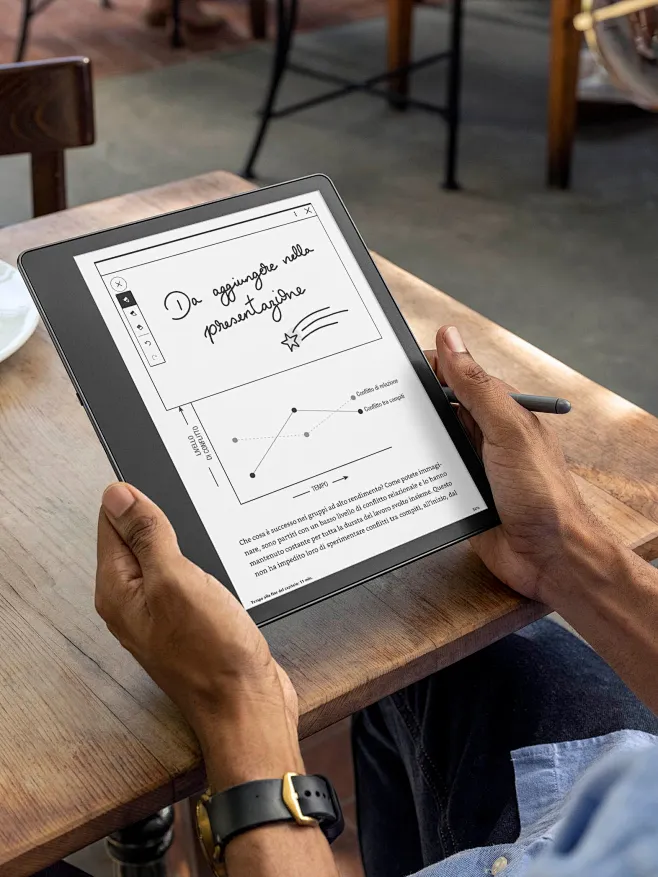
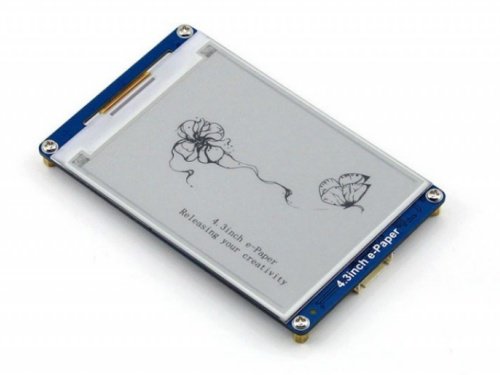
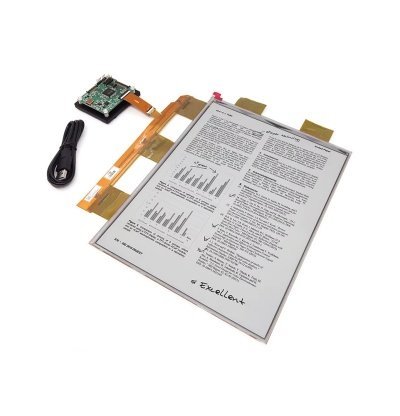
An e-paper display is built on electrophoretic technology. Inside each pixel, there are tiny capsules filled with a fluid containing charged white and black particles. Apply a voltage, and the particles move—white to the top, black to the bottom, or vice versa. The image forms not by emitting light, but by modulating how much ambient light is reflected back to your eyes.
This is exactly how paper works. You don’t need a backlight to read a book in the sun—the sun illuminates the page. The same principle applies to e-paper.
Because e-paper is reflective, it doesn’t compete with ambient light. It uses it. As the surrounding light increases, more light is reflected from the display surface, making it easier to read rather than harder. In direct sunlight, e-paper is at its best.
There’s no glare either. E-paper displays are naturally glare-free because they use diffuse reflection rather than mirror-like surfaces. The display doesn’t reflect a sharp image of the sun back at you—it reflects a clean, readable image of the content you actually want to see.
Reflective displays are like reading a book. The brighter the day, the better it looks.
The Numbers Behind the Difference
The performance gap between reflective and transmissive displays in sunlight comes down to how each technology handles light. But the gap in power consumption is just as striking.
Transmissive displays require continuous power to maintain an image. The backlight stays on, the pixels stay lit, and the battery drains. A bright outdoor LCD can draw hundreds of watts to stay visible in the sun.
E-paper, by contrast, is bistable. Once an image is set, it stays in place without any power. The display only consumes energy when the content changes. In static display mode, power consumption drops to essentially zero.
This isn’t a small difference. An E Ink display uses about 99 percent less power than the LCD screens used in laptops and tablets. Reflective displays are dramatically less power-hungry than transmissive displays with backlights.
What does this mean in practice? It means e-paper can run on a coin-cell battery for years. It means solar-powered signage becomes viable. It means outdoor displays can be deployed in places where running power lines is impractical or prohibitively expensive.
Transmissive displays buy visibility with watts. Reflective displays buy visibility with ambient light—and watts are optional.
The Third Option: Transflective
There is a middle ground worth mentioning. Transflective displays combine reflective and transmissive technologies in a single panel.
Part of the display reflects ambient light (like e-paper), and part allows backlight to pass through (like a traditional LCD). In bright conditions, the reflective component takes over. In dim light, the backlight kicks in.
This sounds like the best of both worlds, and in some applications—like GPS devices and outdoor handhelds—it works reasonably well.
But transflective displays come with compromises. Because the reflective layer is partially transparent to let the backlight through, it’s less reflective than a purely reflective display. Put a transflective display next to a pure e-paper display in sunlight, and the difference is obvious. The e-paper looks crisper, brighter, more like paper.
Transflective displays also still need a backlight, which means they still consume power and generate heat—just less than a purely transmissive display. They’re a compromise, not a solution.
Why This Matters for Outdoor Applications
The difference between reflective and transmissive isn’t academic. It determines which displays work outdoors and which don’t.
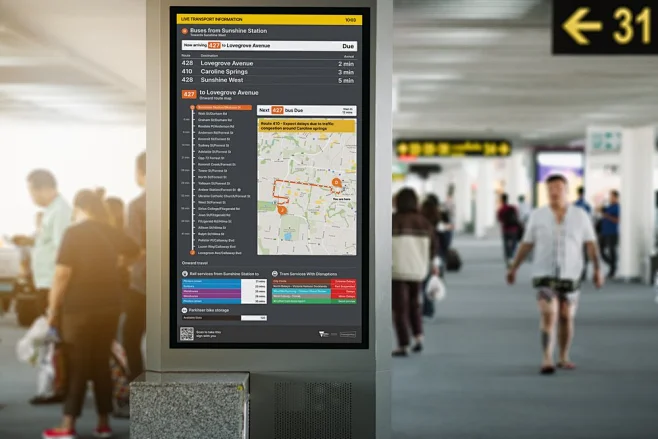
Public transportation signs need to be readable in direct sunlight, rain, and everything in between. E-paper bus stop displays are increasingly common because they stay readable when LCDs wash out.
Retail signage outside stores faces the same challenge. A promotional display that’s unreadable at noon is worthless. E-paper signage remains visible throughout the day.
Smart city infrastructure—parking meters, wayfinding kiosks, public information boards—benefits from e-paper’s combination of sunlight readability and ultra-low power consumption.
Warehouse and logistics operations often involve moving between indoors and outdoors. Handheld devices with e-paper displays remain readable in both environments without needing to crank up a backlight.
Solar-powered displays are only practical with technologies that sip power rather than guzzle it. E-paper’s near-zero static power consumption makes it the obvious choice.
The Trade-Offs
None of this is to say e-paper is perfect for every outdoor application. It’s not.
E-paper refreshes slowly—about 0.3 to 2 seconds depending on the module and color configuration. It’s not suitable for video, animations, or rapidly changing content.
Color reproduction is improving but still doesn’t match LCD or OLED. For applications that require vibrant, saturated colors, e-paper isn’t there yet.
And in low-light conditions, reflective displays need assistance. That’s why many e-paper modules include front lights—soft illumination that makes the display readable at night or in dim environments.
E-paper excels where the content is mostly static, the environment is bright, and power is limited. For dynamic video or color-critical work, look elsewhere.
Choosing the Right Display for Your Application
If you’re specifying a display for an outdoor or industrial application, here’s a quick decision framework:
Is the device mostly used outdoors or in bright environments? Choose reflective (e-paper). It gets better as the light gets brighter.
Does it need to show video or fast-moving content? Choose transmissive (high-brightness LCD). E-paper can’t keep up.
Is it battery-powered or solar-powered? Choose reflective. The power savings are dramatic.
Does it need to be readable both indoors and outdoors? Consider transflective, but understand the compromises. Or use e-paper with a front light for low-light conditions.
Is color critical? High-brightness LCD or OLED. E-paper color is improving but still limited.
Is long-term reliability important? E-paper has no burn-in risk, no backlight to fail, and no organic materials to degrade. It’s built to last.
The Bottom Line
Transmissive displays fight the sun. They crank up the backlight, burn through battery, and still struggle to stay readable in direct sunlight. Reflective displays work with the sun. They use ambient light to create images that get clearer as the environment gets brighter.
E-paper is the most mature reflective display technology available today. It’s bistable, ultra-low power, sunlight-readable, and glare-free. For outdoor signage, transportation displays, warehouse applications, and any environment where bright light and limited power are factors, it’s hard to beat.
At Jictech, we design and manufacture e-paper display modules for exactly these kinds of applications. From 1.54-inch to 13.3-inch sizes, monochrome to three-color to grayscale options, we can tailor a module to your specific outdoor or industrial requirement.
Visit https://jiclcd.com/e-paper/ to explore our e-paper product line, or check out https://jiclcd.com/industrial-display/ for our broader industrial display solutions.
FAQs
Reflective displays use ambient light to show images—they don’t generate their own light. Transmissive displays use a backlight or self-emitting pixels to create light. Reflective displays excel in bright environments; transmissive displays work better in dim conditions.
E-paper reflects ambient light like paper does. The brighter the environment, the more light reflects off the display, making it easier to read. LCDs generate their own light, which gets washed out by sunlight.
A transflective display combines reflective and transmissive technologies. It can use ambient light in bright conditions and a backlight in dim conditions. It’s a compromise that works in some applications but doesn’t match pure reflective displays for sunlight readability.
For partial sunlight, about 800 nits. For full sun, 5,000 nits or more. Military-grade applications may require up to 10,000 nits.
Yes. Many e-paper modules include integrated front lights that softly illuminate the display in low-light conditions, maintaining readability at any time of day.
Yes. E-paper is increasingly used for bus stop signs, public information boards, retail signage, and smart city infrastructure because of its sunlight readability, ultra-low power consumption, and reliable operation in extreme conditions.