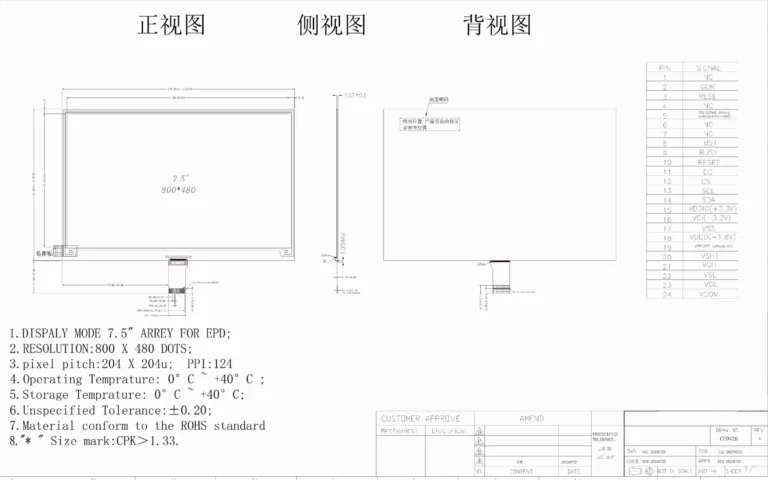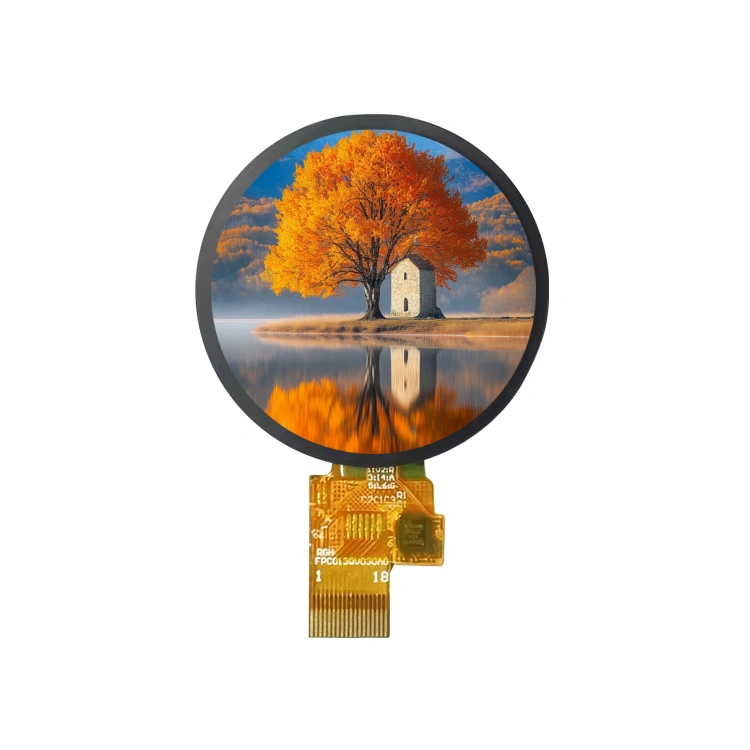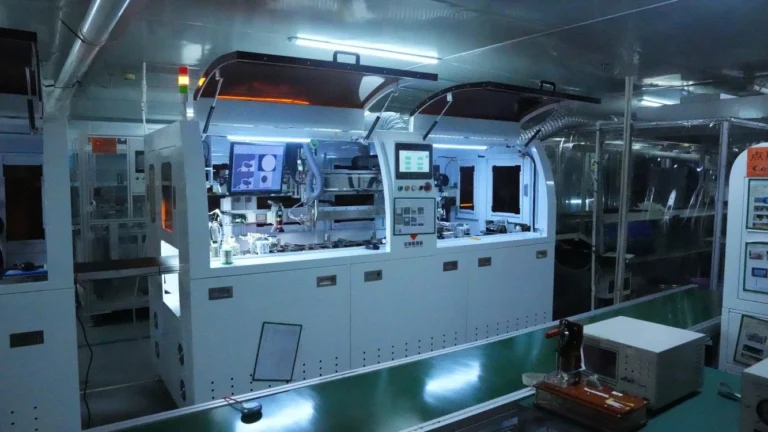










In today’s fast-evolving electronics market—from smartphones and smartwatches to industrial HMIs and automotive dashboards—choosing the right display technology is critical. Two of the most widely used options are TFT LCD and AMOLED. But which one is better for your project?
This comprehensive guide breaks down the key differences between TFT LCD and AMOLED displays across performance, cost, reliability, and application suitability—so you can make an informed decision with confidence.
What Is a TFT LCD Display?
TFT LCD (Thin-Film Transistor Liquid Crystal Display) is a type of active-matrix LCD that uses transistors at each pixel to actively control light transmission. Unlike passive LCDs, TFT technology delivers faster response times and higher image quality.
How It Works
A TFT LCD relies on a backlight (usually LED-based) to illuminate liquid crystals sandwiched between two polarized glass panels. The crystals twist or untwist under electrical signals to allow varying amounts of light through red, green, and blue color filters—creating the final image.
Common Applications
- Industrial control panels
- Medical devices
- POS terminals
- Automotive instrument clusters (entry-level)
- Budget consumer electronics
Pros & Cons
✅ Mature, cost-effective manufacturing
✅ Excellent longevity and stability
✅ Performs well in high-brightness outdoor environments (with anti-glare coatings)
❌ Limited contrast ratio (due to always-on backlight)
❌ Higher power consumption when displaying bright content
❌ Thicker module design (not suitable for ultra-slim or curved devices)
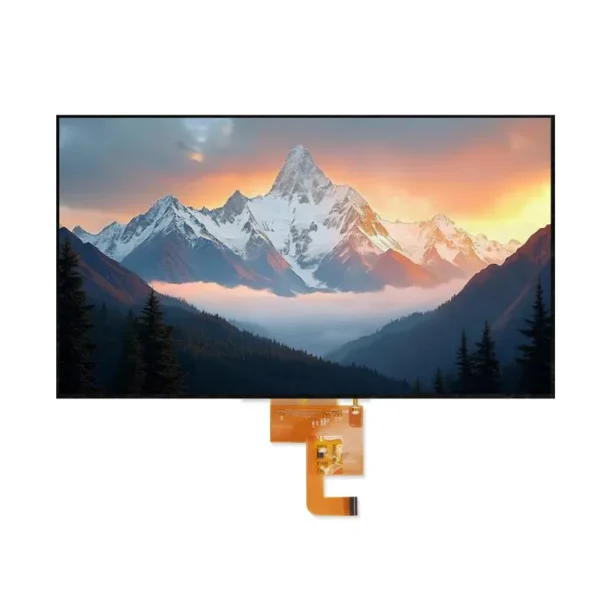
What Is an AMOLED Display?
AMOLED (Active-Matrix Organic Light-Emitting Diode) is a self-emissive display technology where each pixel generates its own light using organic compounds. No backlight is needed.
How It Works
Each pixel in an AMOLED screen contains red, green, and blue organic LEDs that emit light when current flows through them. Because pixels can be turned completely off, true blacks and infinite contrast ratios are achievable.
Common Applications
- Premium smartphones and tablets
- Smartwatches & fitness trackers
- VR/AR headsets
- High-end automotive infotainment systems
- Foldable and flexible devices
Pros & Cons
✅ Exceptional contrast, color saturation, and viewing angles
✅ Lower power consumption (especially with dark UIs)
✅ Ultra-thin, lightweight, and supports flexible/curved designs
❌ Higher manufacturing cost
❌ Risk of burn-in over time (pixel aging)
❌ Performance may degrade in extreme temperatures
TFT LCD vs AMOLED: Side-by-Side Comparison
| Feature | TFT LCD | AMOLED |
|---|---|---|
| Contrast Ratio | ~1000:1 (standard); up to 5000:1 with IPS | ∞:1 (true black) |
| Power Consumption | Constant (backlight always on) | Dynamic (black = 0W) |
| Response Time | 10–25 ms | <0.1 ms |
| Viewing Angles | Good (IPS improves to ~178°) | Excellent (~180°) |
| Lifespan | 50,000+ hours (stable) | 30,000–50,000 hours (blue OLED degrades faster) |
| Cost (per unit) | Lower, especially for sizes >5″ | Higher, particularly for large or custom sizes |
| Outdoor Visibility | Better with high-brightness backlights | Can struggle in direct sunlight (unless HDR-boosted) |
| Flexibility | Rigid only | Supports bendable, foldable, and curved designs |
| Operating Temp Range | -30°C to +85°C (industrial grade available) | Typically 0°C to +60°C (consumer grade) |
Key Insight: AMOLED excels in visual quality and energy efficiency for battery-powered devices, while TFT LCD dominates in rugged, cost-sensitive, or long-life industrial applications.
How to Choose the Right Display for Your Project
There’s no universal “best”—only the best fit for your use case. Ask yourself:
Choose TFT LCD if:
- Your budget is tight
- You need long-term reliability (10+ years)
- The device operates in harsh environments (high heat, humidity, vibration)
- Sunlight readability is critical (e.g., outdoor kiosks, agricultural machinery)
- You’re building non-consumer products like test equipment or factory automation systems
Choose AMOLED if:
- Visual impact matters (vibrant colors, deep blacks)
- Your product is battery-powered and uses dark-mode UI
- You need ultra-thin or curved form factors (e.g., wearables)
- You’re targeting premium consumer markets
- Flexibility or transparency is required (emerging applications)
Pro Tip: For mid-range applications, consider IPS LCD (a high-quality TFT variant) or LTPO AMOLED (for adaptive refresh rates and lower power).
Common Myths About TFT LCD and AMOLED
Myth 1: “AMOLED is always superior to LCD.”
→ Reality: In industrial settings, TFT LCD’s stability, temperature tolerance, and lower total cost of ownership often outweigh AMOLED’s visual benefits.
Myth 2: “TFT LCD is outdated technology.”
→ Reality: Over 70% of embedded displays shipped in 2024 were still based on TFT LCD—thanks to its reliability and scalability.
Myth 3: “AMOLED can’t be used outdoors.”
→ Reality: Modern AMOLED panels now reach 1500+ nits peak brightness (e.g., Samsung E6), making them viable even in daylight—with proper optical bonding.
Future Trends in Display Technology
- Mini-LED Backlit LCDs: Bridging the gap with local dimming for near-OLED contrast.
- LTPO AMOLED: Enables 1–120Hz variable refresh rates (used in iPhone ProMotion and Galaxy S series).
- MicroLED: Emerging as a potential successor—combining OLED’s self-emissive benefits with inorganic durability (still expensive).
- Sustainability Focus: Both industries are investing in longer lifespans and recyclable materials to meet EU RoHS and REACH standards.
Conclusion: It’s About Fit, Not Superiority
When deciding between TFT LCD and AMOLED, prioritize your project’s environment, power budget, lifespan requirements, and user experience goals—not just specs on a datasheet.
At JicTech LCD, we supply both industrial-grade TFT LCD modules and custom TFT LCD solutions for global OEMs. Whether you need a 3.5-inch sunlight-readable HMI or a 1.5-inch circular AMOLED for a smart ring, our engineering team can help you select, customize, and integrate the perfect display.
👉 Need expert advice?
[Contact our display specialists] or [Download our Display Selection Guide PDF] to get started today.