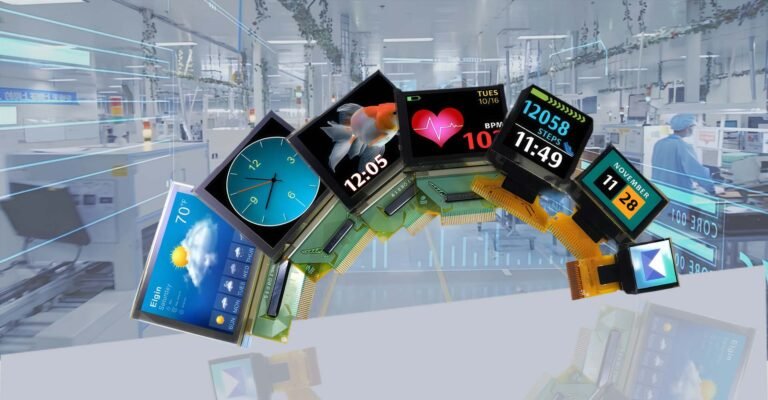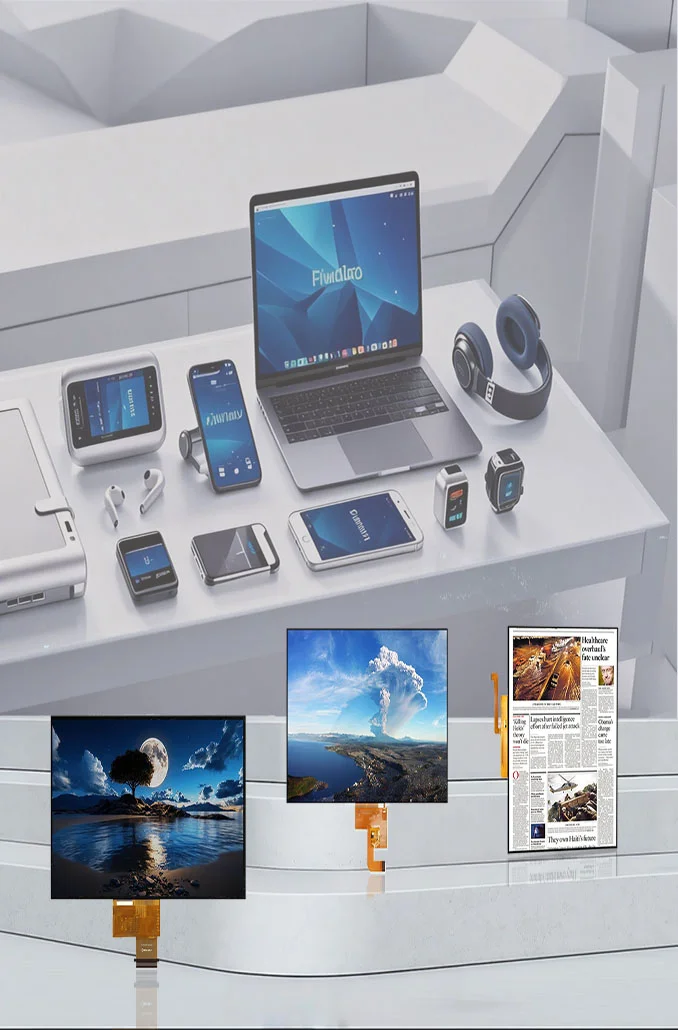



Yes, a TFT display is a type of LCD (Liquid Crystal Display). More specifically, TFT stands for Thin-Film Transistor, which is a technology used to enhance the performance of LCDs by improving image quality, response time, and color accuracy. While all TFT displays are LCDs, not all LCDs are TFT—TFT is a more advanced and widely adopted variant in modern display applications.
What Is a TFT LCD?
A TFT LCD (Thin-Film Transistor Liquid Crystal Display) is a flat-panel display technology that uses thin-film transistors to control individual pixels on the screen. Unlike passive matrix LCDs, where entire rows and columns are activated simultaneously, TFT LCDs use an active matrix system—each pixel has its own transistor—allowing for faster refresh rates, better contrast, and sharper images.
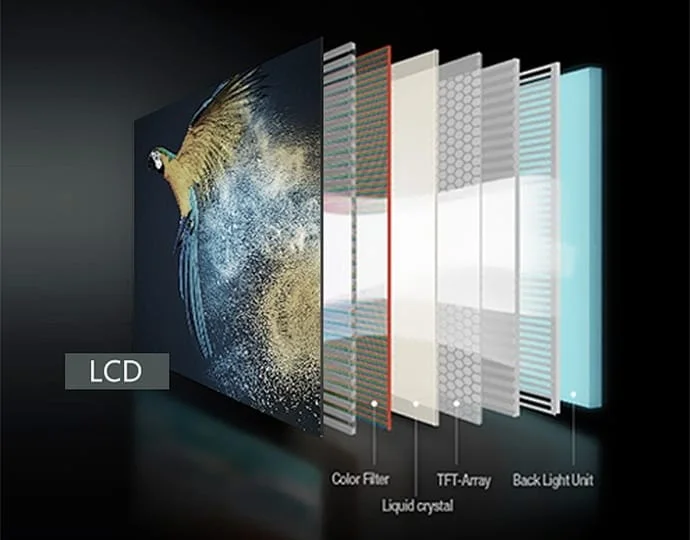
The core structure includes:
- A glass substrate with a grid of transistors
- A liquid crystal layer that modulates light
- A backlight (typically LED)
- Color filters to produce full-color images
This design enables high-resolution, responsive, and energy-efficient displays suitable for both consumer electronics and industrial applications.
How Does a TFT LCD Work?
TFT LCDs operate based on the principle of controlling light polarization through liquid crystals. Here’s a simplified breakdown:
- Backlight: An LED backlight emits white light.
- Polarizing Filters: Light passes through a polarizing filter.
- Liquid Crystals: Electric signals from transistors twist the crystals to allow or block light.
- Color Filters: Red, green, and blue sub-pixels combine to form colors.
- Second Filter: Final polarization ensures only desired light reaches the viewer.
Each pixel is independently controlled by its own transistor, enabling precise brightness and color management.
TFT vs. Other LCD Types: Comparison Table
| Feature | TFT LCD | Passive Matrix LCD | OLED (for comparison) |
|---|---|---|---|
| Response Time | Fast (~1–5 ms) | Slower (~10–50 ms) | Very fast (<1 ms) |
| Contrast Ratio | High (up to 1000:1) | Lower (around 100:1) | Extremely high (infinite theoretically) |
| Viewing Angle | Wide (160°+), but may vary | Narrow (60°–80°) | Excellent (>170°) |
| Power Consumption | Moderate; depends on backlight | Lower than TFT | Very low (especially when dark) |
| Brightness | High (up to 2500 nits) | Limited | High, but can burn-in |
| Durability | Good; long lifespan | Less durable | Sensitive to moisture and UV |
| Cost | Medium to high | Low | High |
TFT LCDs offer a balanced combination of performance, cost, and reliability, making them ideal for many applications.
How to Choose the Right TFT LCD?
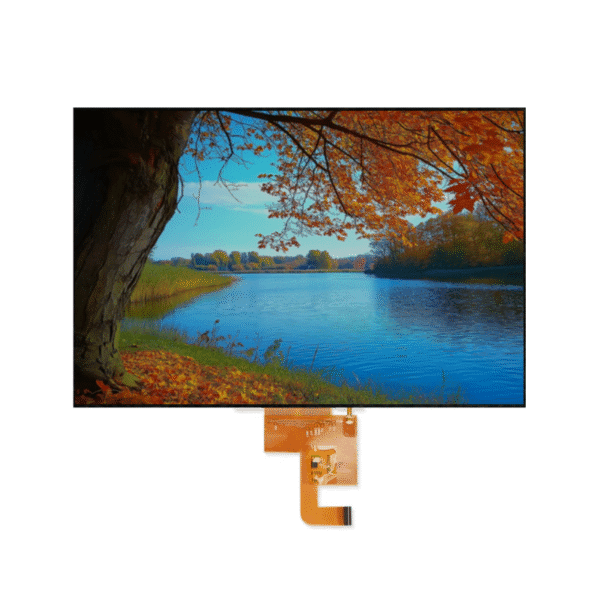
When selecting a TFT LCD module, consider these key parameters:
- Screen Size: From small wearable screens (0.85″) to large industrial panels (32″).
- Resolution: Common options include 128×128, 480×480, 1920×1080, etc.—choose based on clarity needs.
- Brightness: For outdoor use, aim for 1000–2500 nits; indoor devices may need only 200–600 nits.
- Interface Type: SPI, MIPI, LVDS, or RGB depending on your host system.
- Touch Functionality: Capacitive touch supports multi-touch gestures; essential for user interaction.
- Driver IC Compatibility: Ensure compatibility with ST7735S, ILI9341, or custom ICs if needed.
- Form Factor & Structure: Round, square, bar-type, or ultra-thin designs for space-constrained environments.
For example, JICTECH’s TFT LCD modules offer extensive customization across all these parameters. Their product line supports non-standard sizes like 1.28″, 5″, 10.1″, and even 32″, along with customizable resolutions, brightness levels up to 2500 nits, and multiple interface types including SPI, MIPI, and LVDS. They also support various touch technologies such as CST816D and GT911, and provide flexible form factors for integration into wearables, automotive dashboards, or medical devices.
🔍 See JICTECH’s parameter range below for reference:
| Parameter Category | Example Configurations | Description |
|---|---|---|
| Screen Size | 0.85″, 1.28″, 1.8″, 2.4″, 3.5″, 5″, 7″, 10.1″, 21.5″, 32″, etc. | Non-standard sizes available |
| Resolution | 128×128, 240×240, 480×480, 800×480, 1920×1080, etc. | Custom resolutions supported |
| Brightness | 200 nits, 400 nits, 600 nits, 1000 nits, 2500 nits, etc. | High-brightness, low-power, wide-temperature options |
| Interface Type | SPI, RGB 18-bit, MCU, MIPI, LVDS, EDP | Recommended based on host platform |
| Touch Function | No touch / Capacitive touch (CST816D, GT911, FT series, etc.) | Multi-touch and gesture recognition customization |
| Viewing Angle | All-direction (ALL), 6 o’clock, 12 o’clock | Adapted to mounting orientation |
| Driver IC | ST7735S, ST7789 series, ILI9341, ST7701S, etc. | Compatible with mainstream drivers; custom IC support |
| Form Factor & Structure | Round, square, bar-type, with PCB, ultra-thin design, etc. | Custom cutting, bezel design, and mechanical adaptation |
| Application Scenarios | Wearable devices, industrial control, automotive, medical, outdoor displays, etc. | Scenario-optimized solutions |
Figure: JICTECH offers highly customizable TFT LCD modules across screen size, resolution, brightness, interface, and application scenarios.
Applications Across Industries
TFT LCDs are versatile and widely used in numerous industries:
- Wearable Devices: Smartwatches and fitness trackers benefit from low power and compact designs.
- Industrial Control Panels: Ruggedized displays with wide temperature tolerance and high brightness.
- Automotive: Dashboards, infotainment systems, and HUDs require reliable, glare-resistant screens.
- Medical Equipment: Monitors for patient vitals demand high accuracy and readability.
- Outdoor Displays: Digital signage and kiosks need high-brightness (≥1000 nits) and anti-glare coatings.
- Consumer Electronics: Tablets, smartphones, and laptops rely on high-resolution TFT panels.
With advancements in miniaturization and durability, TFT LCDs continue to dominate markets where cost-effectiveness and robust performance are critical.
Future Trends in TFT LCD Technology
While OLED and microLED are gaining traction, TFT LCDs remain dominant due to their maturity, scalability, and lower production costs. Key future trends include:
- Higher Brightness & Outdoor Visibility: Enhanced backlights and anti-reflective coatings for sunlight-readable displays.
- Flexible & Curved Designs: Advances in materials allow bendable TFT panels for innovative form factors.
- Low-Power Solutions: Optimized driver ICs and local dimming reduce energy consumption.
- Integration with AI: Gesture recognition, adaptive brightness, and smart calibration powered by embedded algorithms.
- Customization at Scale: Manufacturers like JICTECH enable rapid prototyping and mass production of tailored solutions.
As industries demand more specialized displays, TFT LCDs will evolve with greater adaptability and efficiency.
Conclusion
In summary, yes, a TFT display is a type of LCD, but it represents a significant advancement over traditional passive matrix LCDs. Thanks to its active matrix architecture, TFT LCDs deliver superior image quality, faster response times, and broader application potential. With ongoing innovation in brightness, interface flexibility, and form factor design—exemplified by manufacturers like JICTECH—TFT LCDs remain a cornerstone of modern display technology. Whether for wearable tech, automotive interfaces, or industrial controls, choosing the right TFT LCD involves balancing resolution, brightness, touch functionality, and environmental requirements.
Frequently Asked Questions (FAQs)
Q1: Is TFT the same as LCD?
A: Not exactly. All TFT displays are LCDs, but not all LCDs are TFT. TFT refers to a specific type of LCD using thin-film transistors for each pixel, offering better performance than passive matrix LCDs.
Q2: Can I use a TFT LCD outdoors?
A: Yes, especially models with high brightness (1000–2500 nits) and anti-glare coatings. Many manufacturers, including JICTECH, offer outdoor-ready TFT modules.
Q3: What interface should I choose for my TFT LCD?
A: It depends on your host system. SPI is simple and low-speed; MIPI is ideal for mobile devices; LVDS and RGB are common in larger panels. Check compatibility with your processor.
Q4: Do TFT LCDs support touch?
A: Yes, most modern TFT LCDs come with capacitive touch support (e.g., CST816D, GT911), enabling multi-touch and gesture recognition.
Q5: Are TFT LCDs better than OLED?
A: It depends on your needs. OLED offers deeper blacks and thinner profiles, but TFT LCDs are more durable, less prone to burn-in, and generally cheaper—making them preferable for industrial and outdoor applications.