


If you’re sourcing displays for industrial equipment, medical devices, POS systems, or embedded electronics, you’ve probably come across terms like TFT display and touch screen—and may be wondering: Is a TFT display a touch screen?
The short answer: Not necessarily. A TFT display provides the visual output, while a touch screen adds interactive input capability. They are two distinct technologies that can—and often do—work together.
In this guide, we’ll clarify the differences, explain how they integrate, and help you choose the right solution for your project.
What Is a TFT Display?
TFT (Thin-Film Transistor) is a type of active-matrix LCD (Liquid Crystal Display) technology widely used for high-quality color screens.
Key features of TFT displays include:
- Vibrant colors and high contrast
- Fast response times
- Wide viewing angles (especially in IPS-TFT variants)
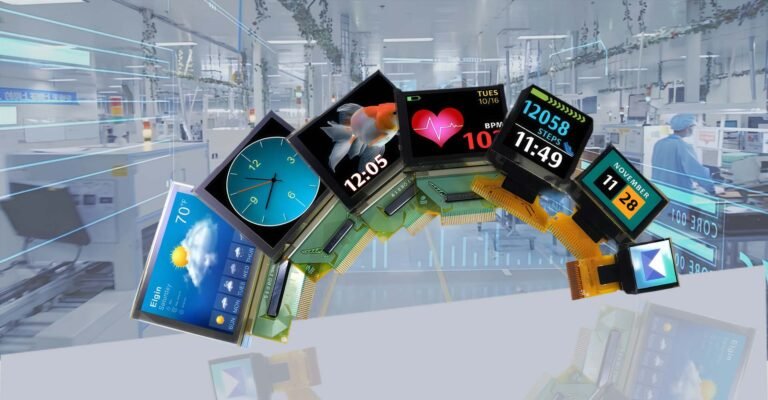
- Common sizes ranging from 0.85” to 32” and beyond
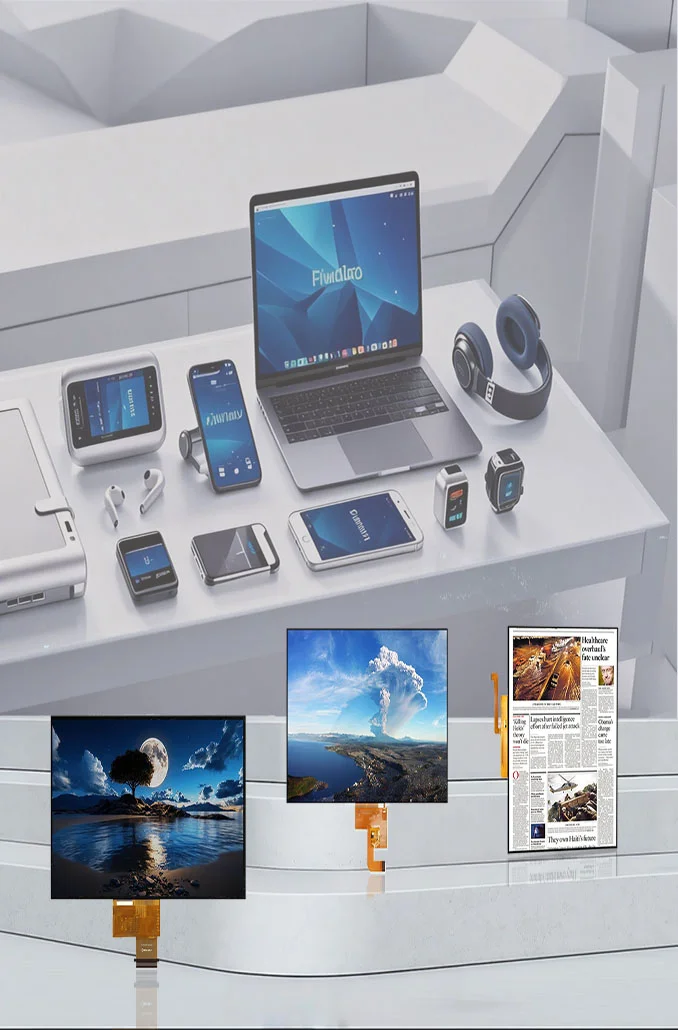
TFT panels are found in smartphones, automotive dashboards, factory HMIs, and handheld terminals. However, a standard TFT module only handles image rendering—it does not support touch input by itself.
Remember: TFT = Display technology. It shows content—but can’t “feel” your touch.
What Is a Touch Screen?
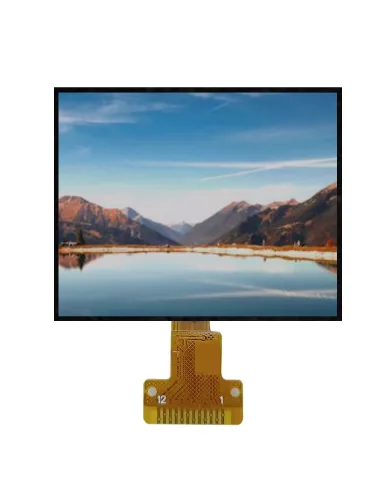
A touch screen is an input device layered over a display that detects physical contact (from a finger or stylus). It enables direct interaction without buttons, mice, or keyboards.
There are two main types used with TFT displays:
- Resistive Touch Screens
- Made of two flexible layers that connect when pressed
- Works with gloves or styluses
- Lower cost, but less durable and supports only single-touch
- Capacitive Touch Screens (including PCAP – Projected Capacitive)
- Uses electric field changes to detect touch
- Supports multi-touch gestures (pinch, swipe, etc.)
- More responsive and durable—ideal for consumer and industrial use
Touch functionality is added on top of a display—it’s not inherent to the display itself.
Can a TFT Display Be a Touch Screen?
Yes—but only when integrated with a touch sensor layer.
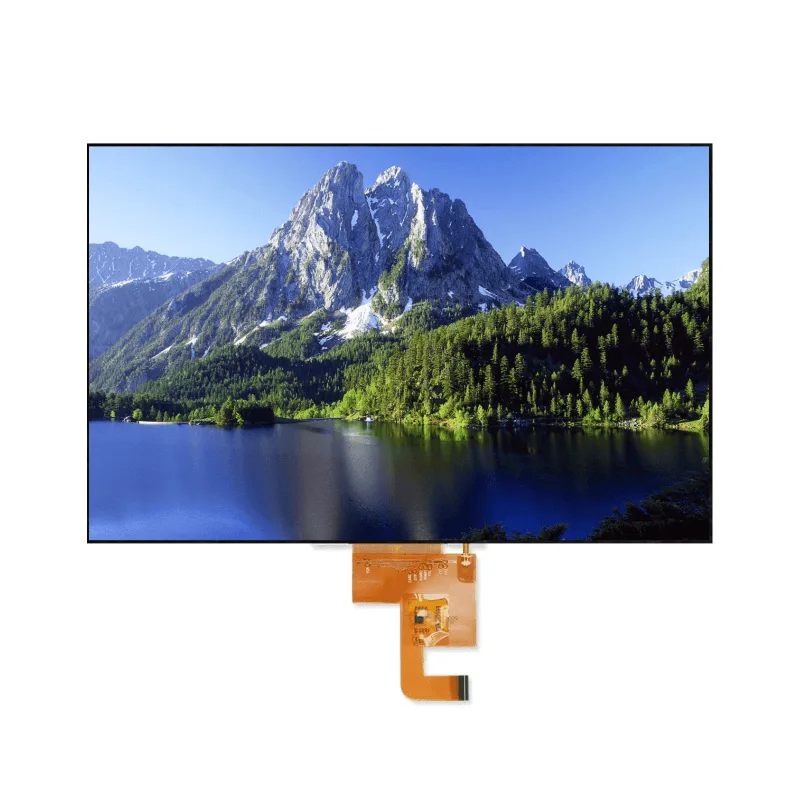
A typical TFT touch display module consists of:
- Backlight unit
- TFT LCD panel (for visuals)
- Touch sensor (resistive or capacitive)
- Cover glass or protective lens
This integration is common in modern devices:
- Smartphones = OLED/IPS-TFT + PCAP touch
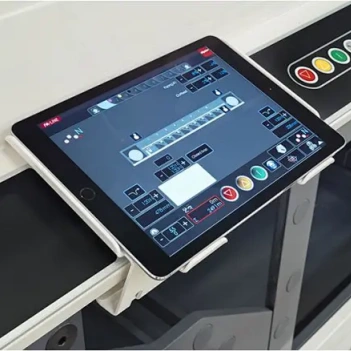
- Industrial HMIs = TFT + resistive or PCAP touch
- Medical monitors = High-brightness TFT + sealed capacitive touch
So while a bare TFT panel is not a touch screen, manufacturers routinely combine both into a single, ready-to-use module.
Types of Touch-Integrated TFT Displays
When sourcing from suppliers, you’ll encounter several integrated options:
| Type | Best For | Pros | Cons |
|---|---|---|---|
| Resistive TFT Touch | Harsh environments, glove operation, budget projects | Low cost, works with any stylus | Single-touch only, lower clarity |
| Capacitive (PCAP) TFT Touch | Consumer electronics, kiosks, modern HMIs | Multi-touch, high sensitivity, sleek design | Doesn’t work well with thick gloves |
| On-cell / In-cell TFT | Ultra-thin devices (e.g., tablets) | Thinner stack, better optical clarity | Higher cost, less common in industrial supply |
Choose based on your application’s environment, user interaction needs, and budget.
How to Choose the Right TFT Touch Display for Your Project
Ask yourself these key questions:
- Will users wear gloves? → Resistive may be better.
- Do you need multi-touch gestures? → Go with PCAP capacitive.
- What’s your interface requirement? (e.g., RGB, LVDS, MIPI, SPI)
- What size and resolution do you need? (Common: 3.5”, 5”, 7”, 10.1”)
- Is the device used outdoors or in bright light? → Consider high-brightness (>1000 nits) models.
- Do you need IP65/IP67 protection? → Ensure the touch module is sealed properly.
Pro Tip: Many suppliers offer customization—from FPC cable length to anti-glare coating or wide-temperature support (-30°C to +80°C).
Common Misconceptions Clarified
Let’s bust some myths:
- ❌ “All color LCDs are touch screens.”
→ False. Most basic TFT modules have no touch capability. - ❌ “TFT means touch-enabled.”
→ No. TFT refers only to the transistor-based display technology. - ✅ “You can add touch to a TFT display.”
→ Yes! Through lamination or purchasing a pre-integrated module.
Understanding this distinction prevents costly ordering mistakes—especially when scaling production.
Why This Matters for Importers, OEMs, and System Integrators
As a buyer or product designer, confusing TFT with touch functionality can lead to:
- Wrong component orders
- Delays in prototyping
- Unexpected redesign costs
By knowing that TFT and touch are separate (but combinable) layers, you can:
- Specify exactly what you need
- Compare quotes accurately
- Work with suppliers who offer modular or fully integrated solutions
Many global brands rely on customized TFT touch displays for reliability and user experience—don’t let terminology hold you back.
Conclusion: TFT ≠ Touch, But They Make a Powerful Pair
To recap:
🔹 A TFT display is not automatically a touch screen.
🔹 But it can be combined with resistive or capacitive touch layers to create a complete human-machine interface (HMI).
Whether you’re building a smart thermostat, an agricultural controller, or a retail kiosk, choosing the right combination ensures optimal performance, usability, and cost-efficiency.
Ready to Find the Perfect TFT Touch Display?
✅ Browse our catalog of industrial-grade TFT LCDs with integrated resistive or PCAP touch—from 0.85” to 32”.
📥 Download our free Buyer’s Guide: “How to Specify a TFT Touch Display for Industrial Applications”
📧 Contact our engineers for custom solutions, samples, and technical support.
Your project deserves the right display—don’t guess. Get expert guidance today.