








Guía definitiva de tecnologías de visualización industrial
Los módulos de visualización de equipos de control industrial son interfaces visuales especializadas diseñadas para soportar entornos operativos difíciles y proporcionar una interacción persona-máquina (HMI) fiable para sistemas de fabricación, automatización y control de procesos. Estas soluciones de visualización reforzadas difieren fundamentalmente de las pantallas de consumo, ya que ofrecen una mayor durabilidad, rangos de temperatura ampliados y certificaciones de calidad industrial que garantizan un funcionamiento continuo en fábricas, centrales eléctricas, sistemas de transporte e instalaciones al aire libre.
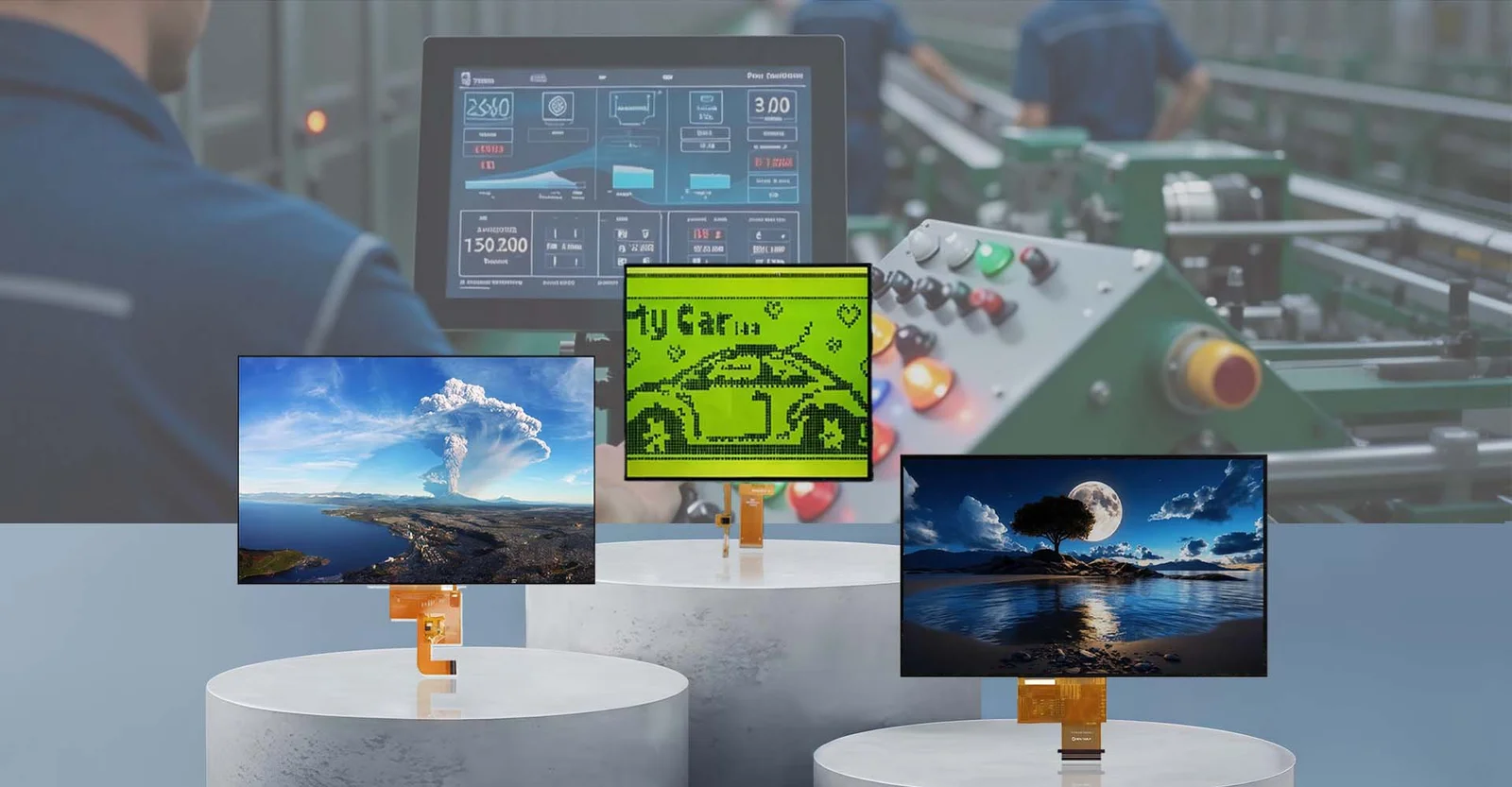
Basándome en mis quince años especificando pantallas para proyectos de integración de Siemens, Rockwell y Schneider Electric, el sector del control industrial emplea predominantemente siete categorías distintas de módulos de visualización: TFT-LCD paneles con mayor luminosidad, módulos de pantalla táctil resistiva, pantallas táctiles capacitivas proyectadas (PCAP), pantallas fluorescentes al vacío (VFD), diodos orgánicos emisores de luz (OLED), las pantallas de papel electrónico (electroforéticas) y los módulos LCD de alto brillo legibles a la luz del sol. Cada tecnología responde a requisitos operativos, limitaciones medioambientales y escenarios de aplicación específicos dentro del ecosistema de la automatización industrial.
Módulos de visualización TFT-LCD para automatización industrial
Los módulos de pantalla de cristal líquido con transistor de película fina (TFT-LCD) constituyen la columna vertebral de los modernos sistemas de visualización industrial. A diferencia de los monitores comerciales, los paneles TFT industriales incorporan varias mejoras fundamentales que justifican su elevado precio en entornos de fabricación.
Especificaciones técnicas y adaptaciones industriales
Los módulos TFT industriales estándar funcionan en Rangos de temperatura de -20°C a +70°C, con gestión de variantes ampliada -30°C a +80°C para aplicaciones de acería y fundición. Estas pantallas presentan índices de luminancia entre 500 a 1500 nits, superando ampliamente los 250-300 nits típicos de los monitores de oficina. El elevado brillo compensa las condiciones de luz ambiental intensa que predominan en las fábricas con una intensa iluminación cenital.
Mi experiencia sobre el terreno con instalaciones de cadenas de montaje de automóviles revela que unión óptica-el proceso de eliminación de los espacios de aire entre el panel LCD y el cristal protector- resulta esencial para mantener la legibilidad. Esta técnica de fabricación reduce los reflejos internos en aproximadamente 85%, lo que evita el aspecto “desvaído” que presentan las pantallas no adheridas en entornos muy iluminados. Además, la adhesión óptica mejora la integridad estructural, evitando la formación de condensación en entornos con humedad variable, como las plantas de procesamiento de alimentos.
Entornos de aplicación
Los módulos TFT-LCD dominan los paneles de operador de controladores lógicos programables (PLC), las estaciones de trabajo de sistemas de control distribuido (DCS) y las interfaces de máquinas de control numérico por ordenador (CNC). El sitio 7 pulgadas a 21,5 pulgadas de diagonal cubre la mayoría de los requisitos de las IHM, con 10,4 pulgadas y 15 pulgadas variantes que representan las implantaciones de mayor volumen en la fabricación discreta.
Para los proyectos de instalaciones de tratamiento de aguas que he dirigido, Paneles frontales con grado de protección IP65 evitar la entrada de polvo y chorros de agua a baja presión durante los procedimientos de lavado. El sistema de protección contra la penetración es especialmente importante cuando se especifican pantallas para salas blancas de la industria farmacéutica o plantas de procesamiento químico en las que se realizan operaciones de limpieza frecuentes.
Disponibilidad a largo plazo y gestión del ciclo de vida
El aprovisionamiento de TFT industriales exige prestar atención a garantías de longevidad de la producción. Proveedores reputados como Jictech, AUO, Innolux y Tianma ofrecen compromisos de disponibilidad de 3 a 5 años para los modelos de paneles industriales, lo que contrasta claramente con el ciclo de vida de 12 a 18 meses típico de las pantallas de consumo. Esta estabilidad resulta fundamental para los fabricantes de dispositivos médicos y los contratistas militares que necesitan una década de soporte para los sistemas certificados.
Módulos de pantalla táctil resistiva para uso con guantes
La tecnología táctil resistiva mantiene una presencia significativa en el mercado de equipos de control industrial, a pesar de que el sector de la electrónica de consumo se está decantando por las soluciones capacitivas. La física fundamental de la tecnología táctil resistiva, que detecta el contacto inducido por la presión entre capas conductoras, permite utilizarla con guantes, lápices ópticos y en condiciones de humedad que incapacitan a otras tecnologías.
Construcción y mecánica operativa
Los módulos táctiles resistivos industriales suelen utilizar Resistivo analógico de 5 hilos en lugar de la configuración de 4 hilos habitual en los dispositivos de consumo. La arquitectura de 5 hilos concentra los electrodos sensores en la capa inferior de vidrio, mientras que la lámina flexible superior sirve únicamente como sonda de tensión. Esta disposición mejora notablemente la durabilidad, ya que resiste De 35 a 50 millones de actuaciones en comparación con el ciclo de vida de 1 millón de toques de los diseños básicos de 4 hilos.
En dureza superficial de los recubrimientos resistivos industriales oscila entre 3H y 4H en la escala de dureza del lápiz, suficiente para resistir los arañazos de las herramientas metálicas y las partículas abrasivas habituales en los entornos de mecanizado. Los tratamientos superficiales antideslumbrante (AG) y antirreflejos (AR) mejoran aún más la legibilidad en condiciones de iluminación difíciles.
Consideraciones sobre la integración
De mi trabajo de integración con fabricantes de maquinaria de envasado se desprende que los módulos táctiles resistivos son especialmente valiosos para procesamiento de alimentos congelados (-25°C ambiente) y fabricación de metales (requisitos de guantes gruesos). La inmunidad de la tecnología a las interferencias electromagnéticas de los equipos de soldadura y los variadores de frecuencia (VFD) ofrece ventajas adicionales en entornos industriales ruidosos desde el punto de vista eléctrico.
Sin embargo, la tecnología resistiva presenta limitaciones: la capacidad multitáctil sigue restringida (normalmente sólo admiten gestos de doble toque), y la superficie superior flexible acaba desarrollando microarañazos que afectan a la claridad óptica. En el caso de las aplicaciones que requieren un uso frecuente del zoom, la panorámica o la introducción de gestos complejos, las alternativas capacitivas proyectadas merecen ser tenidas en cuenta a pesar de sus limitaciones operativas.
Pantallas táctiles capacitivas proyectadas (PCAP) para HMI modernas
La tecnología táctil capacitiva proyectada ha penetrado en los mercados industriales tras su dominio en la electrónica de consumo, con variantes industriales especializadas que abordan las limitaciones que restringían inicialmente la implantación en las fábricas.
Adaptaciones PCAP industriales
Las pantallas PCAP de consumo estándar fallan en entornos industriales debido a su sensibilidad a la humedad y a la incompatibilidad con guantes. Contemporáneo módulos PCAP industriales incorporan varias modificaciones críticas:
- Controladores de sensibilidad mejorada detección del tacto a través de guantes de trabajo de cuero de 4 mm o guantes de seguridad de nitrilo de 2 mm
- Algoritmos de rechazo de agua distinguir el contacto intencionado con los dedos de las gotas de agua o las películas de solución limpiadora
- Sistemas de montaje antivibración prevención de falsos registros táctiles debidos a oscilaciones inducidas por la maquinaria
- Cubierta de cristal templado (de 2 mm a 4 mm de grosor) con resistencia a los impactos IK08
En arquitectura de detección de capacitancia mutua prevalente en los módulos PCAP industriales admite el funcionamiento multitáctil real (normalmente, reconocimiento de 10 puntos), lo que permite la funcionalidad de pellizcar para ampliar para la revisión detallada de esquemas y las aplicaciones de seguimiento de activos basadas en mapas.
Escenarios de implantación
Mis aplicaciones recientes incluyen terminales SCADA para petróleo y gas que requieran certificaciones de ubicación peligrosa de Clase I División 2, y sistemas de gestión de almacenes utilizando pantallas montadas en carretillas elevadoras con una luminosidad de 1000 nits para transiciones de visibilidad interior/exterior. La superficie lisa y plana de las pantallas PCAP facilita la limpieza en aplicaciones críticas para la higiene, como el procesamiento de productos lácteos y la fabricación de productos farmacéuticos.
Retos de la compatibilidad electromagnética
La tecnología PCAP exige una cuidadosa ingeniería de compatibilidad electromagnética (CEM). Los circuitos de detección de alta impedancia son susceptibles de sufrir interferencias de variadores de frecuencia sin apantallar y equipos de soldadura por radiofrecuencia. Una conexión a tierra adecuada, cables apantallados y núcleos de ferrita se convierten en requisitos de integración esenciales y no en mejoras opcionales.
Pantallas fluorescentes de vacío (VFD) para entornos extremos
La tecnología de visualización fluorescente en vacío, a pesar de sus orígenes vintage, persiste en nichos industriales específicos en los que la resistencia medioambiental pesa más que los requisitos de sofisticación gráfica.
Características técnicas
Los módulos VFD generan imágenes mediante el bombardeo electrónico de ánodos recubiertos de fósforo dentro de envolturas de vidrio al vacío. Esta construcción física ofrece varias propiedades distintivas:
- Temperatura de funcionamiento: -40°C a +85°C sin degradación del rendimiento
- Luminancia: Autoemisión de 500-1000 cd/m² sin sistemas de retroiluminación
- Ángulo de visión: Visibilidad casi omnidireccional de 170°.
- Tiempo de respuesta: Conmutación en microsegundos para actualizaciones numéricas rápidas
La característica espectro de emisión azul-verde (con variantes de fósforo rojo, amarillo y blanco disponibles) proporciona una excelente legibilidad nocturna sin los problemas de interrupción del sueño por luz azul asociados a las pantallas LCD retroiluminadas por LED.
Aplicaciones contemporáneas
El despliegue moderno de VFD se concentra en grupos de instrumentos para maquinaria pesada, indicadores de posición del elevador, y terminales punto de venta (TPV) que requieren un funcionamiento 24/7 con intervalos de mantenimiento mínimos. Mi trabajo de especificación de equipos agrícolas utiliza módulos VFD para los cuadros de mandos de tractores y cosechadoras, donde la resistencia a las vibraciones y las temperaturas extremas degradarían rápidamente las tecnologías alternativas.
En limitación monocromática y renderizado basado en caracteres pixelados limitan los VFD a aplicaciones numéricas y alfanuméricas sencillas. Las interfaces gráficas de usuario, los indicadores de estado codificados por colores y los requisitos de visualización complejos requieren alternativas LCD u OLED.
Módulos de visualización OLED industriales de alto contraste
La tecnología de diodos orgánicos emisores de luz ha madurado lo suficiente para su implantación industrial y ofrece unos índices de contraste y un ángulo de visión inalcanzables para las alternativas basadas en LCD.
Implementación industrial de OLED
A diferencia de las pantallas OLED de consumo que priorizan los perfiles delgados, módulos OLED industriales hacen hincapié en la longevidad y la resistencia medioambiental:
- Tecnologías de encapsulación evitar la degradación de los compuestos orgánicos por la humedad y el oxígeno
- Algoritmos de desplazamiento de píxeles Reducción del riesgo de quemado de imágenes estáticas en aplicaciones HMI con elementos persistentes de la barra de estado.
- Sustratos de vidrio reforzados Sustitución de bases poliméricas flexibles para una mayor durabilidad mecánica
En relación de contraste infinita (emisión de negro verdadero por píxeles desactivados) resulta especialmente valiosa en entornos de fábrica oscuros donde el rendimiento del nivel de negro determina la legibilidad. Mi experiencia en la integración de dispositivos médicos confirma la superioridad de OLED en las pantallas de ultrasonidos y endoscopia, donde la sutil diferenciación de la escala de grises afecta a la precisión del diagnóstico.
Limitaciones y estrategias de mitigación
La degradación de la luminancia de los OLED sigue siendo un problema para las interfaces industriales estáticas. Implementación de salvapantallas, pixel-orbiting (desplazamiento sutil de elementos estáticos), y reducción automática del brillo durante los periodos de inactividad amplía la vida útil operativa de las 30.000 horas típicas a más de 50.000 horas para los paneles de calidad industrial.
En estructura de costes de las primas-normalmente de 3 a 4 veces el equivalente de las soluciones LCD- restringe el despliegue de OLED a aplicaciones en las que el rendimiento del contraste justifica el gasto: aviónica militar, imágenes médicas de alta gama y equipos de monitorización de emisiones.
Módulos de visualización de papel electrónico para aplicaciones industriales de consumo ultrabajo
La tecnología de pantalla electroforética (comercializada como “e-paper” o “tinta electrónica”) se ha expandido más allá de los lectores electrónicos y se ha introducido en aplicaciones industriales que requieren un funcionamiento alimentado por baterías o autonomía con carga solar.
Principios de funcionamiento y adaptaciones industriales
Pantallas de papel electrónico utilizan microcápsulas que contienen partículas blancas y negras cargadas suspendidas en un fluido. Los campos eléctricos reposicionan estas partículas para formar imágenes que persisten sin consumo de energía-.funcionamiento biestable que permite el mantenimiento de la pantalla durante meses con pilas de botón.
Módulos industriales de papel electrónico capacidad de actualización parcial (actualización de regiones específicas de la pantalla sin parpadeo de redibujado completo), opciones flexibles de sustrato para superficies de montaje curvas, y integración frontlight para una legibilidad nocturna sin el consumo de energía de los sistemas de retroiluminación emisiva.
Contextos de implantación
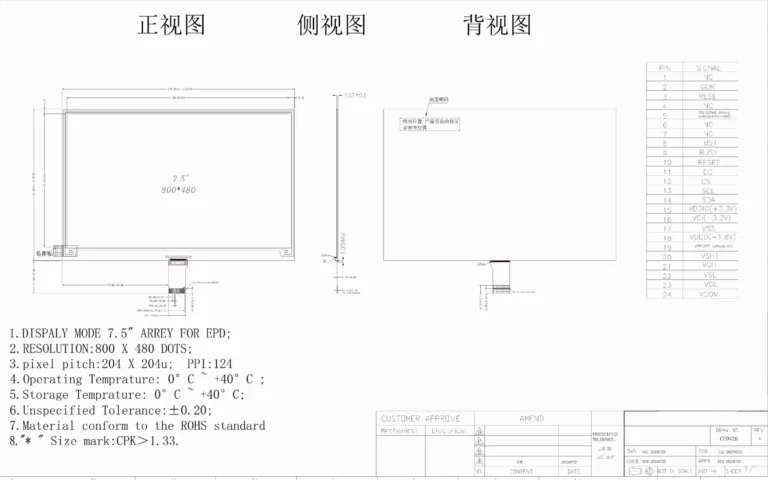
Mis proyectos recientes de redes de sensores IoT utilizan 2,9 pulgadas a Módulos de papel electrónico de 7,5 pulgadas para:
- Etiquetas de seguimiento de activos en parques logísticos que muestran en tiempo real la ubicación y las instrucciones de manipulación
- Sistemas Kanban electrónicos en entornos de fabricación ajustada, mostrando los programas de producción y los niveles de inventario
- Estaciones de control de oleoductos en lugares remotos con carga lenta mediante paneles solares
- Sistemas de recogida en almacén eliminar la documentación en papel
En Ángulo de visión de 180 y legibilidad a la luz del sol (principio de visualización reflectante en lugar de emisivo) igualan o superan las prestaciones de los LCD en aplicaciones industriales al aire libre. Sin embargo, la Tiempos de actualización completa de 0,5 a 2 segundos y paletas monocromáticas o de colores limitados (negro/blanco/rojo o negro/blanco/amarillo) restringen el papel electrónico a la visualización de información cuasi estática en lugar de a la visualización dinámica de procesos.
Módulos LCD de alto brillo legibles a la luz del sol para control industrial en exteriores
Las instalaciones industriales en exteriores -sistemas de gestión del tráfico, equipos de construcción, supervisión de campos petrolíferos- exigen módulos de visualización especializados que superen la exposición directa a la luz solar.
Soluciones de ingeniería para la visibilidad solar
Los paneles LCD estándar se vuelven ilegibles bajo la luz solar directa debido a la reflexión que abruma la iluminación de fondo transmitida. Legible a la luz del sol expositores industriales aplicar varias estrategias simultáneas:
- Retroiluminación LED de alto brillo: 1500 nits a 2500 nits (en comparación con los monitores de oficina de 300 nits)
- Polarizadores circulares: Eliminación del deslumbramiento reflejado mediante la cancelación de fase óptica
- Pilas ópticas unidas: Eliminación de las reflexiones internas del entrehierro mediante laminación adhesiva directa
- Modos LCD transflectivos: Utilización de la luz ambiente para complementar la retroiluminación en condiciones de mucha luz.
En gestión térmica Los requisitos de las retroiluminaciones de alto brillo requieren soluciones de refrigeración activas -tubos de calor, ventiladores o refrigeradores termoeléctricos- en carcasas selladas donde la convección natural resulta insuficiente.
Validación del rendimiento en el mundo real
Mi trabajo de especificación para puestos de operador de camiones mineros confirma que las pantallas adheridas de 2.000 nits mantienen una legibilidad total bajo el sol tropical directo, mientras que los paneles industriales estándar de 1.000 nits requieren estructuras de sombreado por parte del operador para una visibilidad adecuada. El sitio penalización del consumo de energía (normalmente 40-60W para paneles de alto brillo frente a 15-25W para LCD industriales estándar) requiere la verificación de la capacidad del sistema eléctrico en aplicaciones de equipos móviles.
Guía de selección: Cómo elegir módulos de visualización para equipos de control industrial
Basándome en dos décadas de experiencia en la especificación de pantallas en los sectores automovilístico, farmacéutico, energético y de manipulación de materiales, recomiendo este marco de evaluación sistemática:
Evaluación de la compatibilidad medioambiental
Comience con verificación del rango de temperatura de funcionamiento. Identifique las condiciones extremas de su aplicación, incluidas las temperaturas de arranque en instalaciones sin calefacción y las temperaturas máximas cerca de fuentes de calor. Especifique pantallas con una temperatura nominal de al menos 10 °C más allá de los extremos medidos para adaptarse a la deriva de la calibración del sensor y al envejecimiento de los componentes.
Humedad y condensación son igualmente críticas. Las aplicaciones marinas, tropicales y de procesamiento de alimentos requieren pantallas con calentadores internos evitar la condensación de arranque en frío, y revestimiento de conformación en la electrónica del conductor que protege contra atmósferas corrosivas.
Requisitos de durabilidad mecánica
Evalúe especificaciones sobre vibraciones y choques utilizando como referencia las normas de ensayo IEC 60068-2-6 e IEC 60068-2-27. Las aplicaciones de minería, construcción y ferrocarril suelen requerir 5 Grms de resistencia a las vibraciones aleatorias y Supervivencia al choque 50G.
En resistencia al impacto del panel frontal (código IK según IEC 62262) debe coincidir con los riesgos de colisión y manipulación de herramientas de su empresa. IK08 (resistencia a impactos de 5 julios) es adecuada para la mayoría de los entornos industriales; IK10 (20 julios) es necesaria para quioscos de acceso público y equipos de construcción.
Matriz de selección de tecnología táctil
| Requisitos operativos | Tecnología recomendada | Justificación |
|---|---|---|
| Uso de guantes pesados (cuero/aislantes) | Resistivo de 5 hilos | La detección basada en la presión no se ve afectada por las propiedades dieléctricas del guante |
| Operación con guantes ligeros/nitrilo | PCAP industrial | Capacidad multitáctil con controladores de sensibilidad mejorada |
| Funcionamiento en superficie mojada | PCAP resistivo o especializado | Algoritmos de rechazo de agua o detección independiente de la presión |
| Entorno electromagnéticamente ruidoso | Resistivo | Inmunidad a las interferencias eléctricas |
| Limpieza frecuente/exposición a productos químicos | PCAP con vidrio reforzado químicamente | Superficie plana sin grietas en la membrana |
Especificaciones de rendimiento óptico
Especifique requisitos de luminancia basándose en las mediciones de la iluminación ambiental:
- Oficinas/salas de control interiores: 300-450 nits
- Suelo de fábrica con iluminación cenital: 600-1000 nits
- Cerca de ventanas o procesos luminosos: 1000-1500 nits
- Lugares sombreados al aire libre: 1000-1500 nits con tratamientos antirreflejos
- Exposición directa al solMás de 2000 nits con enlace óptico
En relación de contraste debe ser superior a 500:1 en aplicaciones de interior y a 1000:1 en condiciones de luz ambiental intensa. Especifique tratamientos superficiales antideslumbrantes para entornos con iluminación cenital; revestimientos antirreflectantes para iluminación lateral o en exteriores.
Certificación y verificación de la conformidad
Los módulos de visualización industrial requieren la verificación de:
- Conformidad EMC: EN 61000-6-2 (inmunidad) y EN 61000-6-4 (emisiones) para los mercados europeos; FCC Parte 15 para Norteamérica.
- Certificaciones de seguridad: UL 60950-1 o IEC 62368-1 para equipos informáticos; IEC 60601-1 adicional para aplicaciones médicas.
- Clasificación para zonas peligrosas: ATEX/IECEx para atmósferas explosivas; Clase I División 2 para procesos químicos en Norteamérica.
- Certificaciones marítimas: DNV GL o ABS para aplicaciones a bordo de puentes y salas de máquinas
Cadena de suministro y ciclo de vida
Verifique compromisos de longevidad de la producción de los fabricantes de paneles. Los proyectos de automatización industrial suelen exigir garantías de disponibilidad de los componentes de 7 a 10 años. Establezca last-time-buy procedimientos de notificación e identificar alternativas de sustitución de forma y función para los casos de fin de vida útil.
Evalúe disponibilidad de asistencia técnica local. Los fallos de los módulos de visualización en procesos industriales críticos exigen una sustitución rápida: especifique proveedores que mantengan un inventario regional de repuestos u ofrezcan programas de sustitución anticipada.
Mejores prácticas de integración a partir de la experiencia sobre el terreno
Diseño de interfaces eléctricas
Los expositores industriales modernos utilizan predominantemente LVDS (señalización diferencial de bajo voltaje) o eDP (DisplayPort integrado) para la conectividad de paneles. Estos estándares de señalización diferencial proporcionan una inmunidad al ruido esencial para los tendidos de cable en fábrica. Para la integración de sistemas heredados, Módulos VGA y DVI siguen estando disponibles, pero sacrifican las ventajas de compatibilidad electromagnética de la señalización diferencial digital.
Diseño del inversor de retroiluminación requiere prestar atención a las metodologías de atenuación. Regulación PWM (modulación por ancho de pulsos) por debajo de 200 Hz pueden crear efectos estroboscópicos visibles para los operadores e interferir con los sistemas de control de calidad de las cámaras de alta velocidad. Especifique Regulación de corriente continua o PWM de alta frecuencia (>20 kHz) para aplicaciones sensibles a la percepción del parpadeo.
Aplicación de la gestión térmica
Módulo de visualización la fiabilidad se degrada exponencialmente con la temperatura de funcionamiento. Implementar modelado térmico para diseños de paneles de operador cerrados, verificando que las temperaturas internas de la carcasa se mantienen dentro de las especificaciones de la pantalla en condiciones ambientales máximas más carga solar.
Para instalaciones exteriores, montaje con aislamiento térmico impedir la conducción del calor del recinto al módulo de visualización, combinado con ventilación forzada o refrigeración termoeléctrica, prolonga considerablemente la vida útil.
Consideraciones sobre software y controladores
Las pantallas táctiles industriales requieren estabilidad de calibración en todos los rangos de temperatura y vida útil. Especifique Calibración de 5 ó 25 puntos capacidad de tacto resistivo, con almacenamiento de los parámetros de calibración en memoria no volátil. Las pantallas PCAP suelen requerir un calibrado menos frecuente, pero se benefician de algoritmos de compensación de bordes manteniendo la precisión cerca de los límites del bisel.
Implementar bibliotecas de gestos para pantallas táctiles adecuado a los requisitos de seguridad de su aplicación. En el control de procesos críticos para la seguridad, restrinja la entrada táctil a secuencias de confirmación deliberadas (pulsación y retención, activación con dos botones) que evita el accionamiento accidental por contacto con el cepillo.
Preguntas frecuentes sobre los módulos de visualización de equipos de control industrial
Para un funcionamiento continuo por encima de 70°C de temperatura ambiente, especifique VFD (pantalla fluorescente de vacío) hasta 85°C, o módulos especializados paneles TFT-LCD de alta temperatura con retroiluminación LED de calidad industrial y sistemas de gestión térmica. Mis instalaciones en acerías utilizan módulos TFT a 80 °C con disipadores de calor externos y refrigeración por aire forzado para los puestos de control de las ruedas. Evite las pantallas de consumo estándar, que sufren una rápida degradación del cristal líquido y un cambio de color por encima de los 60 °C.
Pantallas táctiles resistivas de 5 hilos siguen siendo la solución preferida para el uso de guantes pesados de cuero o aislantes en aplicaciones de almacenamiento en frío, fundición y maquinaria pesada. Para guantes más ligeros de nitrilo o látex, pantallas PCAP (capacitivas proyectadas) de calidad industrial con controladores de sensibilidad mejorada proporcionan capacidad multitáctil. Verifique la compatibilidad con el grosor de los guantes mediante pruebas in situ. Las especificaciones que afirman “apto para guantes” varían significativamente en el rendimiento real con guantes gruesos.
Módulos LCD encolados de alto brillo (1500-2500 nits) con polarizadores circulares y unión óptica representan la solución estándar. Para instalaciones exteriores con baterías limitadas o alimentadas por energía solar, pantallas LCD transflectivas Utiliza la reflexión de la luz ambiente para complementar la retroiluminación LED, reduciendo el consumo de energía en 60-80% en condiciones de mucha luz. Especifique Polarizadores resistentes a los rayos UV y revestimientos antirreflectantes evitando la degradación por la luz solar y el deslumbramiento.
Las pantallas para lugares peligrosos requieren diseños intrínsecamente seguros o recintos purgados/presurizados dependiendo de la clasificación de la zona. Para ubicaciones de Zona 2/División 2, módulos LCD industriales con paneles frontales sellados (IP66/IP67) y Electrónica del controlador con certificación ATEX/IECEx satisfacen la mayoría de los requisitos. Las instalaciones de Zona 0/Zona 1 suelen exigir visualizadores acoplados de fibra óptica con todos los componentes electrónicos situados en zonas seguras, o armarios antideflagrantes clasificados para grupos de gases y clases de temperatura específicos.
El funcionamiento continuo en misiones críticas exige pantallas con Tiempo medio entre fallos (MTBF) superior a 50.000 horas, que suele lograrse mediante paneles TFT-LCD de calidad industrial con sistemas de retroiluminación LED en lugar de CCFL (ya obsoletos). Especifique gestión térmica impedir el desarrollo de puntos calientes, aislamiento de vibraciones para la proximidad de máquinas rotativas, y sistemas de retroiluminación redundantes para aplicaciones en las que los fallos de visualización crean riesgos para la seguridad. Implementar programas de sustitución preventiva a 70% del MTBF nominal para minimizar el tiempo de inactividad no planificado.
Este análisis técnico refleja la experiencia operativa en más de 200 proyectos de automatización industrial. Las especificaciones deben validarse con las hojas de datos actuales del fabricante y la revisión de ingeniería específica de la aplicación.