





Introduction
You’ve probably seen someone reading on a Kindle at a coffee shop. Or maybe you’ve noticed a colleague using a reMarkable tablet for note-taking. And if you follow tech news at all, you’ve heard about Pebble’s unexpected return.
E-paper has been hiding in plain sight for years. Most people’s first encounter with it was through an e-reader. But the technology has quietly been expanding into other consumer devices—watches, digital photo frames, home sensors, and more.
Here’s what’s happening beyond the Kindle.
Why E-Paper Works for Consumer Devices
Before we get into the products, it’s worth understanding what makes e-paper attractive for consumer electronics in the first place.
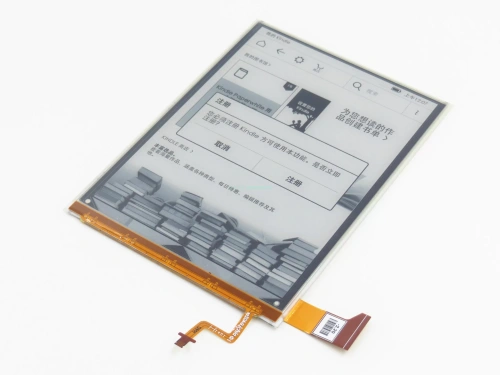
Bistability. Once an image is set on an e-paper display, it stays there without any power. The display only consumes energy when the content changes. This is the fundamental difference between e-paper and LCD or OLED. A Kindle can last weeks on a single charge not because it has a huge battery, but because the screen doesn’t need power to maintain an image.
Sunlight readability. E-paper is reflective—it uses ambient light to show images, like paper does. The brighter the environment, the clearer the display. In direct sunlight, e-paper is at its best. LCDs and OLEDs wash out.
No glare, no blue light. Because e-paper doesn’t emit its own light, it doesn’t cause the same eye fatigue as backlit screens. It’s not completely backlight-free—many devices include front lights for low-light reading—but the default state is paper-like.
Thin and flexible. E-paper can be manufactured on plastic substrates, making it lighter and more impact-resistant than glass-based LCDs. Flexible e-paper opens up product designs that simply aren’t possible with rigid displays.
E-Readers: The Original, Still Evolving
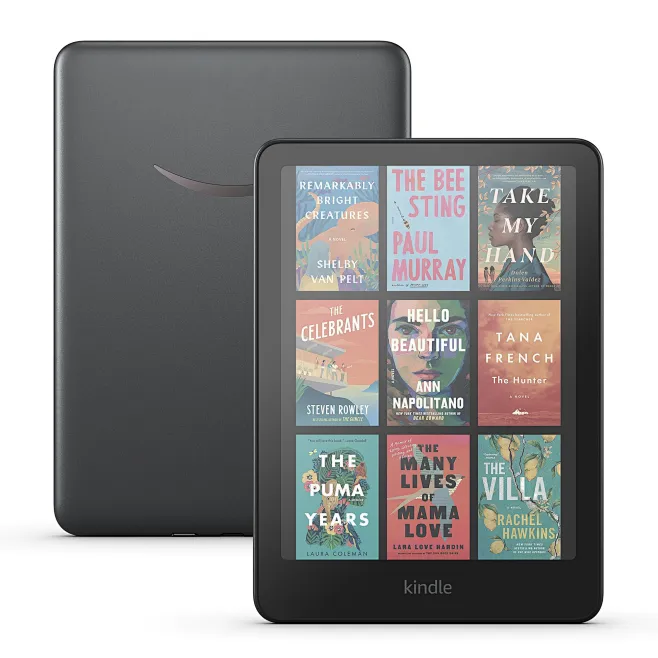
E-readers are where e-paper built its reputation. Amazon’s Kindle line proved that a single-purpose reading device could be compelling—not because it did everything, but because it did one thing exceptionally well. The screen looked like paper. The battery lasted weeks. You could read in direct sunlight.
The technology has continued to evolve. Early e-readers were strictly black and white. Today, color e-paper is becoming mainstream across multiple platforms. E Ink’s Kaleido 3 uses a color filter array to deliver faster refresh rates and partial updates, while Gallery 3 produces more vivid color with particularly strong warm tones. Spectra 6, designed for signage and display applications, reproduces over 60,000 colors with a paper-like finish.
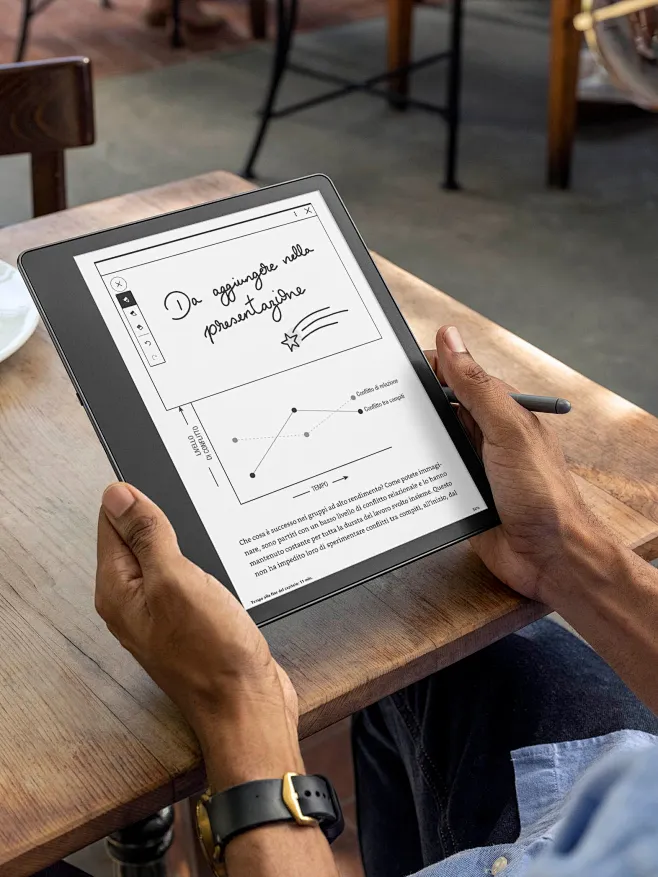
The devices themselves have also changed. reMarkable’s Paper Pro uses an 11.8-inch Canvas Color display based on E Ink Gallery 3 technology. It’s designed for writing and sketching, not just reading—a digital notebook that adds color without sacrificing the paper-like feel. Onyx’s BOOX line runs Android, making it more of a multifunction device. PocketBook continues to push color e-readers in European markets.
The shift from black-and-white to color is the defining trend in this category. It’s what separates the current generation from everything that came before.
Smartwatches: A Comeback Story
This is where things get interesting.
Pebble was the original e-paper smartwatch company. In 2012, it raised over $10 million on Kickstarter—one of the platform’s biggest successes at the time. The watches were simple, focused, and ran for days on a charge. But Pebble struggled, was acquired by Fitbit in 2016, and the brand went quiet.
Then, in January 2025, Google open-sourced PebbleOS. Eric Migicovsky, Pebble’s founder, saw an opportunity. “The impetus for this Pebble relaunch really was that Google open sourced Pebble’s operating system,” he said. “This would not have happened if that had not happened”.
By January 2026, Pebble was back.
The Pebble Round 2 features a 1.3-inch color e-paper display with 260 x 260 pixel resolution—double the pixel density of the original. The screen covers the entire watch face, unlike the original’s large bezel. The watch is 8.1mm thin, has a stainless steel frame, and offers two weeks of battery life. It comes in three finishes—Matte Black, Silver, and Rose Gold—and retails for $199.
There’s also a Pebble Time 2, with a larger 1.5-inch 64-color e-paper display, stainless steel frame, heart rate monitor, and touchscreen.
The refresh rate on the Round 2’s display sits between 30 to 40 frames per second, which allows for simple animations. It’s not going to play video. But it handles watch faces and basic interactions just fine.
The Pebble comeback is a reminder that not every consumer device needs to be an all-in-one powerhouse. Some people just want a watch that tells time, shows notifications, tracks steps and sleep, and doesn’t need to be charged every night. E-paper makes that possible in a way that OLED can’t.
Digital Photo Frames and Art Displays: A New Category
Color e-paper has opened up a category that barely existed a few years ago: large-format digital art displays.
Traditional LCD photo frames never quite worked. They needed to be plugged in. They emitted light that made them look like screens, not like art. And they were never quite big enough to make an impact on a wall.
E-paper changes the equation.
InkPoster unveiled what it calls the world’s largest color e-paper art displays at CES 2026. The Tela and Duna models are built around E Ink Spectra 6 technology and a Sharp IGZO backplane. They reproduce over 60,000 colors without backlight, glow, or glare. The 40.5-inch version is cordless and promises a one-year battery life. Once an image is rendered, the display holds it with zero power.
Fraimic took a different approach. Its Smart Canvas uses a full-color Spectra 6 e-ink display paired with a minimalist black wood frame. You speak a prompt into the device, and its built-in mic sends the command to OpenAI’s GPT Image 2.0, which generates full-color artwork that appears on the display. The 31.5-inch version started shipping in July 2026. Battery life is measured in years, not days.
LG has also entered the space with its 32-inch E-Paper Display (32RS1Q-B), using E Ink Spectra 6 technology with QHD resolution (2560 x 1440). It’s designed for commercial signage—advertising, menu boards, hotel lobbies. The device supports magnetic Qi2 power banks for cordless operation.
At CES 2026, 65% of global digital frame brands launched color e-paper frames. Spectra 6 panels became the mid-to-high-end standard, delivering paper-like, flicker-free, blue-light-free visuals.
The appeal is straightforward: you hang it on a wall, you change the image whenever you want, and you never think about charging it. It looks like a print, not a screen.
Smart Home Devices: Quiet Integration
E-paper is showing up in smart home devices where it was never the obvious choice.
The Qingping thermometer uses an e-ink display that blends in perfectly on a bookshelf. It’s incredibly clear from almost any viewing angle. Thanks to the low-power e-ink screen, it lasts for eight months on a single coin-cell battery. Unlike LCD or LED screens that emit light and contribute to screen fatigue, e-paper reflects ambient light.
It’s a small device—a thermometer and humidity sensor—but it’s a good example of e-paper doing what it does best: displaying information clearly and continuously without burning through battery. You don’t need a bright, colorful screen for a thermometer. You need something you can read at a glance, that doesn’t glare, and that doesn’t need to be recharged every week.
The same logic applies to other home sensors, smart switches, and control panels. E-paper is starting to appear in these categories because it solves a real problem: how do you put a screen in a device that doesn’t have continuous power?
Flexible E-Paper: What’s Next
Flexible e-paper is the next frontier.
In March 2026, DKE launched its DKE FLEX platform—the world’s first e-paper displays built on organic thin-film transistor (OTFT) technology on plastic substrates. The displays support both monochrome and color E Ink frontplanes and offer bend radii below 2mm. The first product, a 3.9-inch OTFT-driven e-paper display, is already on the market, featuring a screen that uniquely wraps around a 180-degree bend.
What does this enable? Wearables that wrap around your wrist. E-readers that fold or roll. Product designs that don’t have to be flat. The Ledger Stax, a crypto hardware wallet, already uses FlexEnable’s OTFT technology to achieve a bend radius never before seen in an e-paper product.
Flexible e-paper retains all the advantages of rigid e-paper—bistability, sunlight readability, low power—while adding durability and design freedom. It’s still early, but the direction is clear.
The Trade-Offs
None of this is to say e-paper is replacing LCDs or OLEDs in consumer electronics. It’s not.
Refresh rate. E-paper is slow. Even the best color e-paper displays update in seconds, not milliseconds. This makes them unsuitable for video, gaming, or any application that requires smooth motion.
Color. Color e-paper has improved dramatically, but it still doesn’t match the saturation and vibrancy of OLED or high-end LCD. Spectra 6 displays over 60,000 colors, which sounds like a lot until you remember that a typical LCD can display millions.
Cost. Color e-paper and flexible e-paper are expensive to manufacture. A 31.5-inch Fraimic frame costs $399. A 40.5-inch InkPoster is considerably more. These are premium products, not mass-market commodities.
Consumer perception. Many consumers still think of e-paper as “the Kindle screen”—black and white, slow, limited. That perception is changing, but it takes time.
Choosing an E-Paper Module for Consumer Electronics
If you’re developing a consumer product and considering e-paper, here’s what to think about:
Size. E-readers typically use 6 to 10-inch displays. Smartwatches use 1 to 2-inch displays. Digital photo frames range from 7 inches up to 40 inches. Match the size to the viewing distance and the amount of information you need to display.
Color. Black and white works for simple information displays. Three-color (black, white, red or yellow) adds some visual distinction. Full color (Spectra 6, Kaleido 3, Gallery 3) is necessary for photo frames, art displays, and any application where color is part of the experience.
Refresh rate. If users need to interact with the display—writing, drawing, scrolling—you’ll need faster refresh. Gallery 3 is better for interactivity. Spectra 6 is optimized for static display.
Flexibility. Do you need a flat display, or could your product benefit from a curved or flexible screen? Flexible e-paper is now available, but it’s more expensive and less widely available.
Front light. If your device will be used in low-light conditions, you’ll need a front light. Many e-readers and smartwatches include this. It adds cost and power consumption, but it’s essential for usability in dim environments.
Touch. Capacitive touch is common on e-readers and smartwatches. Electromagnetic resonance (EMR) touch is better for stylus input, as seen on reMarkable devices.
At Jictech, we design and manufacture custom e-paper display modules for consumer electronics applications. From e-readers to smartwatches to digital photo frames, we can tailor a module to your specific product requirements. Visit https://jiclcd.com/e-paper/ to explore our e-paper product line, or check out https://jiclcd.com/consumer-electronics-displays/ for our consumer electronics display solutions.
The Bottom Line
E-paper is no longer just the screen inside a Kindle. It’s in watches that last two weeks on a charge. It’s in digital art frames that hang on walls without cables. It’s in home sensors that run for months on a coin-cell battery. And it’s starting to flex, bend, and wrap around products in ways that were impossible a few years ago.
The technology has limits. It’s not for video. It’s not for gaming. It’s not for anything that needs fast refresh or vivid color. But for static or slow-changing information—reading, timekeeping, art display, sensor data—e-paper has advantages that no other display technology can match.
The consumer electronics industry is starting to notice.
FAQs
E-readers are the most common application. Beyond that, e-paper is used in smartwatches (Pebble), digital photo frames and art displays (InkPoster, Fraimic, LG), smart home sensors (Qingping thermometer), and digital notebooks (reMarkable).
E-paper is readable in direct sunlight, doesn’t cause the same eye fatigue as backlit screens, and consumes almost no power when displaying static content—allowing e-readers to last weeks on a single charge.
The Pebble Round 2 offers two weeks of battery life on a single charge. Some e-paper smartwatches can last even longer, depending on the display size and update frequency.
Yes. E Ink offers multiple color platforms: Kaleido 3 (4,096 colors, faster refresh), Gallery 3 (more vivid color, better for interactivity), and Spectra 6 (over 60,000 colors, optimized for signage and display applications).
E-paper doesn’t emit blue light or flicker, which are common sources of eye strain with backlit displays. It reflects ambient light like paper, making it more comfortable for extended reading.
E Ink is a company that manufactures e-paper display panels. “E-paper” is the generic term for the technology. Most e-paper displays in consumer electronics use E Ink panels, but the terms are often used interchangeably.
Yes. Flexible e-paper is now available, with bend radii below 2mm. This enables wearables that wrap around the wrist or conform to curved surfaces, though the technology is still early in its adoption cycle.