



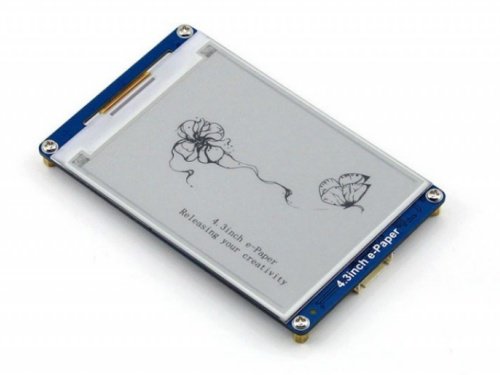

E Ink is a specific electrophoretic display technology and brand, while e-paper display is a general category of reflective display technologies.
All E Ink displays are e-paper displays, but not every e-paper display uses E Ink technology.
This distinction matters when evaluating performance, cost, supply chain stability, and long-term product support for low-power display applications.
What Is an E-Paper Display?
An e-paper display (electronic paper display) refers to a class of reflective, bistable display technologies designed to visually resemble printed paper.
Core Technical Characteristics
- No backlight; uses ambient light
- Ultra-low power consumption
- Image remains visible without continuous power
- High contrast in bright environments
- Limited refresh speed compared to LCD or OLED
Common E-Paper Technology Types
- Electrophoretic Display (EPD)
- Cholesteric LCD (ChLCD)
- Electro-wetting displays
- Microcup / microcapsule-based systems
E-paper displays are typically selected for information-centric interfaces where power efficiency and readability are prioritized over animation or video performance.

What Is E Ink?
E Ink is both:
- A company (E Ink Holdings)
- A proprietary electrophoretic display technology
How E Ink Works (Engineering View)
- Microcapsules contain positively and negatively charged particles
- Electric fields move particles to the viewing surface
- The display state is maintained without power (bistability)
Main E Ink Technology Platforms
- Carta – high-contrast monochrome
- Kaleido – color via filter layer
- Gallery – advanced full-color e-paper
- Spectra – optimized for ESL applications
E Ink has become the de facto industry standard due to its mature ecosystem, predictable performance, and long-term availability.
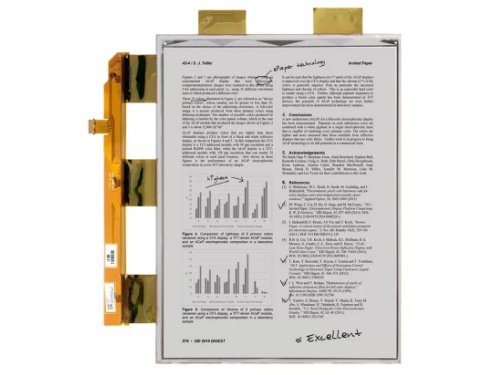
E-Paper Display vs. E Ink: Technical Comparison
| Category | E-Paper Display (General) | E Ink Display |
|---|---|---|
| Definition | Display category | Specific technology & supplier |
| Technology Scope | Multiple display principles | Electrophoretic only |
| Supplier Base | Fragmented | Centralized (E Ink Holdings) |
| Standardization | Varies | High |
| Long-Term Supply | Depends on vendor | Strong lifecycle control |
| Driver Ecosystem | Inconsistent | Well established |
Advantages and Limitations
| Aspect | E-Paper Displays | E Ink Displays |
|---|---|---|
| Power Consumption | Very low | Extremely low |
| Sunlight Readability | Excellent | Excellent |
| Refresh Rate | Slow | Slow |
| Color Capability | Technology-dependent | Limited, improving |
| Cost Range | Wide | Generally higher |
| Reliability | Vendor-dependent | Proven in mass deployment |
How to Choose Between E-Paper and E Ink
Choose E Ink when:
- Product lifecycle exceeds 5–10 years
- High shipment volume or global deployment
- Software compatibility and driver maturity matter
- Stability and consistency outweigh cost
Choose alternative e-paper technologies when:
- Cost sensitivity is critical
- The application is short-lived or experimental
- Custom display behavior is required
- Color performance trade-offs are acceptable
When Are E-Paper Displays the Right Choice?
Ideal Use Cases
- Static or semi-static content
- Battery-powered or energy-harvesting systems
- Outdoor or high-brightness environments
- Always-on information displays
Not Recommended For
- Video playback
- High-frame-rate UI
- Interactive graphics or gaming
Industry Applications
E-paper and E Ink displays are widely used in:
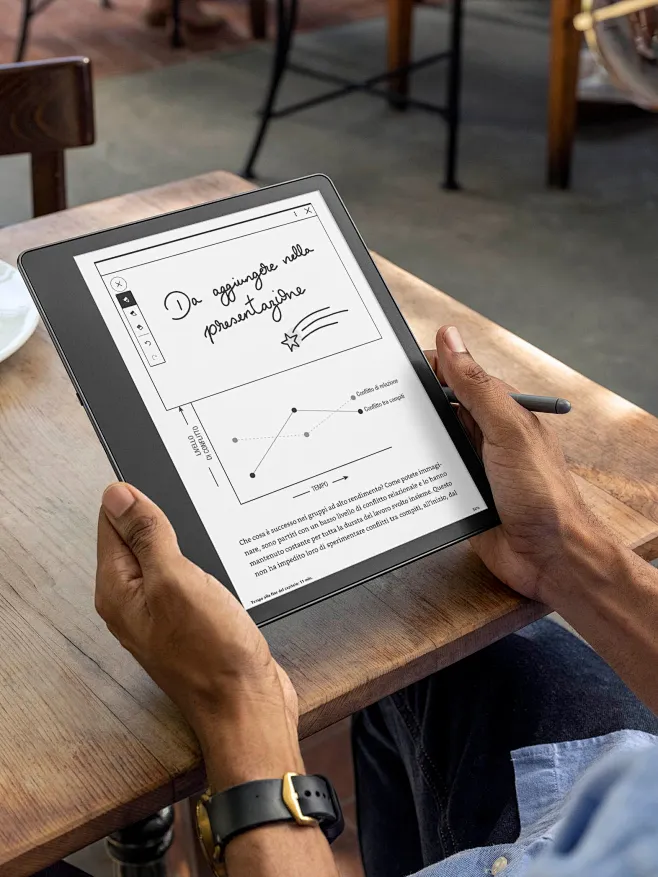
- E-Readers & Digital Notebooks
- Electronic Shelf Labels (ESL)
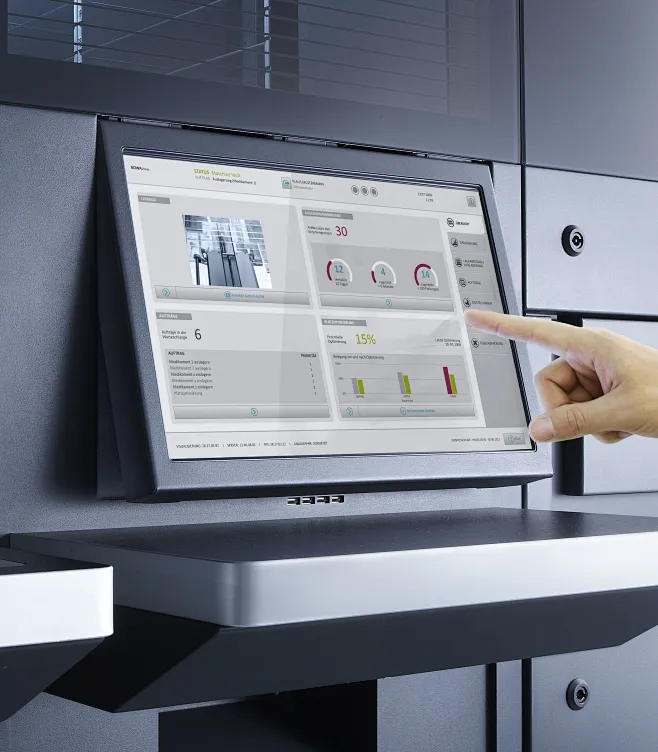
- Industrial HMI & Indicators
- Smart Logistics Tags
- Medical Information Displays
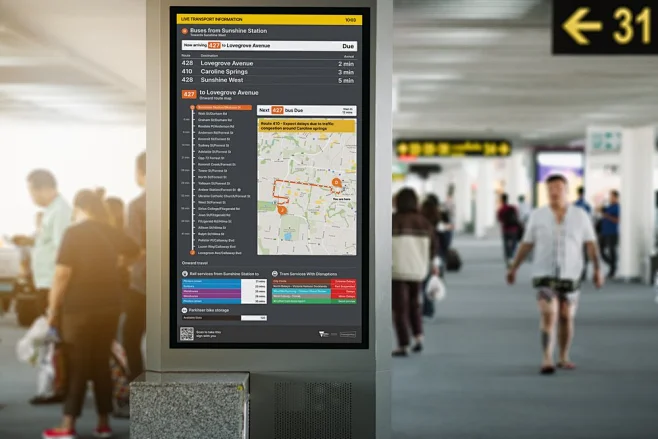
- Public Information Signage
- Low-Power IoT Devices
Why Choose Our E-Paper Modules?
With over 20 years of display manufacturing experience, Shenzhen JieTech LCD Co., Ltd. provides engineering-oriented e-paper display solutions designed for both prototyping and mass production.
Engineering & Manufacturing Strengths
- More than 100 dedicated R&D engineers
- Flexible production capability from EVT/DVT to volume manufacturing
- Integrated module development including display, FPC, driver IC, and mechanical adaptation
- Support for custom size, interface, and system integration
Production Capability
- 2 STN lines, 10 FOG lines, and 2 TAB lines
- Advanced automated bonding and assembly equipment
- Scalable output suitable for ESL, industrial, and consumer products
Quality & Reliability
- Certified to ISO 9001, IATF 16949, and ISO 14001
- Proven track record with global customers across 70+ countries
- Long-term supply assurance and consistent quality control
Application-Focused Design
JieTech e-paper modules are engineered for:
- Ultra-low power consumption
- High mechanical durability
- Stable performance in industrial and outdoor environments
From custom design to full-cycle technical support, JieTech acts as a long-term display module partner, not just a component supplier.
Contact an engineer immediately
Future Trends in E-Paper Technology
- Improved color saturation and contrast
- Faster partial refresh
- Flexible and ultra-thin substrates
- Lower BOM cost for large-scale IoT adoption
- Hybrid display architectures (e-paper + LCD/OLED)
Conclusion
E-paper is a category; E Ink is the most established technology within that category.
For most commercial and industrial applications, E Ink remains the safest and most mature option. However, alternative e-paper technologies can be viable depending on cost, customization, and application lifecycle.
Selecting the right solution requires a clear understanding of technical requirements, production scale, and long-term support expectations.
FAQ
Q1: Is E Ink the same as e-paper?
No. E Ink is one type of e-paper technology.
Q2: Why is E Ink widely used in ESL systems?
Due to its ultra-low power consumption and long-term stability.
Q3: Can e-paper displays be customized?
Yes. Size, interface, and module structure can be customized.
Q4: Do e-paper displays require a backlight?
No. They rely entirely on ambient light.
Q5: What is the typical lifespan of an e-paper display?
Often over 5–10 years, depending on usage conditions.