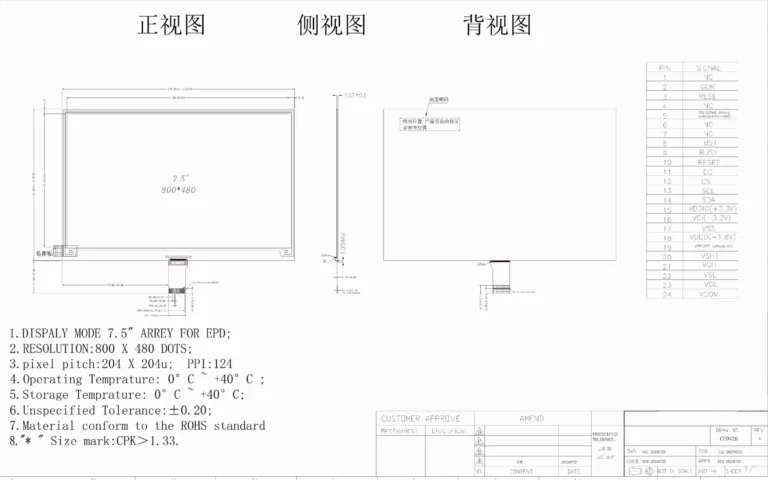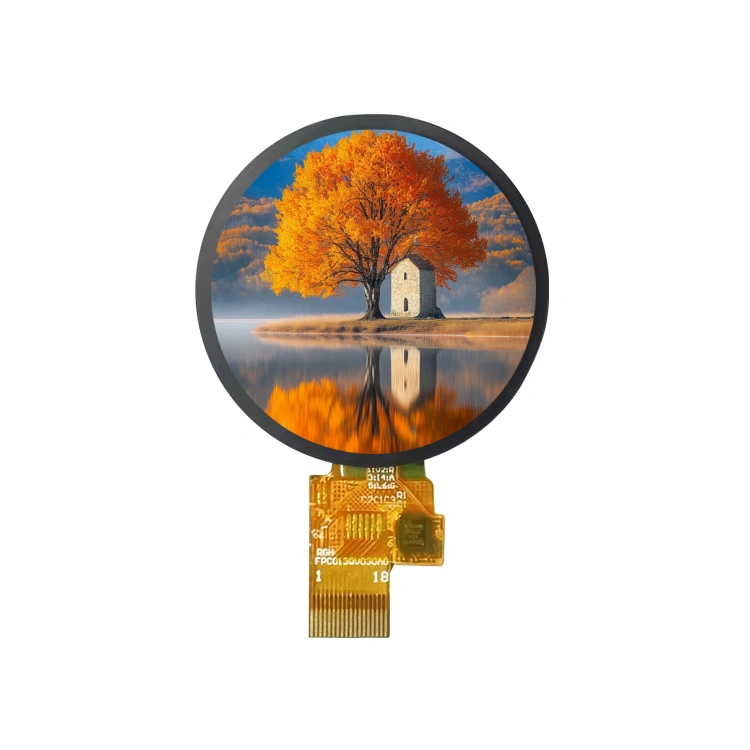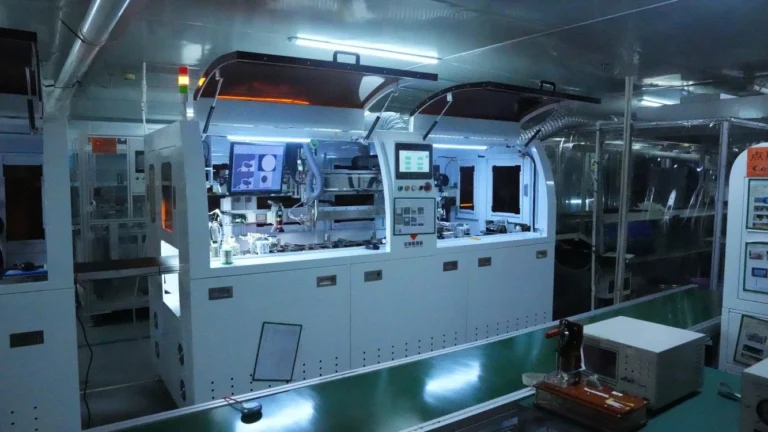










By James Lin – Senior Display Solutions Architect, 18+ Years in Industrial & Consumer Display
When I first started working on display panels back in the early 2000s, CRT monitors still dominated industrial control rooms, and “flat panel” was a buzzword reserved for high-end laptops. Fast forward to today—TFT LCDs are everywhere: from your smartwatch to cockpit displays in commercial aircraft. Over the past 18 years, I’ve designed, tested, and integrated thousands of TFT LCD modules across medical, automotive, and consumer electronics applications. And yet, even seasoned engineers often ask me: “James, how does a TFT LCD actually work?”
So, let’s break it down—not with textbook jargon, but with real-world insight from someone who’s lived this technology through its evolution.
What Is a TFT LCD?
First things first: TFT LCD stands for Thin-Film Transistor Liquid Crystal Display. It’s a type of active-matrix LCD where each pixel is controlled by one or more dedicated transistors built directly onto the glass substrate.
Unlike older passive-matrix LCDs (like those in early digital watches), which rely on row-and-column addressing that causes ghosting and slow response, TFT LCDs give every pixel its own “on/off switch.” This enables sharper images, faster refresh rates, and consistent brightness—even at wide viewing angles.
Fun fact: The “thin-film” part refers to the semiconductor layer (usually amorphous silicon or low-temperature polysilicon) deposited in ultra-thin layers—often just nanometers thick—onto the glass. Precision at this scale is why cleanroom manufacturing is non-negotiable.
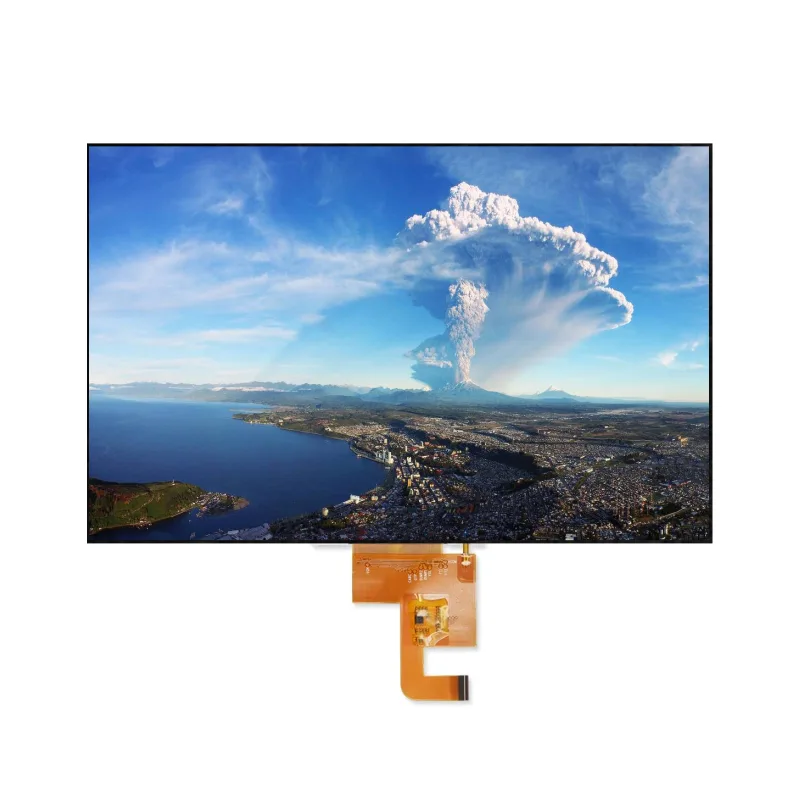
Fig. 1:TFT LCD Module
Core Working Principle: Light, Crystals, and Tiny Switches
At its heart, a TFT LCD doesn’t emit light—it modulates it. Here’s how:
- Backlight provides uniform white light (typically LED-based today).
- The first polarizer only allows vertically aligned light waves to pass.
- Liquid crystal molecules, sandwiched between two glass substrates, twist or untwist based on voltage applied via the TFT.
- This twisting controls how much light rotates as it passes through the liquid crystal layer.
- The second polarizer (horizontal) either blocks or transmits the light, depending on how much rotation occurred.
- Color filters (RGB) then tint the transmitted light to create full-color pixels.
Each pixel is essentially a microscopic light valve. And thanks to the TFT beneath it, we can open or close that valve with extreme precision—thousands of times per second.
In one automotive project I led, we needed a display readable under direct desert sun (over 1,500 nits). Understanding this light-modulation principle helped us optimize the LC twist angle and polarizer alignment to maximize contrast without blowing power budgets.
Key Structural Components
Let’s zoom into the physical stack. A typical TFT LCD module includes:
| Layer | Function |
|---|---|
| Top Polarizer | Filters incoming light orientation |
| Color Filter Substrate | Contains red, green, blue sub-pixels |
| Liquid Crystal Layer | Rotates light based on electric field |
| TFT Array (Bottom Glass) | Houses millions of transistors—one per sub-pixel |
| Backlight Unit (BLU) | Provides illumination (LEDs + light guide plate) |
| Driver ICs | Translate digital signals into analog voltages for TFT control |
What many don’t realize is that alignment tolerance between the top and bottom glass substrates is often less than 2 micrometers. One speck of dust during lamination? That’s a dead pixel—or worse, a yield-killing defect.
Advantages vs. Disadvantages: The Real Trade-Offs
After integrating displays into everything from surgical monitors to outdoor kiosks, I’ve learned that no technology is perfect. Here’s my honest take:
Advantages of TFT LCD
- Mature & Cost-Effective: Mass production has driven costs down dramatically. A 7-inch industrial-grade TFT now costs less than $15 in volume.
- High Brightness & Stability: Easily achieves 1,000+ nits—critical for sunlight-readable applications.
- Long Lifespan: LEDs last 50,000–100,000 hours; no burn-in risk like OLED.
- Consistent Color Performance: Excellent for color-critical fields like radiology or graphic design.
- Wide Operating Temperature Range: With proper design, -30°C to +85°C operation is achievable.
Disadvantages & Limitations
- Requires Backlight: Can’t achieve true black (limited contrast ratio, typically 800:1 to 1500:1 vs. OLED’s ∞:1).
- Viewing Angle Constraints: Even with IPS or AFFS enhancements, color shift can occur beyond 160°.
- Thicker Profile: Compared to OLED or microLED, TFT LCDs are bulkier due to backlight layers.
- Power Consumption: Always-on backlight means higher idle power than emissive displays.
- Response Time Lag: While improved (down to 5ms in gaming panels), it still lags behind OLED for fast-motion content.
I once had a client insist on using OLED for a 24/7 factory floor monitor. After three months, uneven usage caused visible burn-in on static UI elements. We switched back to a high-brightness TFT with anti-glare coating—and never looked back.
Where TFT LCDs Shine: Real-World Applications
You’ll find TFT LCDs dominating niches where reliability trumps “wow factor”:
- Medical Imaging: Diagnostic displays require DICOM calibration, stable gamma, and zero flicker—TFT delivers.
- Industrial HMIs: Resistant to vibration, EMI, and temperature swings. Plus, long-term component availability matters when your machine ships for 10+ years.
- Automotive Dashboards: From instrument clusters to center consoles, automotive-grade TFTs meet AEC-Q100 standards.
- Avionics & Military: Ruggedized versions with optical bonding survive shock, humidity, and altitude changes.
- Consumer Electronics: Still the backbone of budget-to-mid-range tablets, laptops, and smart home devices.
Fig. 2: TFT LCDs in action
How TFT LCD Compares to Other Technologies
| Feature | TFT LCD | OLED | TN/STN LCD |
|---|---|---|---|
| Black Level | Grayish (backlight bleed) | True black | Poor |
| Lifespan | 50k–100k hrs | 20k–30k hrs (blue degrades faster) | 30k+ hrs |
| Sunlight Readability | Excellent (with high nits) | Challenging (reflective) | Moderate |
| Burn-in Risk | None | High (static content) | Low |
| Cost (7″ Panel) | $10–$25 | $25–$50+ | <$8 |
| Power Efficiency | Medium | High (dark content) / Low (bright) | Low |
For mission-critical systems, I almost always default to TFT unless the client specifically needs infinite contrast or ultra-thin form factors.
The Future of TFT LCD: Not Dead—Just Evolving
Despite OLED hype, TFT LCD isn’t going anywhere. Innovations keep it competitive:
- Mini-LED Backlighting: Thousands of dimming zones enable HDR-like contrast (e.g., Apple’s Pro Display XDR).
- Quantum Dot (QD) Enhancement: Wider color gamut (up to 140% DCI-P3) without OLED’s stability issues.
- Low-Power Modes: New driver ICs cut standby power by 40%—key for battery-powered devices.
- Hybrid Designs: Some manufacturers now combine TFT backplanes with microLED emitters for next-gen displays.
In fact, global TFT LCD panel shipments are still growing in industrial segments—up 6.2% YoY in 2024 (per Omdia).
FAQs from My Client Meetings
Q: Is “TFT” the same as “IPS”?
A: No. TFT is the underlying transistor technology. IPS (In-Plane Switching) is a type of LCD mode that uses TFTs but offers better viewing angles. All IPS panels are TFT, but not all TFTs are IPS.
Q: Can TFT LCDs work in freezing temperatures?
A: Standard ones struggle below -20°C (liquid crystals slow down). But with heater films, special LC formulations, and thermal management, we’ve deployed them in Arctic oil rigs.
Q: Why do some TFT screens look “washed out” outdoors?
A: Usually insufficient brightness (<500 nits) or poor anti-reflective coating. Solution? Opt for >1000 nits + AR/AG surface treatment.
Final Thoughts
TFT LCD may not be the flashiest display tech today, but in my two decades of designing human-machine interfaces, it remains the most balanced, reliable, and scalable solution for real-world applications. It’s the workhorse of the display world—unsung, but indispensable.
If you’re selecting a display for your next product, don’t chase specs alone. Think about total cost of ownership, environmental stress, and longevity. More often than not, TFT LCD will be your best ally.
— James Lin
Senior Display Solutions Architect | Helping engineers build better interfaces since 2006
P.S. Need help choosing the right TFT LCD for your industrial or embedded project? Contact our engineering team for a free display consultation—including optical performance reports and lifetime testing data.
Note: All technical data reflects real-world validation from projects executed between 2007–2025. Diagrams are simplified for clarity; actual panel stacks may include additional layers (e.g., touch sensors, EMI shields).